
Forest assisted migration can be a management option to respond to climate change.
Climate change is altering forest conditions at a rapid pace. Tree populations may not be able to adapt in place or naturally migrate to new suitable habitats at this fast rate. Forest assisted migration, defined as the human-assisted movement of tree species to locations where conditions are more likely to support future growth, is one management option that is available to address this climate change challenge.
Read the short narrative topic page and browse the resources, tools, and management projects featured on this page to learn more about forest assisted migration.
Forest Assisted Migration Topic Page
Featured Resources for Forest Assisted Migration
Assisted migration can be incorporated into natural resources and land management adaptation planning in thoughtful, informed, and coordinated ways. Explore these resources to learn more about assisted migration.
Background Resources to Build Knowledge
- An overview of some concepts, potentials, issues, and realities of assisted migration for climate change adaptation in forests (Iverson et al. 2013)
- Operationalizing forest-assisted migration in the context of climate change adaptation: Examples from the eastern USA (Palik et al. 2022)
- Placing Forestry in the Assisted Migration Debate (Pedlar et al. 2012)
- Preparing for climate change: Forestry and assisted migration (Williams and Dumroese 2013).
Practical Resources for Implementation
- A practical framework for applied forestry assisted migration (Bower et al. 2024)
- Reforestation guide: tree planting to enrich, restore, and adapt northern forests (Clark et al. 2025)
- Seed-transfer guidelines for important tree species in the Eastern United States (Pike and Haase 2024)
Webinars
- Addressing Assisted Migration in Research and Practice: A Rooted in Research Webinar Series. A four-part webinar series that explores the research, planning, and implementation of assisted migration.
- Forest Adaptation Webinar Series: Assisted Migration. A webinar focusing on assisted migration as part of a broader series on topics from forests and climate change adaptation in New England and New York.
- Forest-Assisted Migration in the Context of Climate Change Adaptation: Examples from the Eastern USA. A webinar presenting three case studies of operational-scale forest assisted migration to showcase how it can be approached within an adaptation framework.
Featured Tools for Forest Assisted Migration
There are many tools based on the best available science that can be used to support assisted migration management goals and objectives. Explore these tools to help inform management decisions.
Assessing potential climate change pressures across the coterminous United States: mapping plant hardiness zones, heat zones, growing degree days, and cumulative drought severity throughout this century. This tool includes maps and tables illustrating projected changes in these key variables related to growing conditions for trees.
Forest Ecosystem Atlas. The Climate Change Tree Atlas provides information on current and projected suitable habitat for 134 tree species across the eastern US.
Forecasts of Climate-Associated Shifts in Tree Species (ForeCASTS). Forecasts of Climate- Associated Shifts in Tree Species (ForeCASTS) generates maps that depict future suitable habitat ranges for 213 North American tree species, in the United States and globally.
Seedlot Selection Tool. The Seedlot Selection Tool is a web-based mapping application designed to help natural resource managers match seedlots (seed collections from a known origin) with planting sites based on climatic information.
Other Relevant Tools:
Forest Assisted Migration in Action
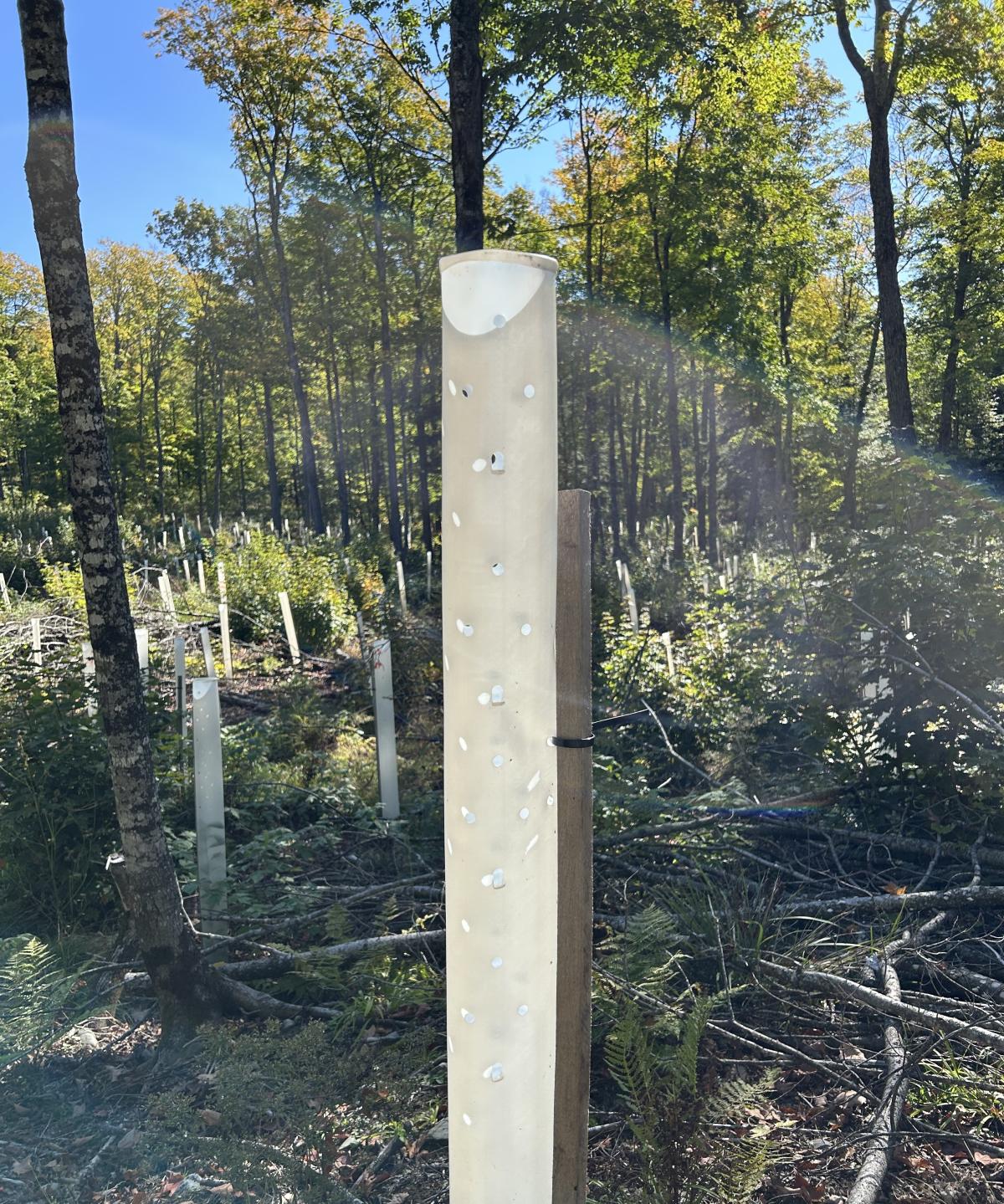
Natural resources and land managers across the country are already incorporating assisted migration into climate adaptation projects to support management goals. Explore these assisted migration examples.
Adaptive Silviculture for Climate Change (ASCC). The ASCC Network is a collaborative effort to establish a series of experimental silviculture trials across different forest ecosystems in the United States and Canada. Many ASCC sites are using forest assisted migration as part of their resistance, resilience, transition, and no-action (RRT-Control) treatments. In Colorado, the Colorado State Forest and the Taylor Park ASCC sites are applying two types of assisted migration, assisted population migration and assisted range expansion, as part of the sites’ experimental treatments.
Desired Regeneration through Assisted Migration (DREAM). The DREAM project is an international collaboration led by the USDA Forest Service that incorporates climate and forest dynamics modelling, plant physiology, and silviculture in structured process to derive climate-informed planting approaches for experimental assisted migration trials.
Superior National Forest Assisted Migration Plan. The Superior National Forest (SNF) in northeastern Minnesota worked with partners to create a formal Assisted Migration Plan. The plan was created to ensure that the SNF pursues assisted migration decisions in a consistent, informed, and coordinated manner and to provide guidelines for SNF staff to determine areas on the Forest that area appropriate for assisted migration. The SNF Assisted Migration Plan can also serve as a foundation for other National Forests to create their own plans that meet the needs of all partners involved with assisted migration actions. Learn more about the plan process.