
Project Area

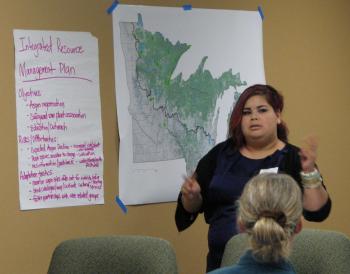 The Red Lake Band of Chippewa Indians is a federally recognized Indian tribe. The Red Lake Reservation encompasses over 840,000 acres of land and water which spans across eight counties in northern Minnesota. The reservation completely surrounds Lower Red Lake, the state’s largest lake, and includes a major portion of Upper Red Lake. The Red Lake Reservation retains the only contiguous, unalloted reservation in Minnesota. Red Lake is one of only a few tribes in the U.S. that resisted allotment, and the Tribe holds all land in common for the benefit of its members.
Management Goals
Adaptation plans focus on three major areas: forest resources, water resources, and local economies. Climate Solutions University is organized by the Model Forest Policy Program.
Climate Change Impacts
The Red Lake Reservation straddles the forest-prairie border in north-western Minnesota. Because of this proximity to a major transition zone and relatively level topography across most of Red Lake lands, this landscape faces has the potential for substantial change in the future. Some of the major risks identified by Red Lake DNR staff include:
The tribe is economically dependent on quaking aspen, a species projected to decline across a range of climate scenarios.
Increased heavy precipitation events and longer, warmer growing seasons could increase both high and low water table events across the reservation.
Warmer winters would reduce access for many areas of managed forest, which require frozen ground conditions.
Many culturally important plant species may be vulnerable to changing climate conditions, and not much is known about the tolerance of these species for climate extremes.
Project Documents
Learn More
Keywords
Agriculture/ Agroforestry