

Short Summary
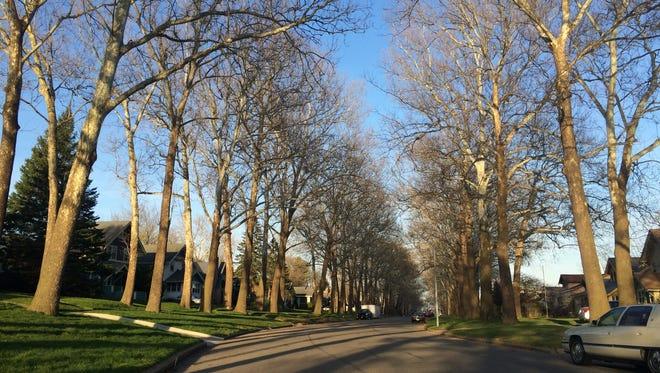
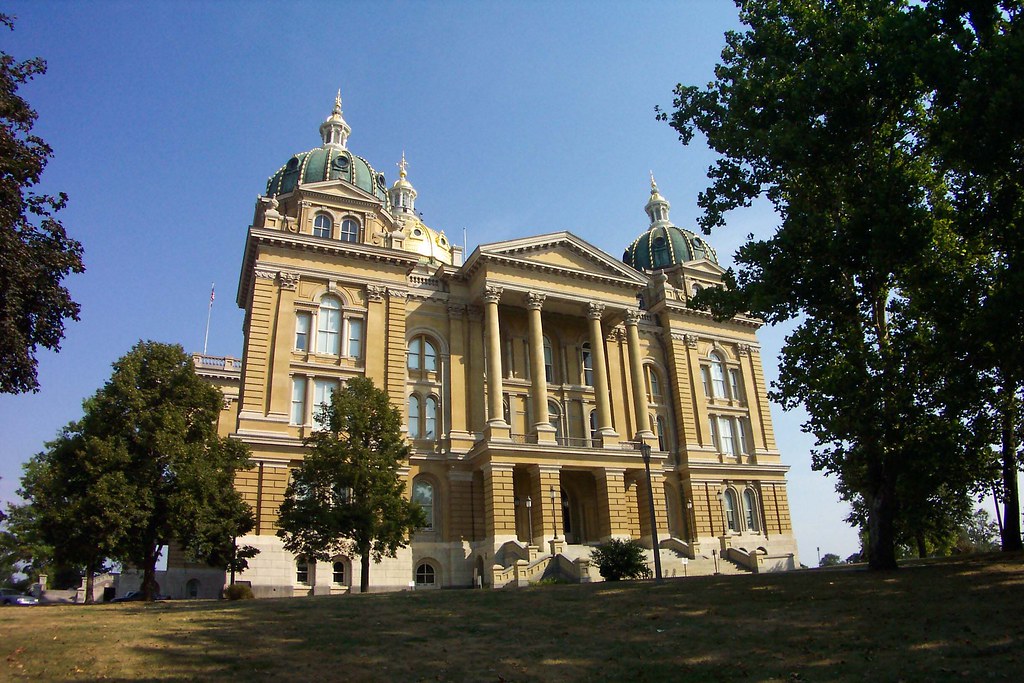
Located in the center of the state, Des Moines is the capital and largest city of Iowa. It is known for its financial and insurance service sectors, and for its early and important role in U.S. presidential campaigns. A changing climate presents serious threats to the city and the vital economy of surrounding agricultural land. Situated on the confluence of the Des Moines and Racoon rivers, flooding has already become a major problem and is likely to get worse, threatening loss of life and economic damage, especially in vulnerable communities. The urban forest of Des Moines is estimated to have 50,000 trees and provide nearly 30% canopy cover providing social, economic, and environmental benefits to the local community. Understanding tree species vulnerability and key climate change impacts is critical to Des Moines’ climate adaptation and management efforts in the 21st century.
Tree Species Vulnerability
Species distribution modeling suggests that the changing climate will shift suitable habitat and heat and hardiness zones for various tree species in the Des Moines region. The city’s urban forest includes roughly 75% native species with common trees like hackberry and honey locust likely to persist and even thrive, while others, like apple and ash will be more vulnerable. In the tree species list identified for Des Moines, 9 species have a low adaptability score, 16 species have a medium adaptability score, and 25 species have a high adaptability score. Climate change vulnerability of urban trees, including adaptive capacity and zone suitability under low and high emissions scenarios, is outlined in the tree species handout below.
Climate Change Impacts
Iowa has warmed by 0.5-1°F in the last century and has seen an increase in precipitation of roughly 10%, with more falling in the east of the state. Measures of acute rainfall events, however, have increased by 35% and streamflow during the year’s worst flood event has increased by 20%. Increased precipitation has moderated summer high temperatures until now, but this effect is likely to end by 2050 with heatwave events becoming more likely, and average maximum daily temperatures over the hottest five-day period increasing by about 6°F. Spring precipitation increases are likely to drive a greater increase in flooding frequency and severity, while summer temperature increases will likely make drought events more common and severe. Des Moines in particular, has a pronounced urban heat island effect responsible for an average summer temperature that is roughly 3°F warmer than nearby rural areas, further exacerbating climate change effects for the urban forest and at-risk populations.
Work With Us
To learn more about this project, contact Leslie.