
Project Area

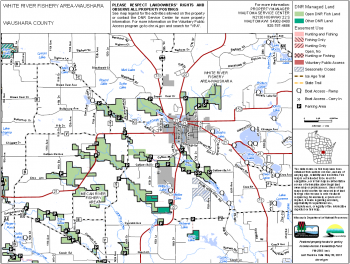 The White River is located in central Wisconsin in Waushara County, which is the heart of the “sand counties” landscape Aldo Leopold wrote about in the Sand County Almanac. Streams and rivers in this area are renowned for cold, clear water and excellent trout fishing. The White River Fishery Area is owned and managed by the Wisconsin DNR, consisting of many parcels of land totaling 3400 acres. These lands are fragmented by agricultural and residential development, but the protected lands along the White River still sustain a remarkable riparian system. The Bird Creek timber sale covers approximately 70 acres, split among several parcels.
Management Goals
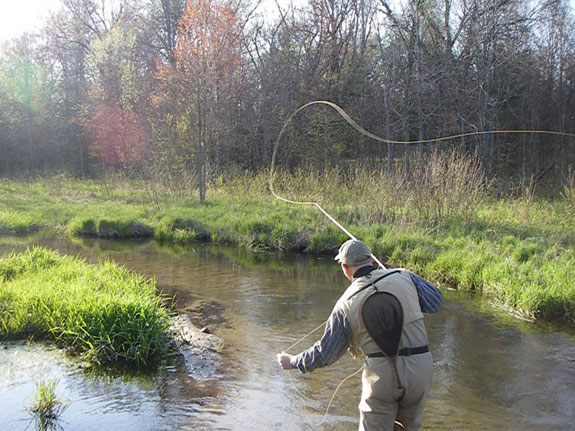
Prior to European settlement, primary cover types on the White River Fishery Area included Oak Woodlands, Oak Openings on the upland sites. The lowlands were likely forested and composed mainly of Swamp Conifers and Lowland Hardwoods. Since the DNR took ownership of these parcels in the 1950s and 60s, the primary management actions have been designed to improve opportunities for public fishing. The Interim Forest Management Plan for this area (available below), is now starting to address forest management needs on the properties, with the overall goal of maintaining healthy forests. Some specific objectives in the management plan include:
- Promote native tree species, such as black oak, northern pin oak, bur oak, white oak, aspen, jack pine, and white pine.
- Maintain oak as a dominant cover type across the management area with evenly distributed age classes from young forest to “old growth”. Maintain oak in a variety of ages classes with 15% in 0-20 years, 40% in 21- 80 years, 25% in 81-100 years and 20% in 101 years plus.
- Maintain the extent and quality of swamp hardwood and bottomland hardwood stands
- Protect water quality, air quality, and undeveloped lake and river frontage
Climate Change Impacts
Adaptation Actions
A Wisconsin DNR forester used the Adaptation Workbook to develop several adaptation actions for this project, many of which were included into the final timber sale establishment. Some of these ideas included:
9.1. Favor or restore native species that are expected to be adapted to future conditions.