


Project Area

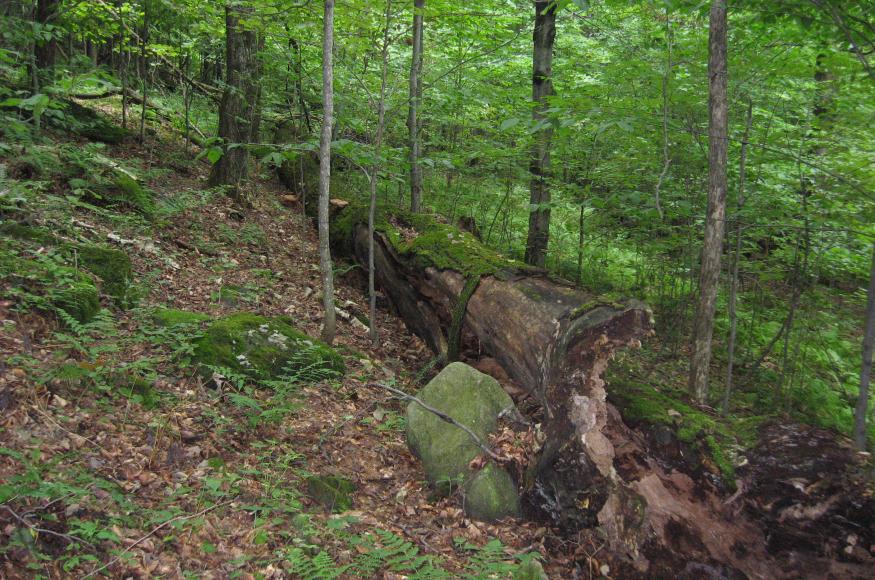
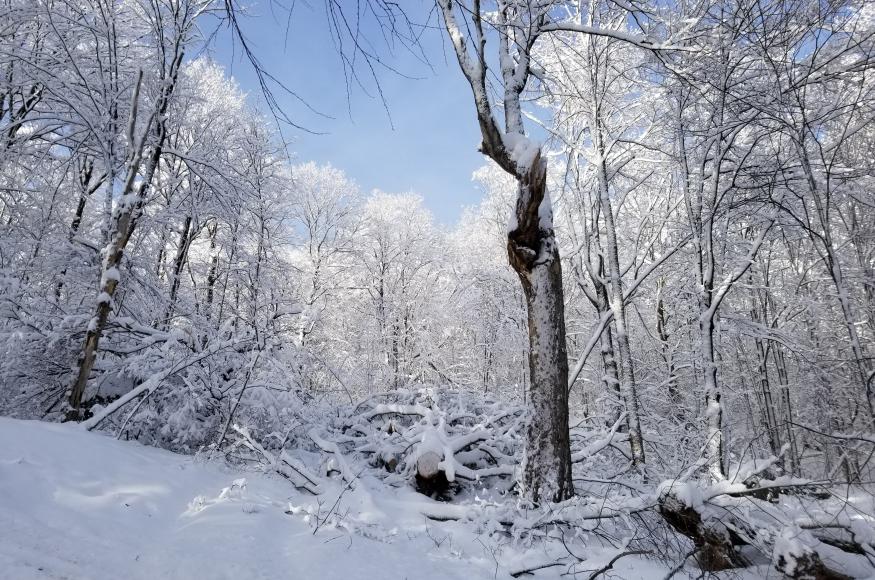
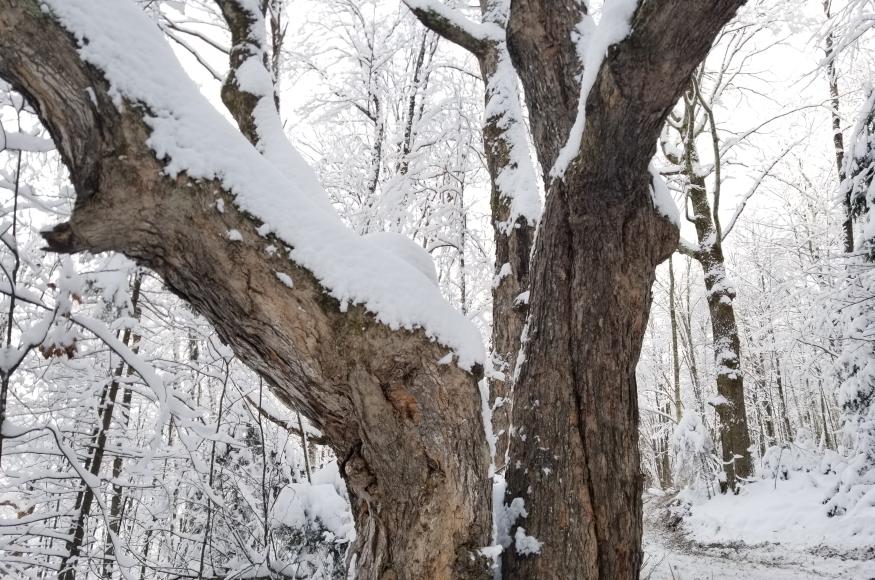
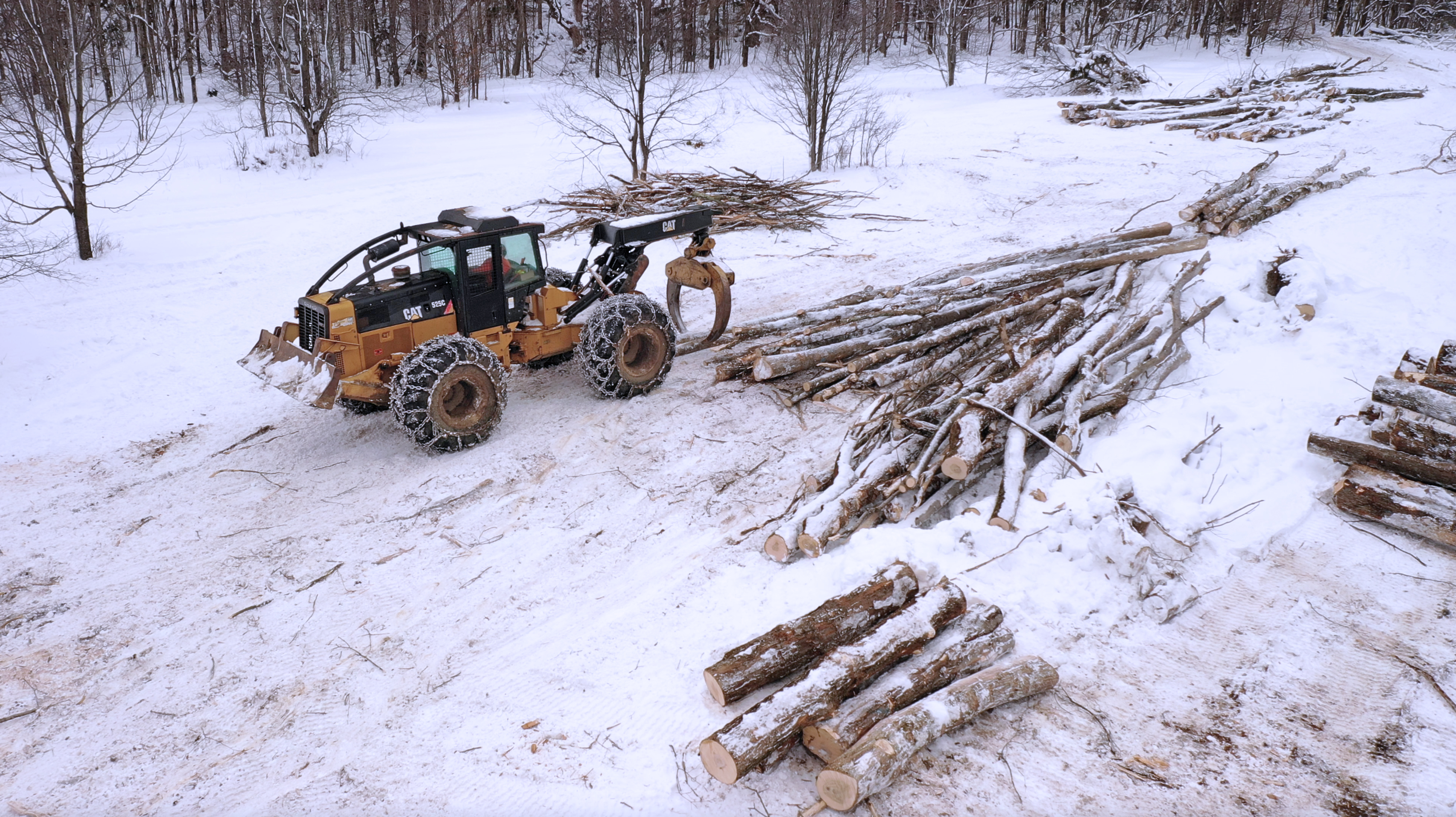
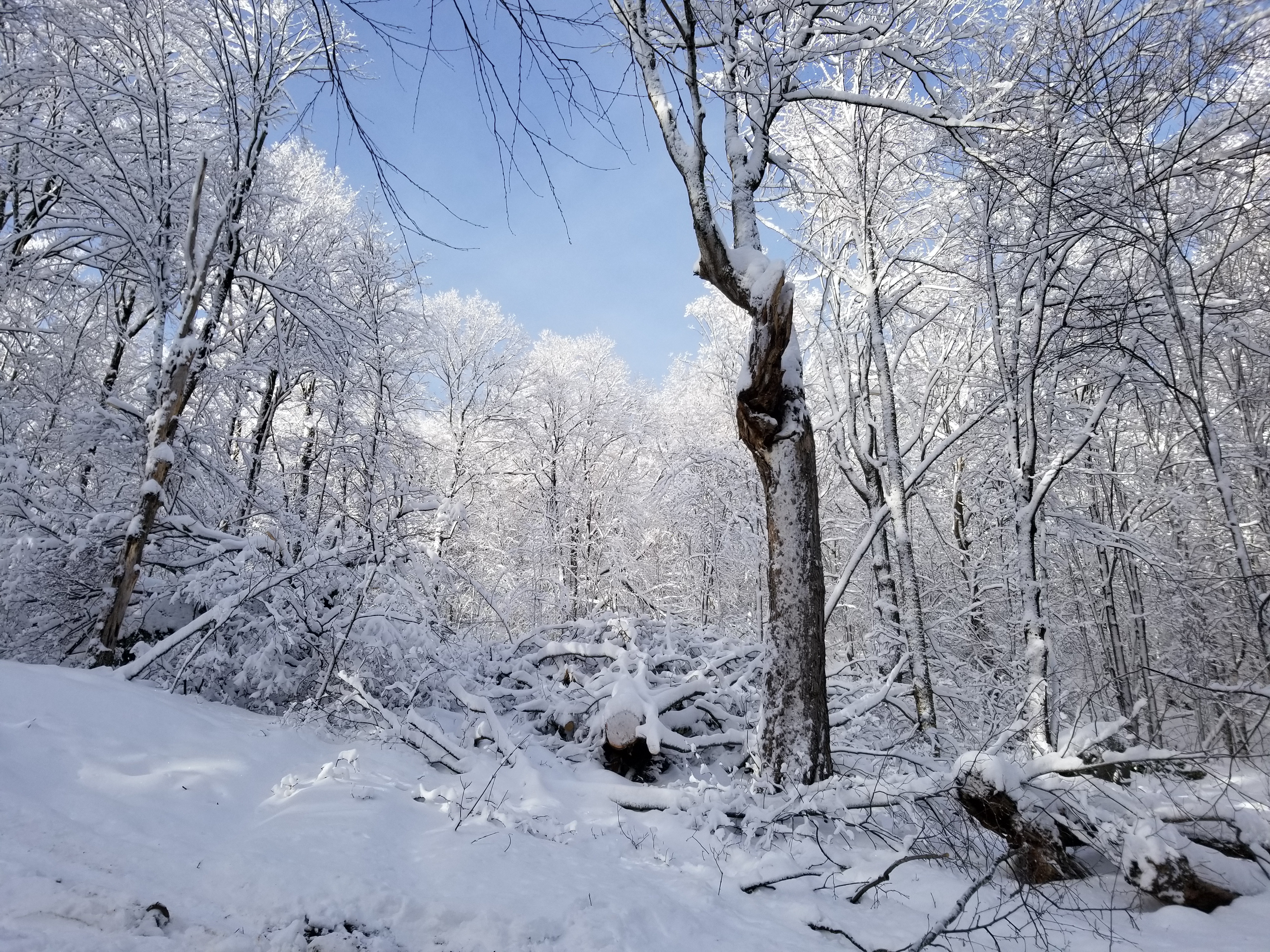
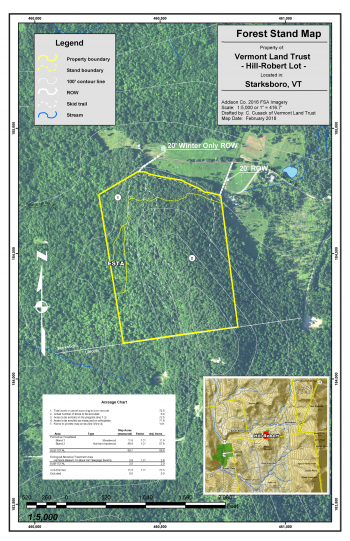
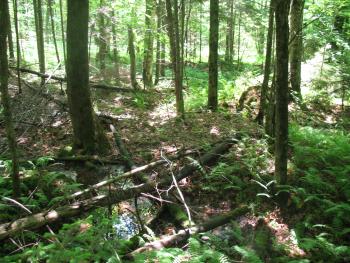 The Jerusalem Skyline property is 72.5 acres in central Vermont in the town of Starksboro. Situated just west of Mt Ellen and the spine of the Green Mountains, the site is moderately steep with a few flat to gently sloping areas. The composition of the forest is largely northern hardwoods with a smaller mixedwood stand that is transitioning to northern hardwoods.
Management Goals

The primary goal of the landowner is to maintain a healthy and productive forest ecosystem that promotes opportunities for growing high-quality sawtimber and other non-timber forest products, such as maple sap, and promotes forest bird habitat. Other goals include: conserving forest health, including maintaining tree species diversity and excluding non-native plant species; protecting water quality, wildlife habitat, forest soils, and rare plant and animal communities; conserving ash; and maintaining scenic qualities and non-motorized and non-mechanized recreational opportunities.
Climate Change Impacts
Climate change is expected to impact forest ecosystems in central Vermont into the future. These include warming of 3.5 to 8.5 ⁰F by the end of the century, with fewer days below freezing and an increase in the growing season by three weeks. On average, the climate is projected to get wetter with more frequent and damaging extreme storms, including intense rainfall that may cause soil erosion. Timing of precipitation is expected to change, with longer periods between rain events increasing the risk of moisture deficits and drought during the growing season. These changes may affect invasive plant and pest and disease pressure on forests in addition to limiting opportunities for winter harvesting. Northern species such as sugar maple, yellow birch, and white birch that comprise much of the canopy on the site are predicted to decline in the region. Northward migration of future-adapted species may be slower than the expected changes in climate that would create suitable habitat for these species, resulting in declining forest health and productivity over time.
Challenges and Opportunities
Some of the challenges and opportunities that climate change presents to meeting management goals include:
Challenges
Loss of dominant species may result in difficulty maintaining species diversity
Sugar maple may be replaced with red maple
White ash may be eliminated by emerald ash borer
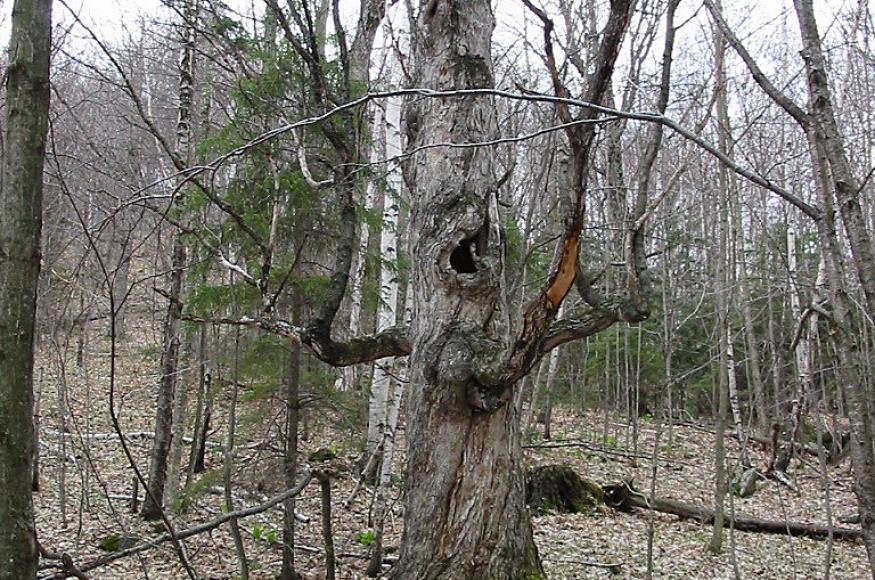
Increase in extreme storm frequency may reduce number of snags which are necessary quality wildlife habitat
Opportunities
Microclimates can be utilized to maintain current species
Root sprouting species (aspen, beech) may be maintained in the short-term through regeneration by harvesting
Longer growing seasons may help in maintaining beech and faster growth of desired species
More frequent stressors (ice damage, insect pests) may increase snags for wildlife habitat
Adaptation Actions
Project participants used the Adaptation Workbook to develop several adaptation actions for this project, including:
Area/Topic
Approach
Tactics
Entire property
Monitor for non-native species annually
Maintain spruce and fir in seepage areas by releasing advanced regeneration and retaining legacy trees for seed
Small group selection to encourage yellow and paper birch; cut mature aspen to encourage coppice growth
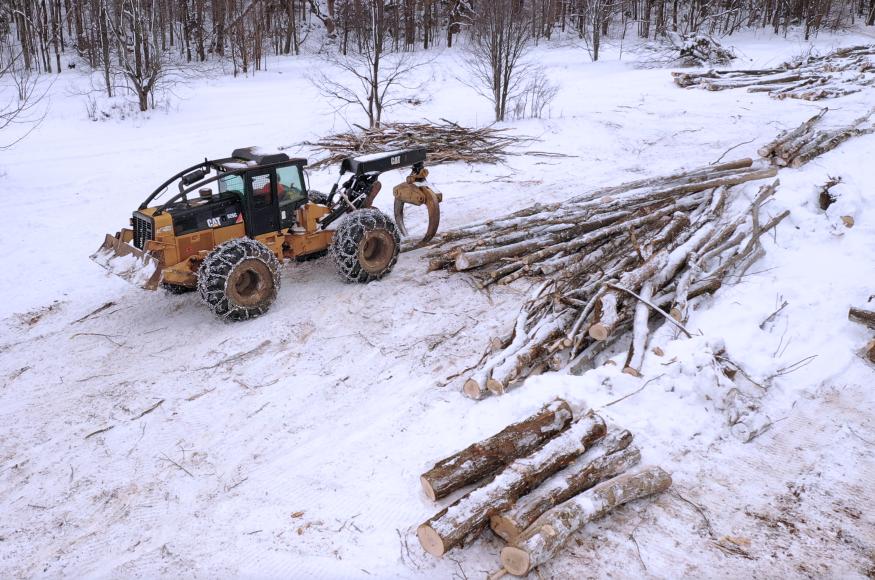
Move skid trail outside of 50’ buffer around seepage area or use in frozen winter conditions only if relocation is not feasible
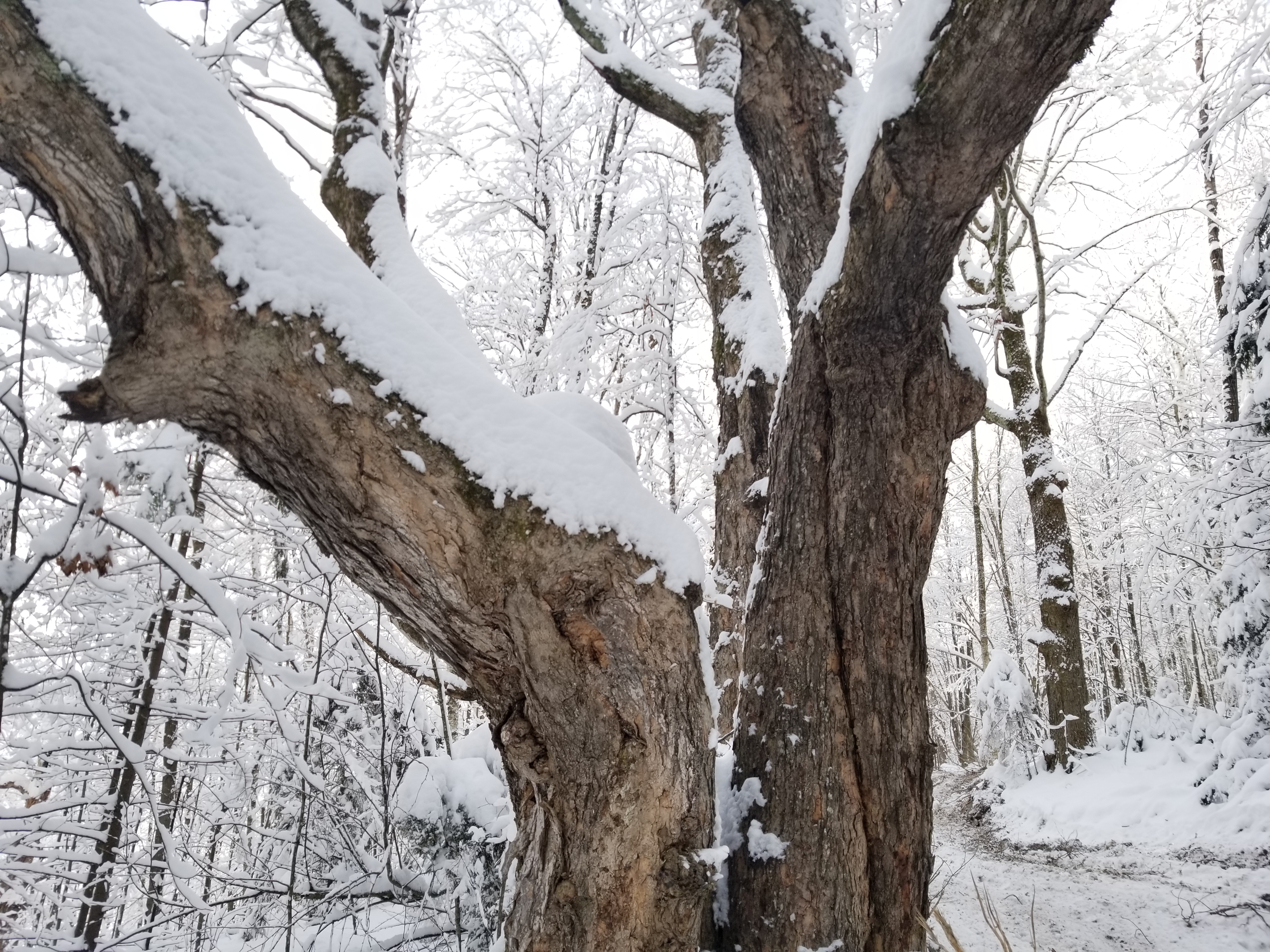
Retain basswood and legacy sugar maples; single tree or small group selection to regenerate sugar maple & ash
Position gaps to limit edge exposure & retain trees on field edges to protect from prevailing winds
Mark legacy trees, protect course woody material and snags, leave tops following harvest
Leave ash in a range of ages and sizes and in the regeneration.
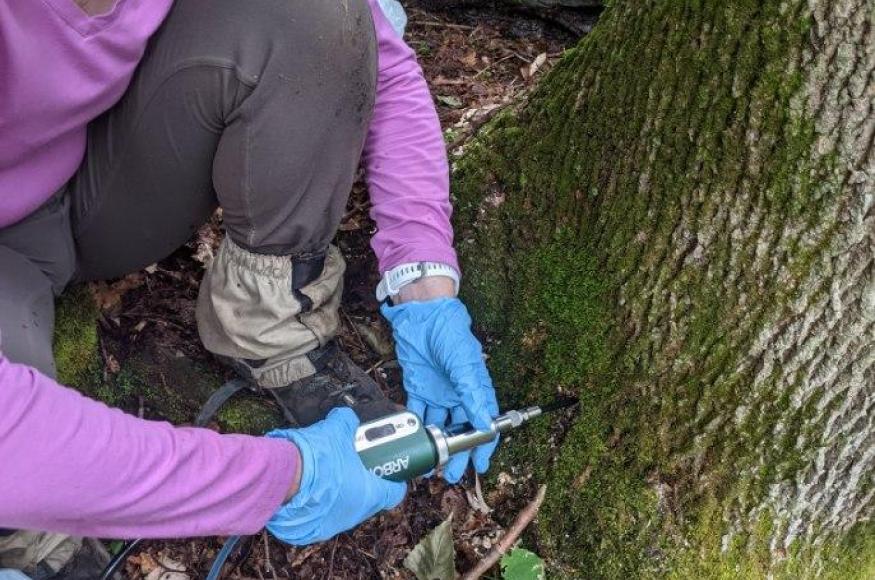
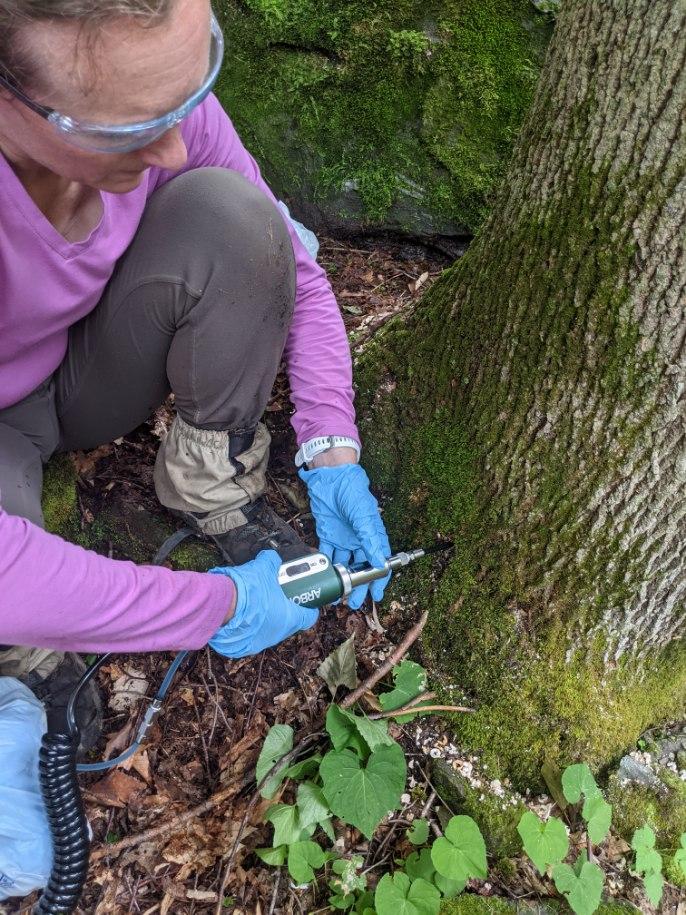
Monitor ash trees for signs of EAB.
Use biocontrol or insecticide treatments of small groups of seed trees to preserve genetic diversity and protect seed trees for future ash regeneration.
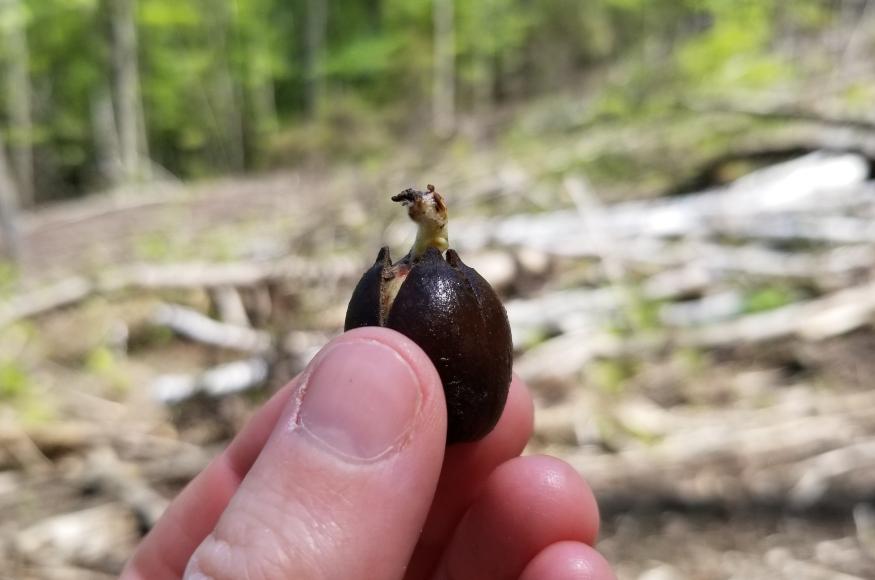
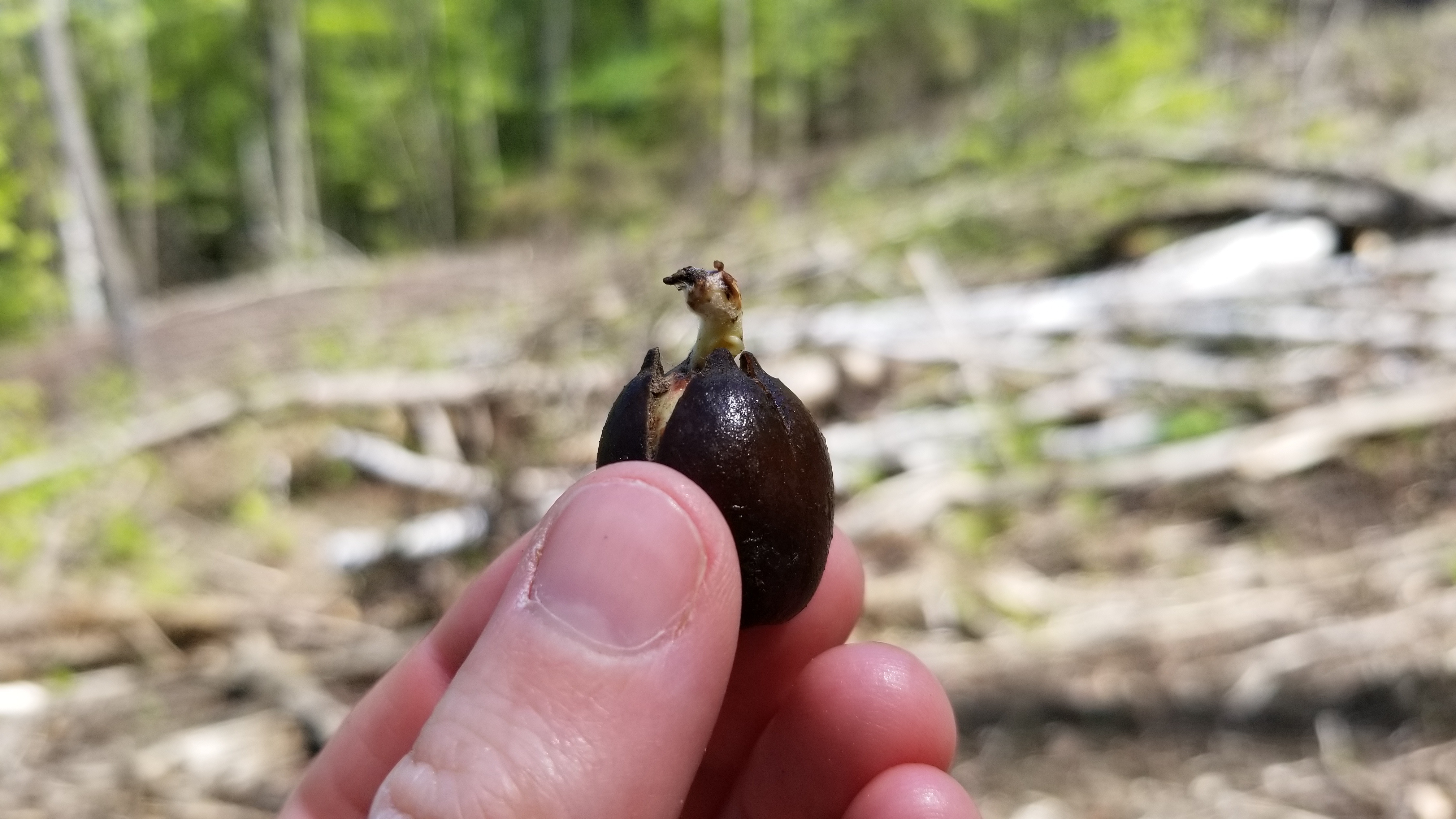
Plant red oak (not currently present on site) in the two of the largest canopy gaps.
Monitoring
Project participants identified several monitoring items that could help inform future management, including:
Percentage of basal area of tree species
Age-class diversity within stands
Presence/ absence of non-native invasive plant species
Standing and downed dead wood
Public use for non-motorized and non-mechanized recreation
Signs/symptoms of EAB on 40 ash trees and presence of lingering ash
Project Documents
2018-FMP-Hill-Robert-Final.pdf
(827.25 KB)
2018-FMP-Map.pdf
(5.28 MB)
FMP_Amendment_2020_VLT_Hill-Robert (1).pdf
(538.48 KB)
Keywords
Management plan
Recreation
Upland hardwoods
Wildlife habitat