


Project Area

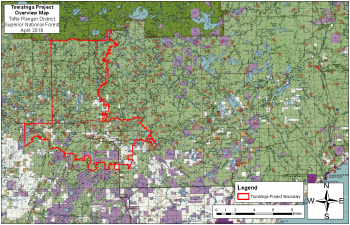 The TomaInga project area covers 60,459 acres that are, of which over 48,000 (80%) are owned and managed by the Forest Service. Minnesota State Highway 1 runs through the middle of this project area, along with the Little Isabella River. This landscape lies just to the south of the Boundary Waters Canoe Area Wilderness and contains numerous lakes and waterways. The area contains three primary Landscape Ecosystems: Dry-Mesic Red and White Pine, Jack Pine/ Black Spruce, and Lowland Conifer.
Management Goals

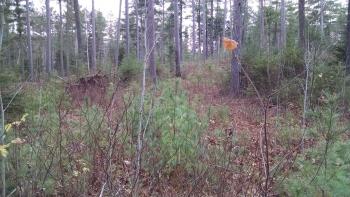
The project planning team for TomaInga used a Midlevel Assessment of forest conditions to establish some general goals and management directions for the project. In order to more closely match the desired conditions stated in the Forest Plan, the TomaInga project will generally attempt to:
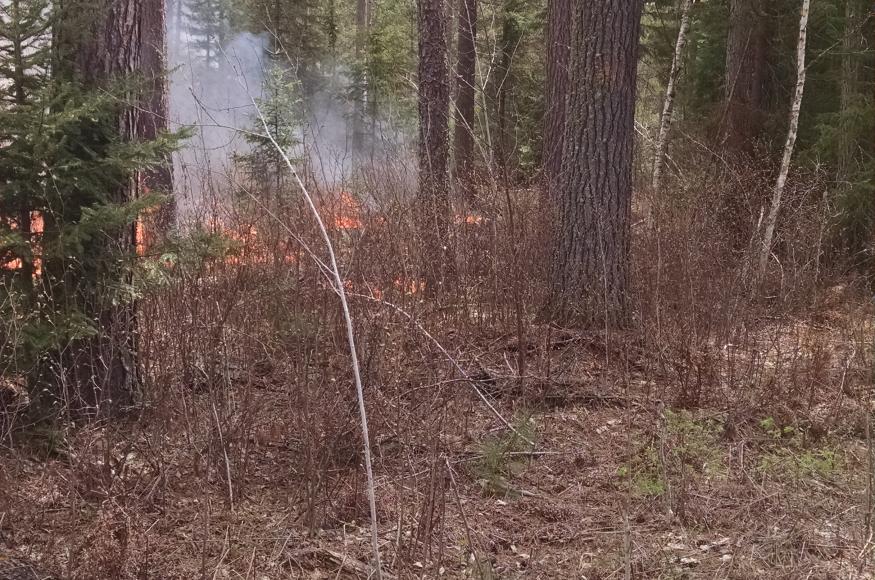
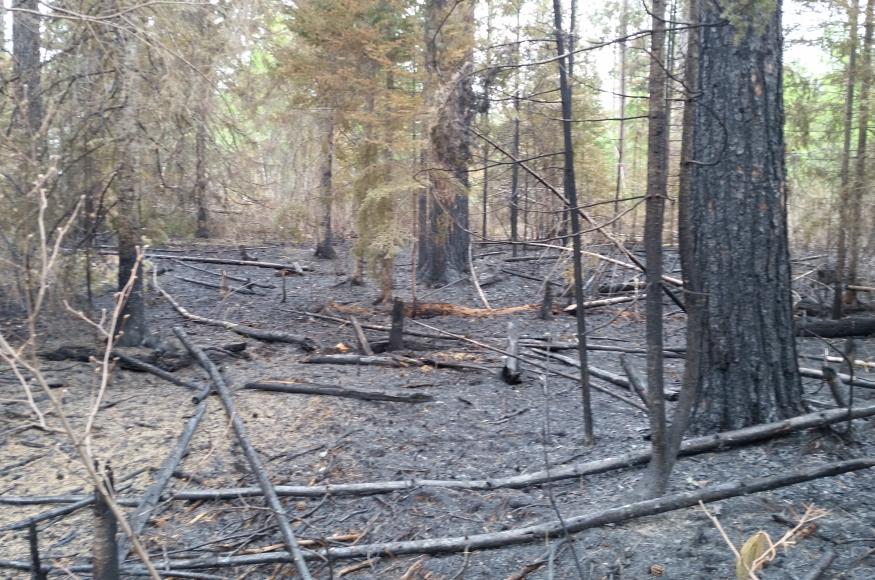
Increase the young age class in all Landscape Ecosystems (LEs) through harvests and prescribed burns
Decrease acres of red pine and aspen in particular LEs
Increase acres of jack pine, white pine, and black spruce in particular LEs
Convert older, even-aged plantations to uneven or multi-aged stands through variable thinning or partial harvest methods
Reduce hazardous fuels and ladder fuels
Climate Change Impacts
Adaptation Actions
Project participants used the Adaptation Workbook to develop many possible adaptation actions for this project. The list will be considered and refined as the team develops the Proposed Action for the TomaInga project. Some of the ideas being considered include:
4.1. Prioritize and maintain unique sites.
4.2. Prioritize and maintain sensitive or at-risk species or communities.
9.1. Favor or restore native species that are expected to be adapted to future conditions.