
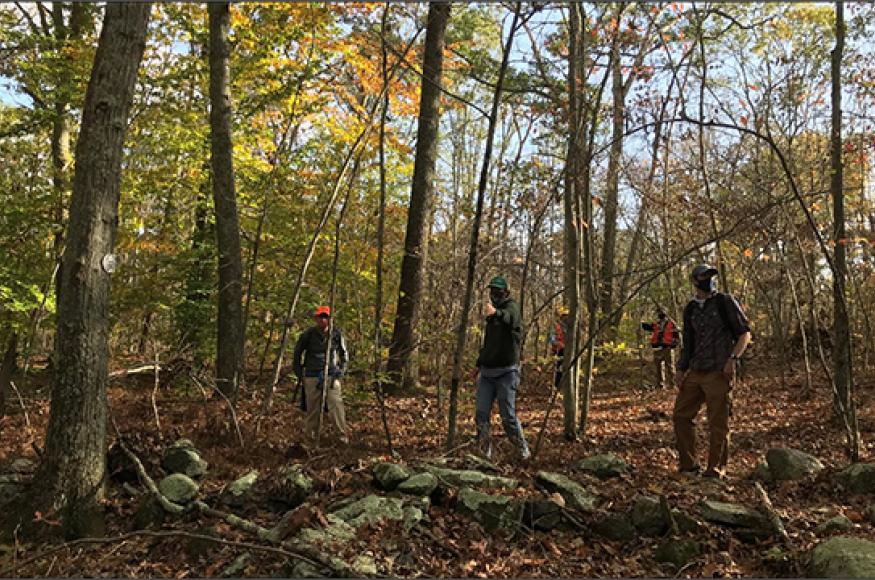
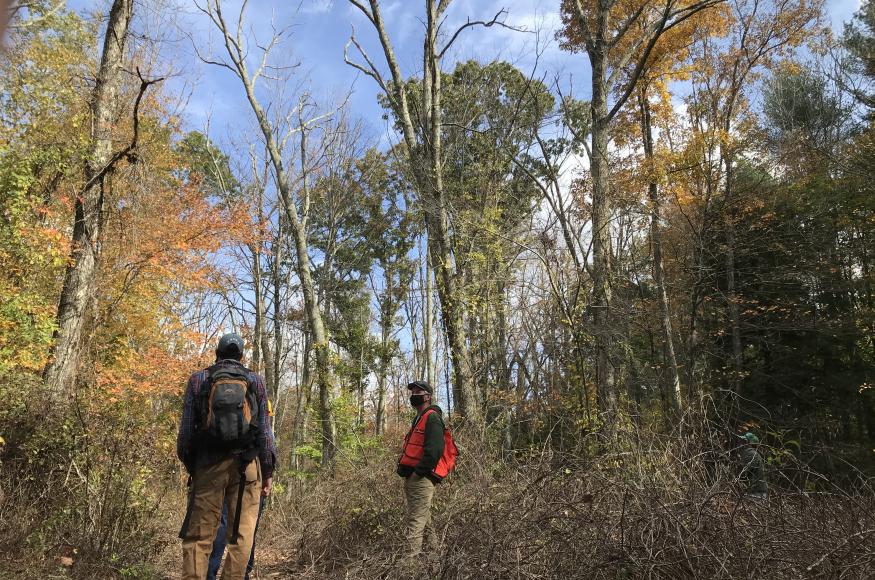
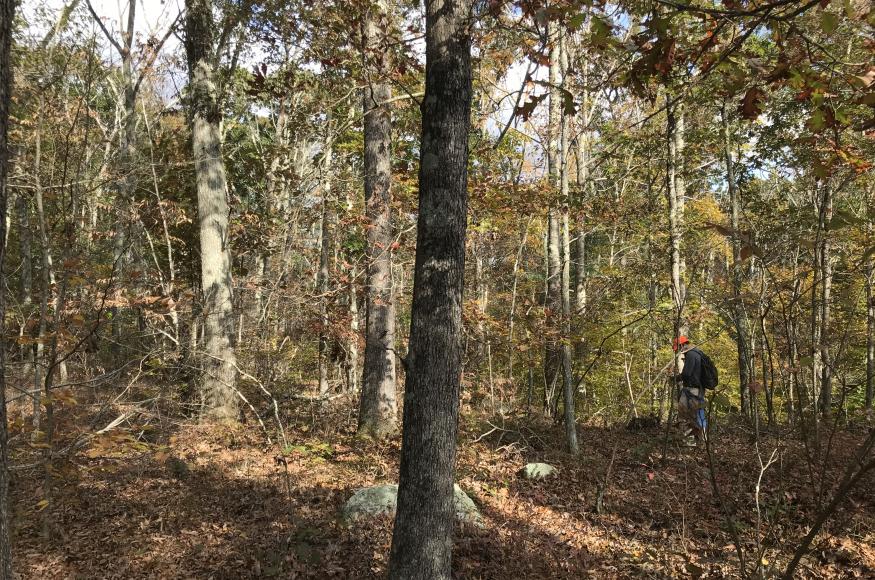
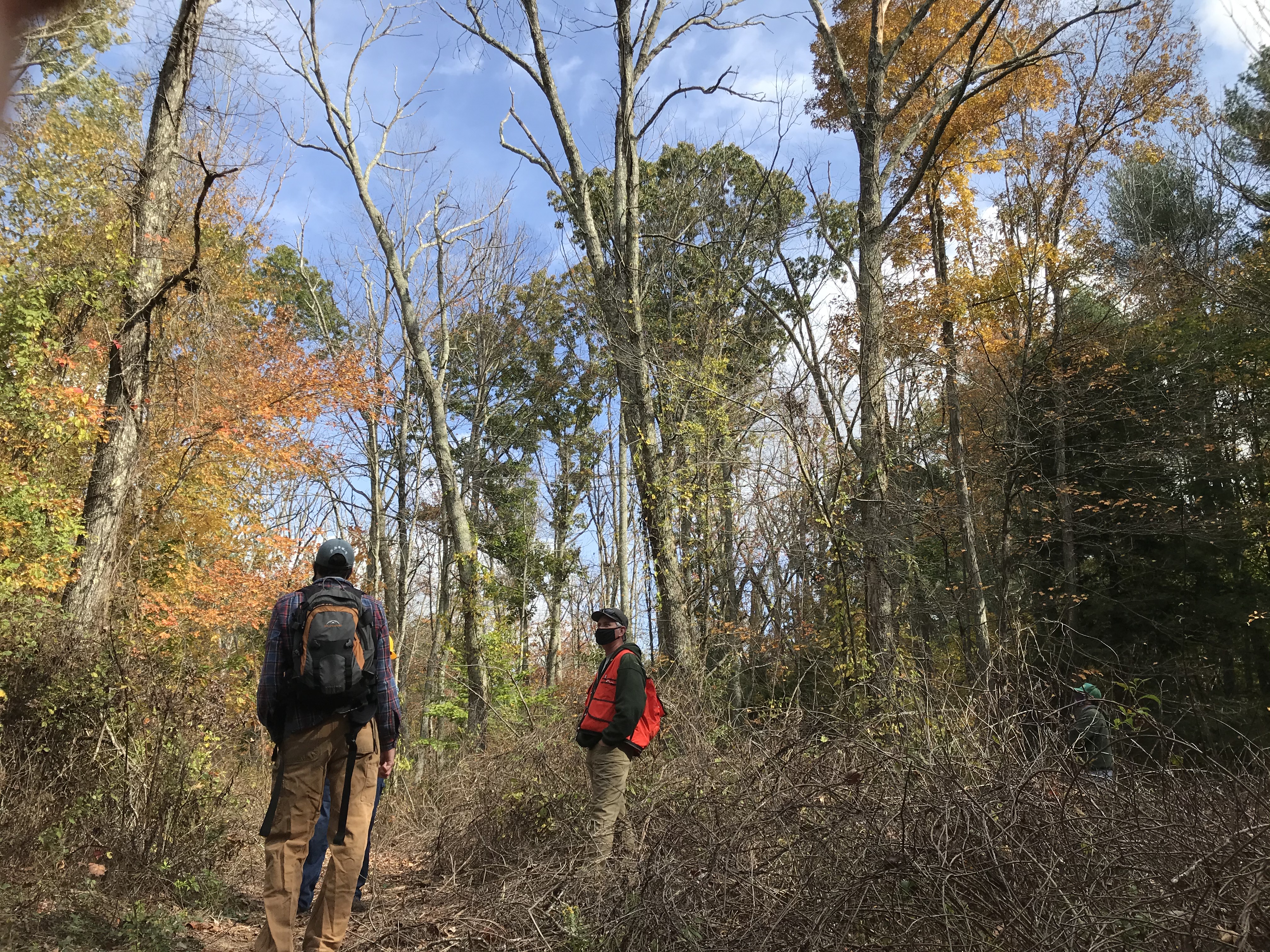
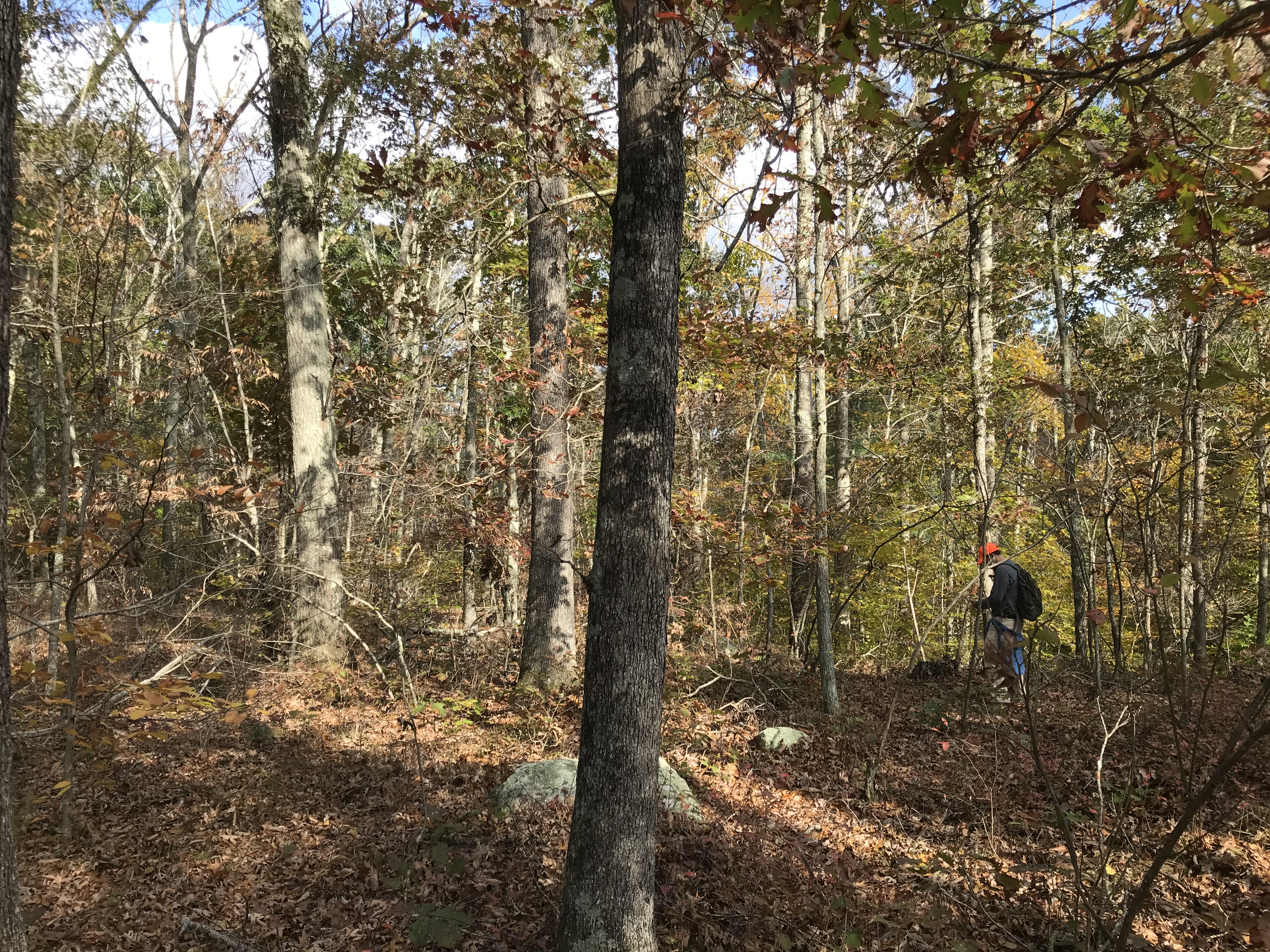
Project Area
 The University of Connecticut is leading the development of an ASCC affiliate project site targeting oak forests in southern New England. Oak forests in southern New England often extend across multiple wooded parcels of varying size and ownership status in a parcelized and fragmented landscape. This project also includes considerations of the social dimensions of managing small parcels in the context of an exurban landscape. Rather than a single site, treatments will be replicated across the regional landscape on multiple ownerships.
 Replicates of the Southern New England Exurban Affiliate site have been developed in eastern Connecticut and southern Rhode Island. The initial replicates were developed for the Mohegan State Forest, University of Connecticut Forest, and Lee Farm in Connecticut. The newest addition to the project is located on the DeCoppet Preserve in Rhode Island, which is nearly 40-acres and managed as a research site for upland forests and habitat. These upland central hardwoods are an even-aged, stratified mixture consisting of an oak-hickory canopy with more shade-tolerant subcanopy.
Management Goals
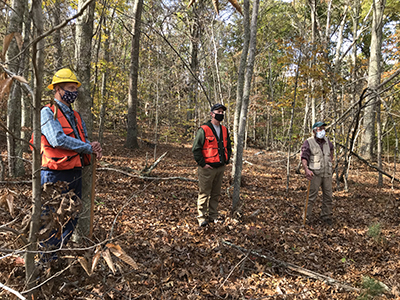
A team of natural resource managers from the Connecticut Department of Energy and Environmental Protection and several local organizations teamed up with regional scientists from the University of Connecticut and the Northern Institute of Applied Climate Science for a virtual workshop in October 2020 to develop the study design for the ASCC project site. The team developed a set of Desired Future Condition statements (DFCs), Objectives, and Tactics for each climate adaptation trajectory (resistance, resilience, transition). These DFCs, objectives, and tactics also provided the foundation for the discussions at the DeCoppet Preserve replicate of this affiliate ASCC site led by the University of Rhode Island and the Rhode Island Department of Environmental Management. Goals for the three treatments are summarized briefly below:
Resistance:
- Maintain current composition and structure with oak dominance with current components of hickory, but also including shade tolerant species and minor species such as hemlock
- Maintain a fully stocked stand
- Initiate regeneration that reflects the current species composition
- Maintain or reduce impacts from forest pests, insects, disease, and invasives
- Reduce competing understory vegetation to promote regeneration
- Protect key ecological and physical characteristics of the site
- Retain habitat features, such as dead wood, to support the current assemblage of birds and other wildlife
Resilience:
- Increase species and structural diversity
- Increase the abundance of historically native species that are adapted to future climate conditions and increased climate variability
- Create multiple age classes that are spatially heterogeneous
- Reintroduce fire as a natural disturbance when possible and increase the resilience of the forest to wildfire
- Improve health and vigor of forest to a variety of insects and diseases (e.g., gypsy moth, forest caterpillar, etc.) and to reduce risk from drought
- Reduce impacts from nonnative invasive plants and undesirable competing vegetation to facilitate future-adapted tree species
Transition:
- Alter the forest community composition to an oak-hickory forest dominated by that contains a novel assemblage of future-adapted species
- Increase overall tree species diversity with a substantial component of native and novel future-adapted species and genotypes that are windfirm and drought-tolerant
- Create diverse canopy cover conditions over space and time that is heterogeneous for regeneration
- Promote age class diversity and structural complexity
- Increase proportion of stand in early successional stage of development, at least temporarily
- Improve health and vigor of forest to a variety of insects and diseases (e.g., gypsy moth, forest caterpillar, etc.) and to reduce risk from drought
- Reduce impacts from nonnative invasive plants and undesirable competing vegetation to facilitate future-adapted tree species
Climate Change Impacts
Challenges and Opportunities
Challenges
Opportunities
Adaptation Actions
The ASCC project was designed to explicitly test three different adaptation options: resistance, resilience, and transition. A detailed silvicultural prescription was designed for each adaptation option, which was replicated several times across the study site. Detailed silvicultural prescriptions can be found in the Adaptation Workbook. Some of the adaptation tactics employed in this project include:
2.2. Prevent the introduction and establishment of invasive plant species and remove existing invasive species.
3.4. Promptly revegetate sites after disturbance.
4.2. Prioritize and maintain sensitive or at-risk species or communities.
5.2. Maintain and restore diversity of native species.
5.4. Establish reserves to maintain ecosystem diversity.
2.2. Prevent the introduction and establishment of invasive plant species and remove existing invasive species.
2.3. Manage herbivory to promote regeneration of desired species.
9.1. Favor or restore native species that are expected to be adapted to future conditions.
5.4. Establish reserves to maintain ecosystem diversity.
9.4. Protect future-adapted seedlings and saplings.
9.7. Introduce species that are expected to be adapted to future conditions.