



Project Area

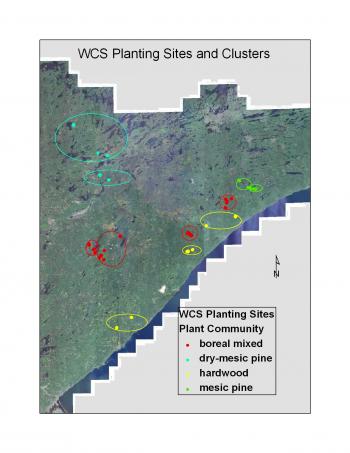 Adaptation actions have been implemented across 2,000 acres of forestland in northeastern Minnesota, on a mix of Federal, State, and County-owned land. Project partners included the Superior National Forest, Minnesota Dept. of Natural Resources, St. Louis County, and Lake County. The project included action on 500 acres of each of these common forest types: Boreal Mixed, Mesic Pine, Dry-Mesic Pine, and Hardwood-Conifer.
Management Goals

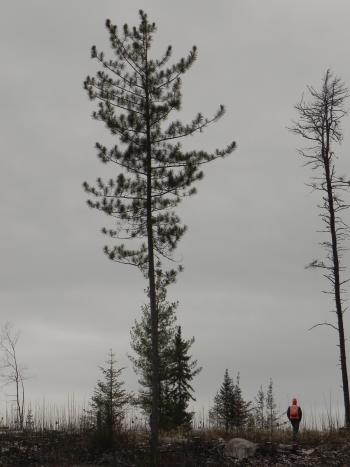
This project was designed specifically to demonstrate and test climate-informed management practices designed to make forests more resilient in the long-run. In the Great Lakes region, conventional forestry practices have emphasized simple stand structures through even-aged management practices. Aspen has tended to benefit across much of the landscape. The focus of this project, consists of a combination of management practices to increase ecosystem complexity:
- Managing for a range of species with a diverse array of life history traits (e.g., shade tolerance, drought and fire). A full spectrum of traits translates to a better ability to respond favorably to new climate conditions
- Managing for a multi-aged forest using partial harvest methods.
- Planting a suite of climate-adapted tree species (bur oak, red oak, white pine, and basswood). TNC chose these species because ecological modeling suggests they are likely to thrive under warmer, drier conditions. All four species are native to the region, but uncommon due to a legacy of past harvesting practices, a climate that historically favored boreal species, and dispersal limitations.
Climate Change Impacts
Much of current forest management in northeastern Minnesota focuses on maintaing and restoring native boreal species, such as aspen and white spruce. At the same time, forest composition in northeastern Minnesota is projected to change as the climate changes, and recent research suggests that these same species are at greater risk in a changed climate. These anticipated changes suggest that, in the long term, climate change may be working in direct opposition to some current restoration management actions.
Modeling studies project changes in forest composition in northeastern Minnesota under future climate scenarios, including a shift towards more maple and a less diverse forest composition across the northern forested landscape. This suggests that many of the tree species that are currently a focus of restoration efforts (white spruce, aspen, paper birch), with the exception of white pine, may be unsuited to future conditions compared to more southerly distributed species, such as maples, basswood, and oaks.
Modeling studies project changes in forest composition in northeastern Minnesota under future climate scenarios, including a shift towards more maple and a less diverse forest composition across the northern forested landscape. This suggests that many of the tree species that are currently a focus of restoration efforts (white spruce, aspen, paper birch), with the exception of white pine, may be unsuited to future conditions compared to more southerly distributed species, such as maples, basswood, and oaks.
Adaptation Actions
This project was designed with several adaptation practices in mind:
- Promoting diverse age classes
- Retaining biological legacies
Project participants used the Adaptation Workbook to develop several adaptation actions for this project, including:
Area/Topic
Approach
Tactics
Planting
5.2. Maintain and restore diversity of native species.
9.1. Favor or restore native species that are expected to be adapted to future conditions.
9.1. Favor or restore native species that are expected to be adapted to future conditions.
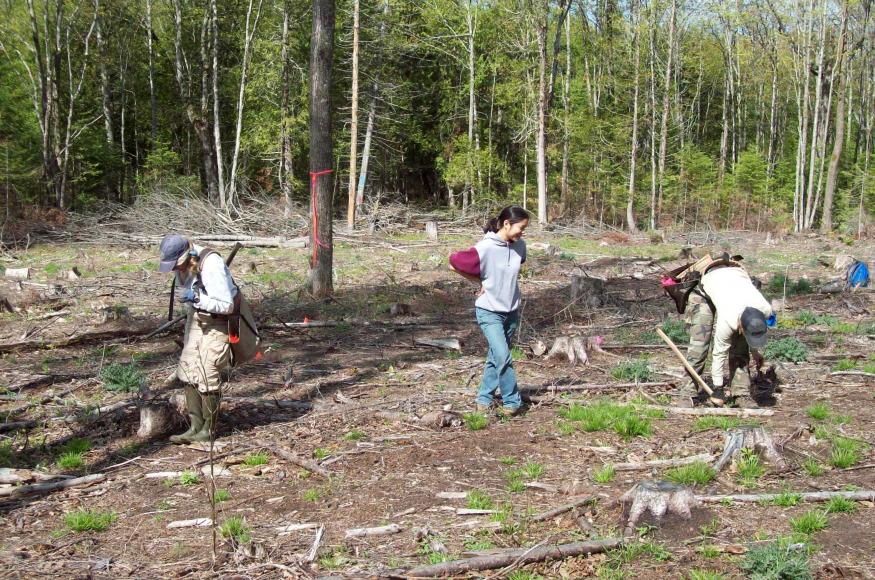
Project partners planted almost 109,000 seedlings across the various project sites. Bur oak, northern red oak, white pine, and basswood are all native to northern Minnesota and expected to be favored by future climate conditions.
Seedlings of each species will come from 2 distinct seed zones in Minnesota, plus a third seed zone in lower Michigan for white pine.
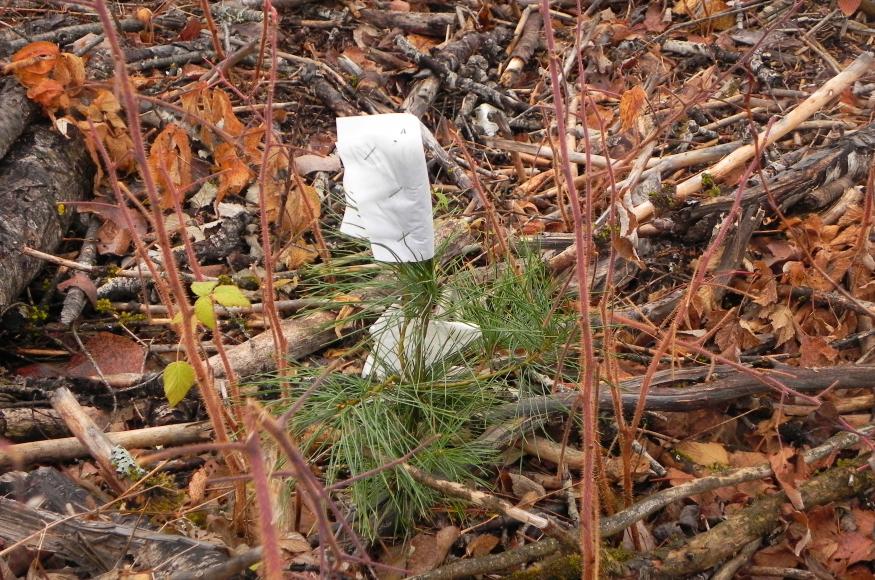
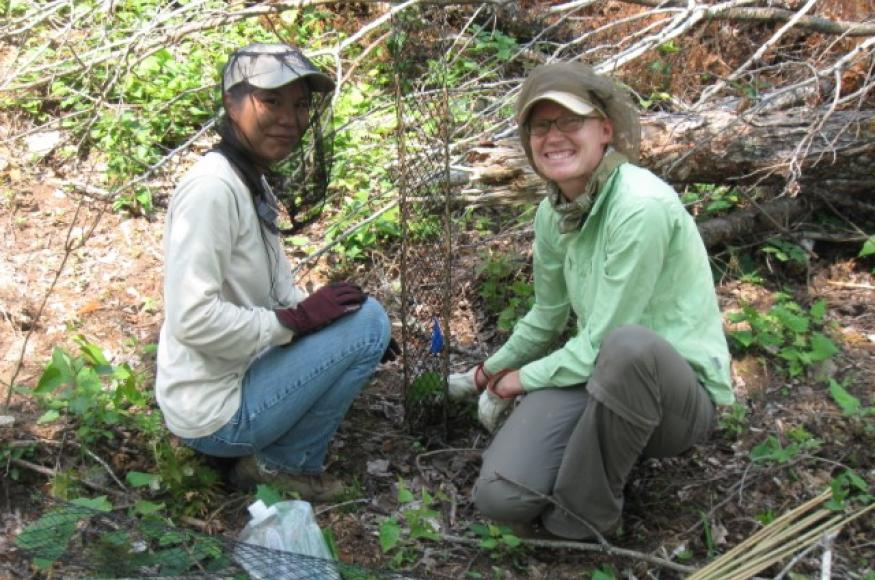
Seedlings were protected from deer herbivory with a combination of bud caps and tree tubes.
Forest Management Practices
Planting sites were selected because they had recently employed partial harvest methods such as patch clearcuts and group selection. Large seed trees and snags were retained at each site.
Monitoring
A subset of the project sites, including 4,600 seedlings, were designed as replicated studies. Follow-up monitoring is being coordinated in partnership between TNC and the University of Minnesota-Duluth. Monitoring variables include: and n May 2014, in addition to monitoring survival, growth, phenology, and other factors.
Survival and growth of planted seedlings, particularly comparing seedlings from southern seed zones to local seed zones.
Phenology of planted seedlings, such as leaf-out dates.
Morphology of planted seedlings
Project Videos
Keywords
Assisted migration
Genetic diversity
Planting
Research
Upland hardwoods