
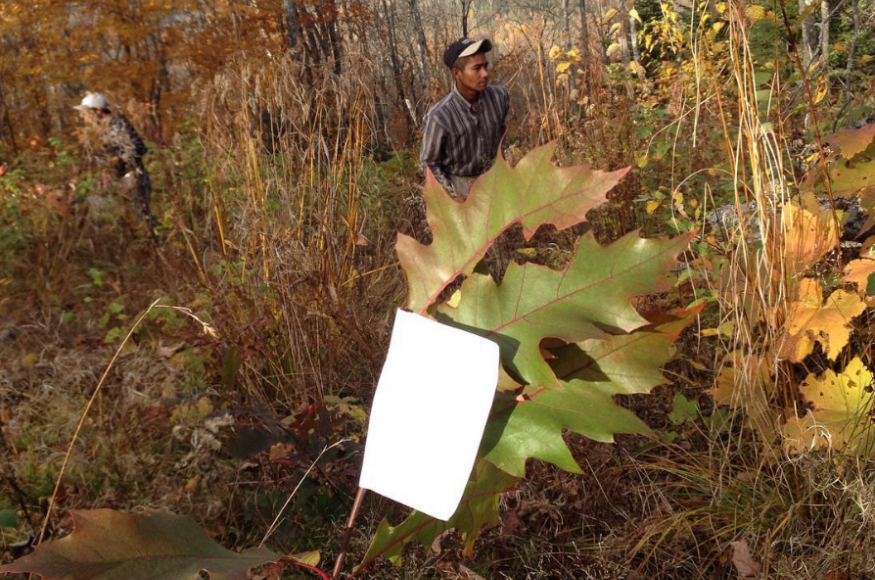

Project Area

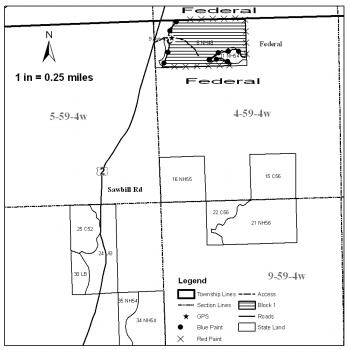 The DNR's Sawbill Hardwoods project occurred on a 57-acre stand of northern hardwoods in northeastern Minnesota. This stand is representative of a narrow band of northern hardwoods that parallels Lake Superior in this portion of the state. Prior to the project, this stand was 85-90% sugar maple and was lacking structural and species diversity.
Management Goals
The DNR's management goals for this northern hardwoods stand are similar for their goals in this forest type across the region. The goal is to increase species diversity and structural diversity while maintaining a healthy and productive forest. Specifically, the management objectives in this stand were to thin the stand down to 80 BA and to install several irregular canopy gaps. The gaps were created by harvesting mature paper birch, with the idea that the gaps will allow for natural regeneration of paper birch and also other shade-intolerant and mid-tolerant species (yellow birch, basswood, northern red oak, white pine, white spruce).
Climate Change Impacts
Challenges and Opportunities
Challenges
Opportunities
Adaptation Actions
Project participants used the Adaptation Workbook to develop several adaptation actions for this project. They found that many of the actions already planned for this stand have great win-win benefits for climate adaptation. After this site was intially harvested, the DNR was contacted by the Nature Conservancy (TNC) and this site was selected for follow-up planting with a mix of climate-adapted tree species: white pine, bur oak, and northern red oak. TNC arranged the planting of 40 seedlings of these species to be planted across the site, including 20 from the local seed zone and 20 from a seed zone further south in Minnesota. This follow-up planting added to a mix of adaptation actions on the site.
2.1. Maintain or improve the ability of forests to resist pests and pathogens.
9.1. Favor or restore native species that are expected to be adapted to future conditions.