
Project Area
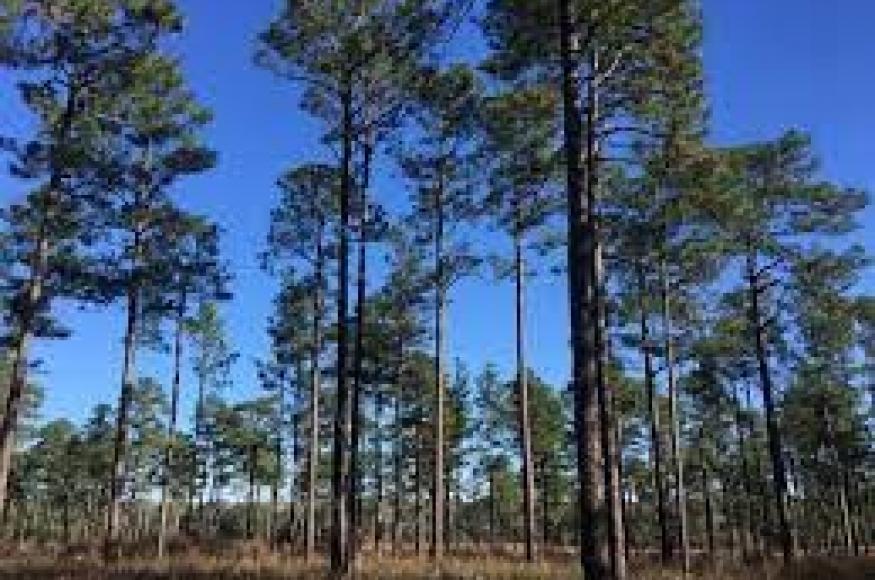
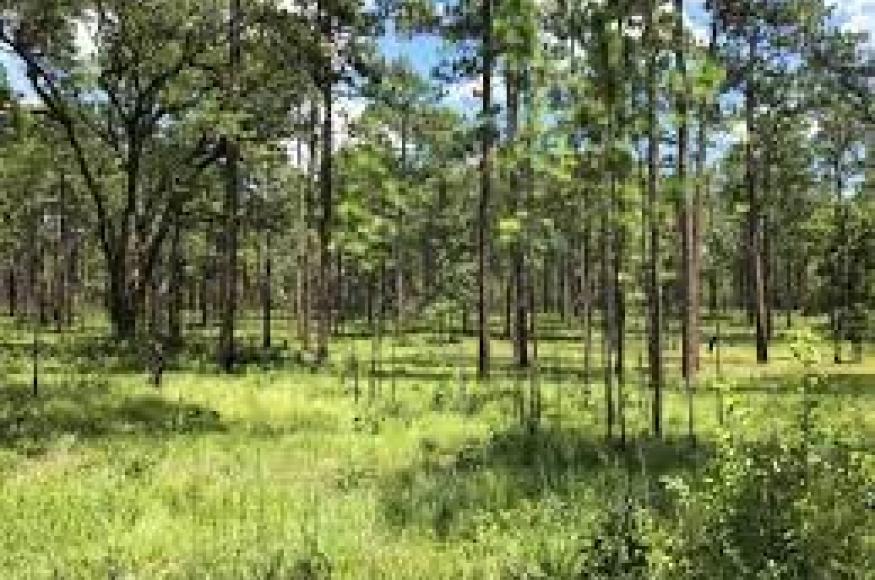
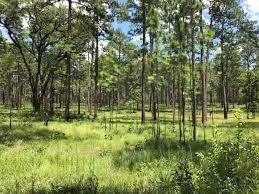
The Jones Center at Ichauway consists of a block of 29,000 acres within Southwestern Georgia, situated in the Dougherty Plains. This region has a diversity of trees such as the long-leaf pine forests, riparian hardwood forests, mixed pine forests, and depressional wetlands. Additionally, the reigon has shrub-scrub uplands, human cultural zones and agricultural tracts for farming. Notably, the Ichawaynochaway Creek passes through this region, and the Flint River is just 13 miles from the Jones Center’s borders.
Management Goals
This project aims to collaboratively start a series of experimental silvicultural trials within diverse ecosystems in the US. USDA Forest Service Land Managers, scientists, and other partners have commenced trial sites as part of a national study to conduct research on ecosystem responses relative to actions surrounding climate change adaptation.
Climate Change Impacts
Key projected climate change impacts that the project team considered for The Jones Center at Ichauway include:
Increased temperatures and drought severity
Changing precipitation amounts and extreme weather events
Increased insects, pathogens, and invasive species
Reduced ability to use prescribed fire as a management tool and potentially more wildfires
Challenges and Opportunities
Climate change will present challenges and opportunities for accomplishing the management objectives of this project, including:
Challenges
Altered vulnerability to future climatic conditions in pine plantations and hardwood forests
Increased mortality rates in pine species from drought
Increased abundance of hardwood stems of all size classes
Opportunities
Longleaf pines are highly resilient to drought and insect-induced mortality, and may be suitable on a wider range of sites under projected climate change
Adaptation Actions
Project participants used the Adaptation Workbook to develop several adaptation actions for this project, including:
Area/Topic
Approach
Tactics
Resistance
Clean out the oaks and off-site pines to enhance fuelbed characteristics and improve prescribed burning effectiveness
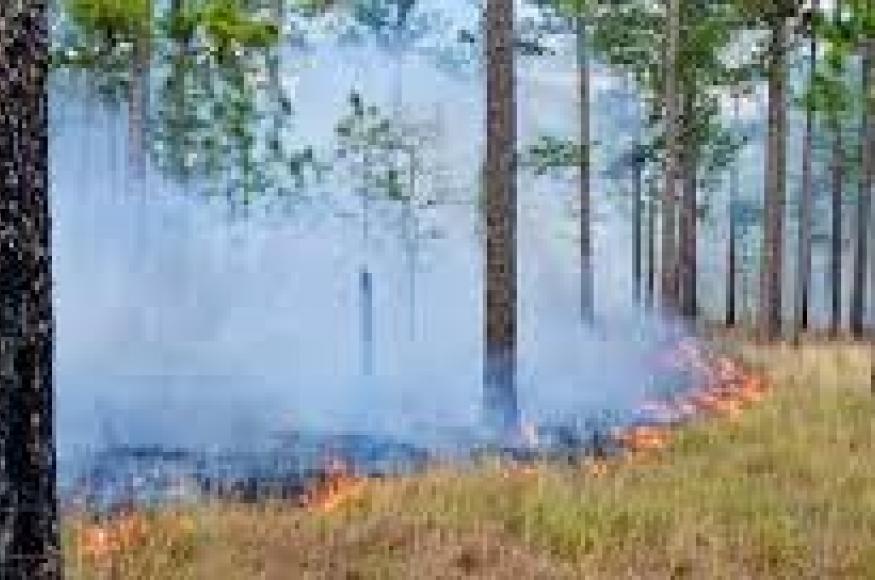
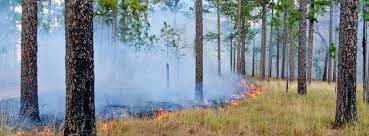
Prescribe burn every 2 years
Apply herbicide to stumps to discourage sprouting
Resilience
Forest Strategy 1: Sustain fundamental ecological functions.
1.4. Reduce competition for moisture, nutrients, and light.
1.5. Restore or maintain fire in fire-adapted ecosystems.
Forest Strategy 5: Maintain and enhance species and structural diversity.
1.4. Reduce competition for moisture, nutrients, and light.
1.5. Restore or maintain fire in fire-adapted ecosystems.
Forest Strategy 5: Maintain and enhance species and structural diversity.
Thin longleaf pine to 50 ft2/acre, removing other pine species
Prescribe burn every 2 years
Retain upland and xeric oaks up to a maximum of 10ft2/acre
Remove mesic oaks which consume a lot of water
Transition
Forest Strategy 5: Maintain and enhance species and structural diversity.
Forest Strategy 9: Facilitate community adjustments through species transitions.
9.6. Manage for species and genotypes with wide moisture and temperature tolerances.
7.3 Introduce species, genotypes, and cultivars that are expected to be adapted to future conditions.
Forest Strategy 9: Facilitate community adjustments through species transitions.
9.6. Manage for species and genotypes with wide moisture and temperature tolerances.
7.3 Introduce species, genotypes, and cultivars that are expected to be adapted to future conditions.
Thin longleaf pine to 30 ft2/acre, removing other pine species
Remove mesic oaks
Plant drought-tolerant, fire-facilitating oaks (turkey oak) and warm season C4 grasses (wiregrass)
Prescribe burn every 2 years
Monitoring
Monitoring is an essential component of the ASCC study. Research partners from several institutions are working together to investigate the effectiveness of different silvicultural treatments aimed at creating adaptive ecosystems. Some of the monitoring items include:
Fuel bed continuity and the effectiveness of burning
Diversity of groundcover and woody understory plants
Stand-level water use and the yield
Canopy tree growth
Activity patterns of small and large animals
Learn More
Keywords
Fire and fuels
Oak
Plantations
Research