


Project Area

 Hennepin County is the most populous county in Minnesota, and includes its largest city: Minneapolis. The county maintains a gravel bed nursery, located at the Hennepin County Adult Corrections Facility in Plymouth, MN. The gravel bed nursery gives the county access to hardy, diverse and cost-effective trees for use on county projects and properties. Additionally, these trees are being planted to replace ash trees that are removed due to emerald ash borer.
Every spring, 1,500 young trees, ranging from 3’ to 15’, are purchased from commercial nurseries and placed in the gravel bed. For 2017, Hennepin County is using 59 species. During the summer, trees will grow and develop a good root structure so they are ready to be transplanted in the fall.
Management Goals
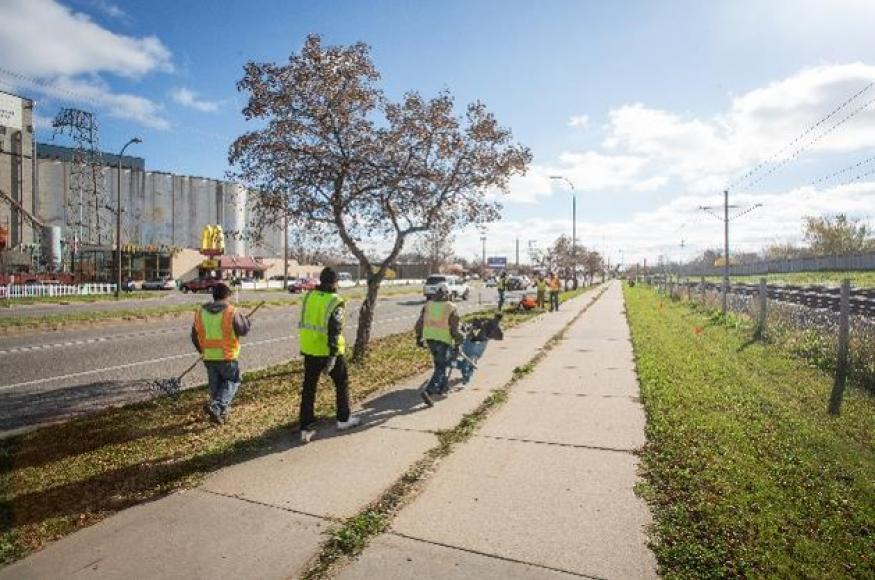
The goal for this project is to provide healthy trees at a low cost that will have a high rate of survival when planted into the landscape. The tree canopy in Hennepin County faces a number of threats, including development, insects and diseases, climate extremes, and poor installation and maintenance. All of the ash trees in the county are threatened by the emerald ash borer. There are more than 1 million ash trees in yards, parks and streets in Hennepin County, making up about 15 percent of the tree canopy.
Trees infested with the emerald ash borer (EAB) have been found in several locations in Hennepin County, including Minneapolis, Plymouth, and Maple Grove. Because it can take several years to detect an emerald ash borer infestation, the impact is probably more widespread. It is likely that the number of ash trees infested and dying from the emerald ash borer will increase greatly in the next five years.
To replace canopy lost from EAB and reduce long-term risks to pests, the county has the following goals:
- Increase plant diversity for each project. Hennepin County has a recommended tree list for facilities and transportation projects. Diversity guidelines are important and we encourage projects to follow the “20-10-5” rule (no more than 20% of one family, 10% of one genera, 5% of one species be planted in a given geographic area)
- Plant non-traditional and neo-native tree species that are native to warmer hardiness zones
- Increase the total number of trees planted to replace the trees being lost to emerald ash borer
- Increase survival of newly planted trees through the use of a gravel bed nursery
Climate Change Impacts
For this project, the most important anticipated climate change impacts include:
Loss of vulnerable species. that are unable to adapt to a changing climate
More competition with invasive species that can take advantage of a longer growing season
Rising temperatures and changing hardiness zones. Warmer winters lead to more pest and disease issues.
Changes in precipitation patterns with heavy, intense rainfalls that runoff rather than soaking the soil. Longer drought periods will increase stress in trees.
Challenges and Opportunities
Climate change will present challenges and opportunities for accomplishing the management objectives of this project, including:
Challenges
Drier conditions later in the growing season could dry out gravel beds and require more irrigation.
Hot, dry conditions could make seedling establishment and transplanting difficult, especially in areas with a strong heat island effect.
Although winters will be warmer on average, some extreme cold conditions could occur, limiting opportunities for southern species.
Opportunities
Milder winters could allow planting of species adapted to warmer climates.
Can increase overall canopy diversity by planting a wider range of species.
Earlier spring tree planting season and later fall tree planting season will allow for more trees to be planted each year.
Adaptation Actions
Project participants used the Adaptation Workbook to develop several adaptation actions for this project, including:
Area/Topic
Approach
Tactics
2.1. Maintain or improve the ability of forests to resist pests and pathogens
5.2. Maintain and restore diversity of native species
5.2. Maintain and restore diversity of native species
encourage projects to follow the “20-10-5” rule (no more than 20% of one family, 10% of one genera, 5% of one species be planted in a given geographic area)
Collect and plant hickory seeds from southern Minnesota and Iowa
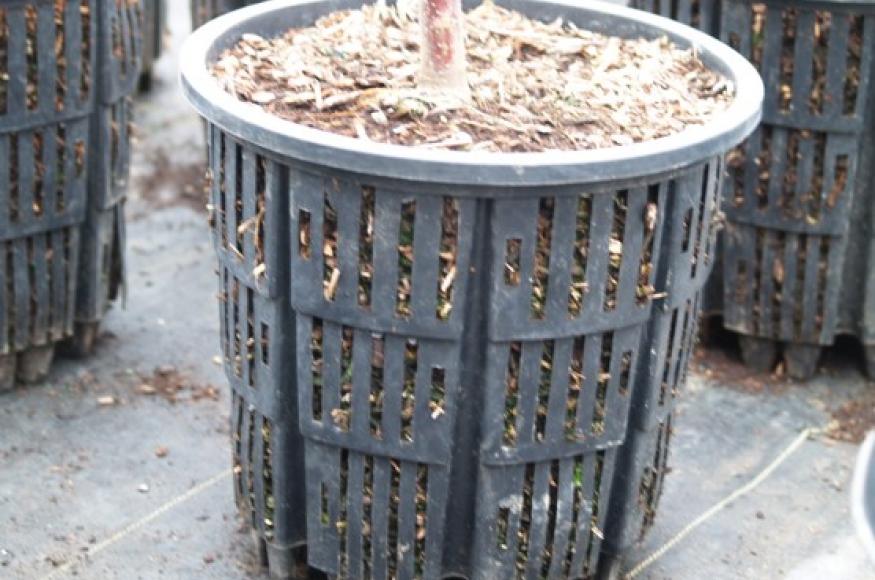
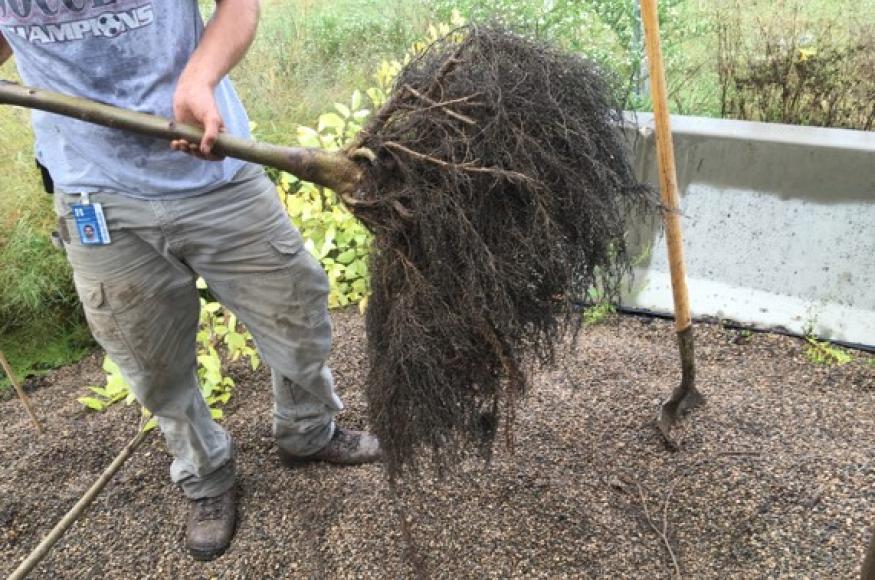
Use root-pruning grow pots to eliminate tap roots
Plant trees not common to urban plantings in the county, such as Manchurian alder, Hardy rubbertree, Dawn redwood, London Planetree, Shingle oak, Bald cypress, Cucumber Magnolia, Tulip Tree, Katsura, Osage orange, and Turkish hazel.
Grow in gravel bed nursery to develop strong root structure
Monitoring
Hennepin County will monitor growth rates and survival of gravelbed trees planted in the landscape. This information will be compared to other planting methods to determine the success of gravel bed trees. Additionally, the information collected will then be analyzed to understand the success rates of planting more southern species and which types are most successful.
Learn More
Keywords
Assisted migration
Planting
Urban