

Project Area

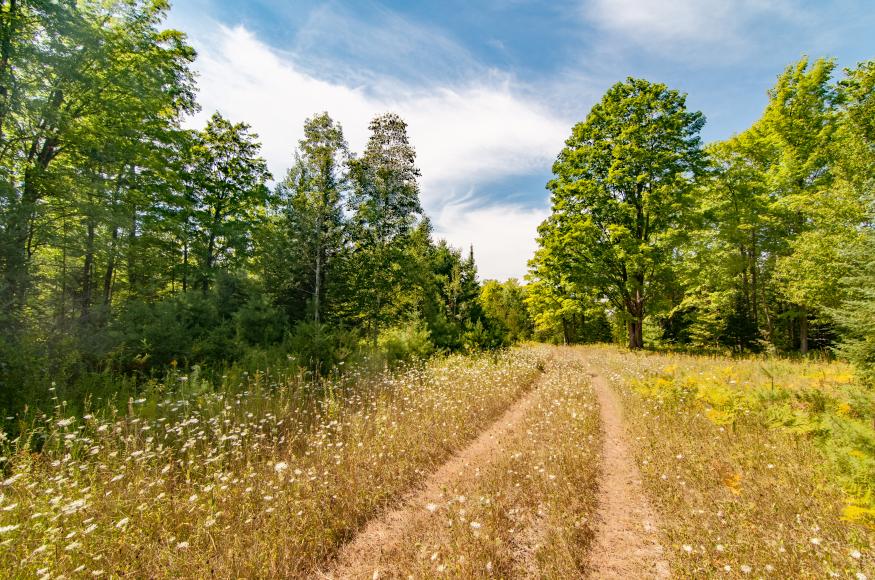
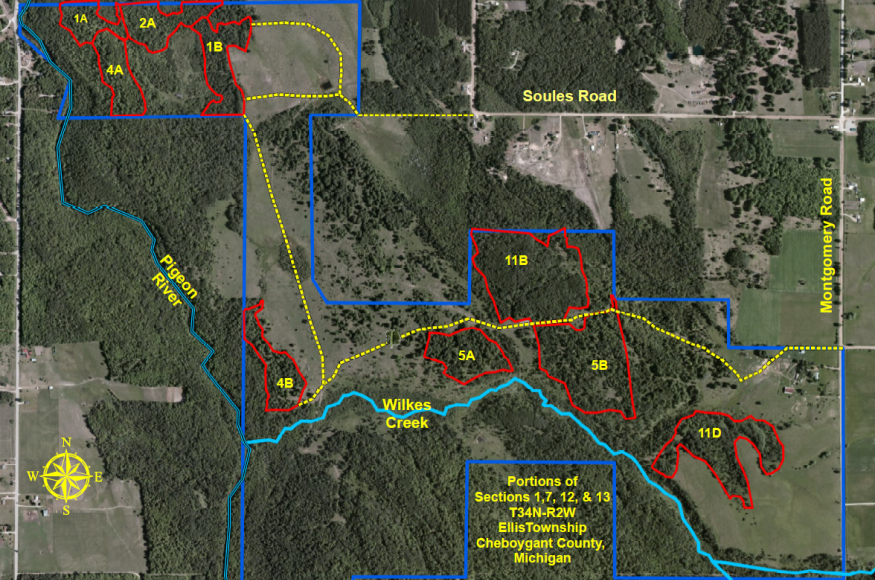
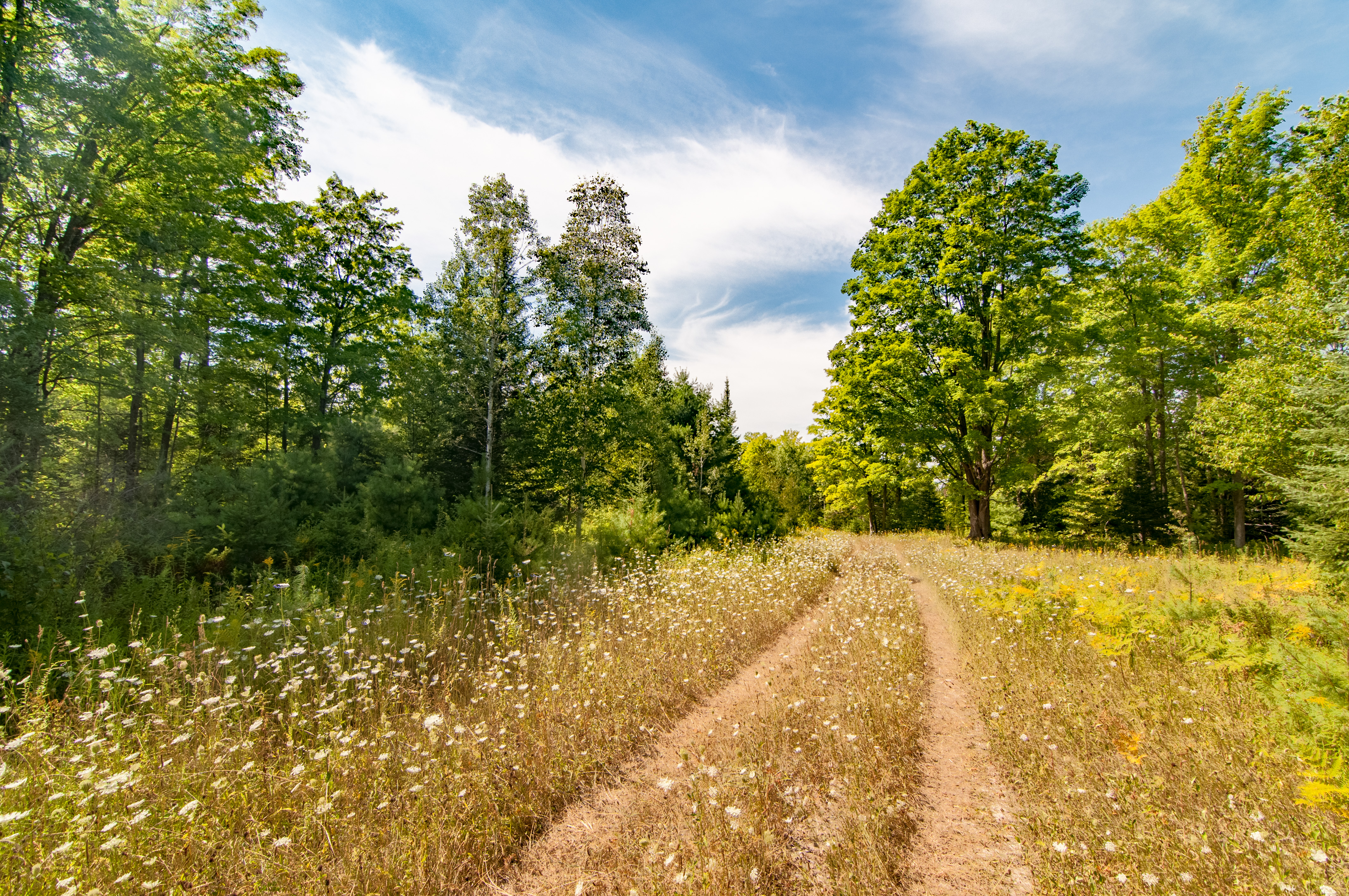
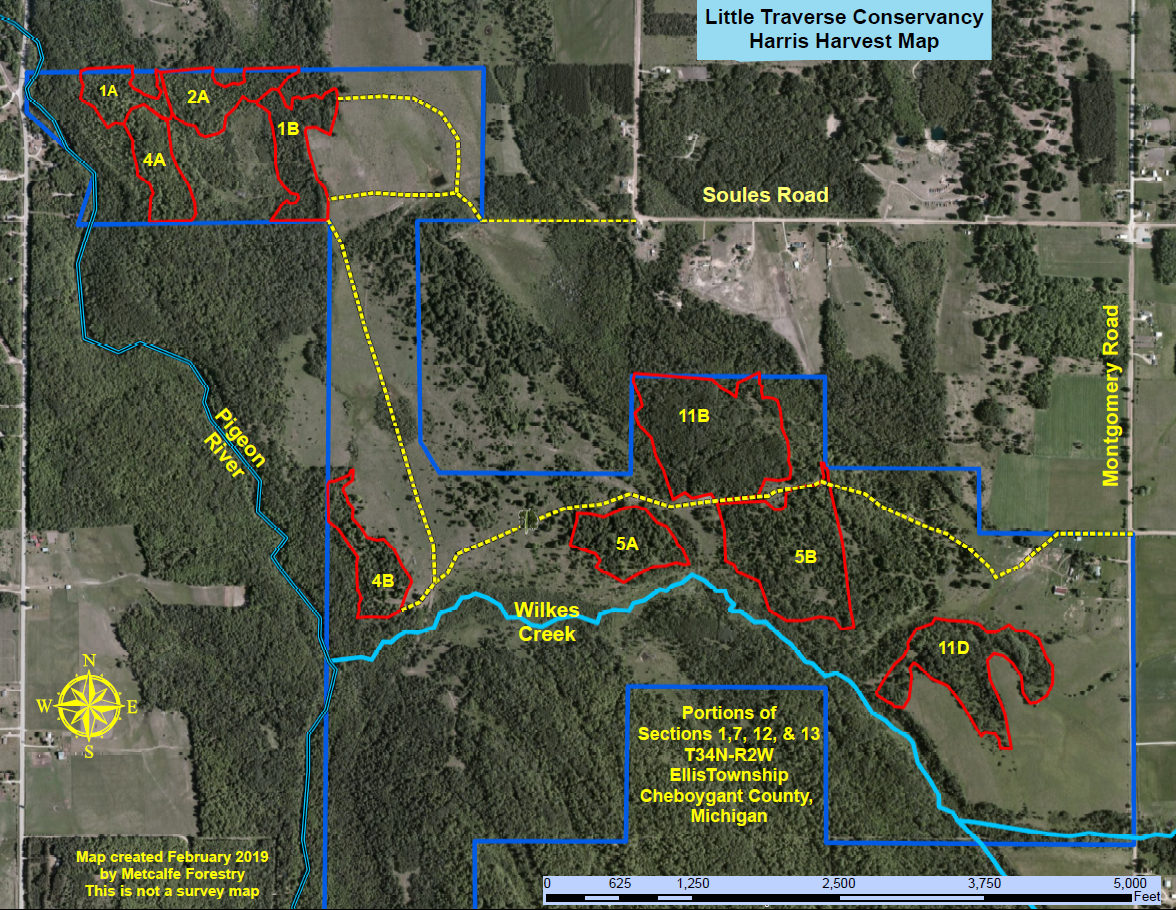
 The Harris Working Forest Reserve covers 645 acres in Michigan's Cheboygan county, near the northern tip of the Lower Peninsula. This property is adjacent to the Pigeon River, a state-designated Natural River and a blue-ribbon trout stream. It's also near the Pigeon River Forest, a special area of limited development, special management areas, and the largest wild elk herd in the eastern US. The Harris Reserve is also next to several Nature Preserves owned managed by the Little Traverse Conservancy, including the Reed's Pigeon River Nature Preserve, Helmers Dam Nature Preserve, and the Banwell Nature Preserve. This property has a mix of forest types, including aspen and northern hardwoods. The Harris Reserve has a history of grazing, which has led to some areas of compacted soils.
Management Goals

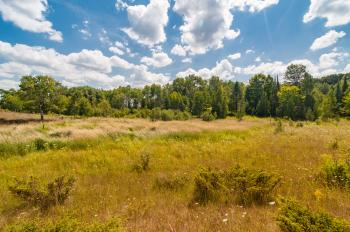
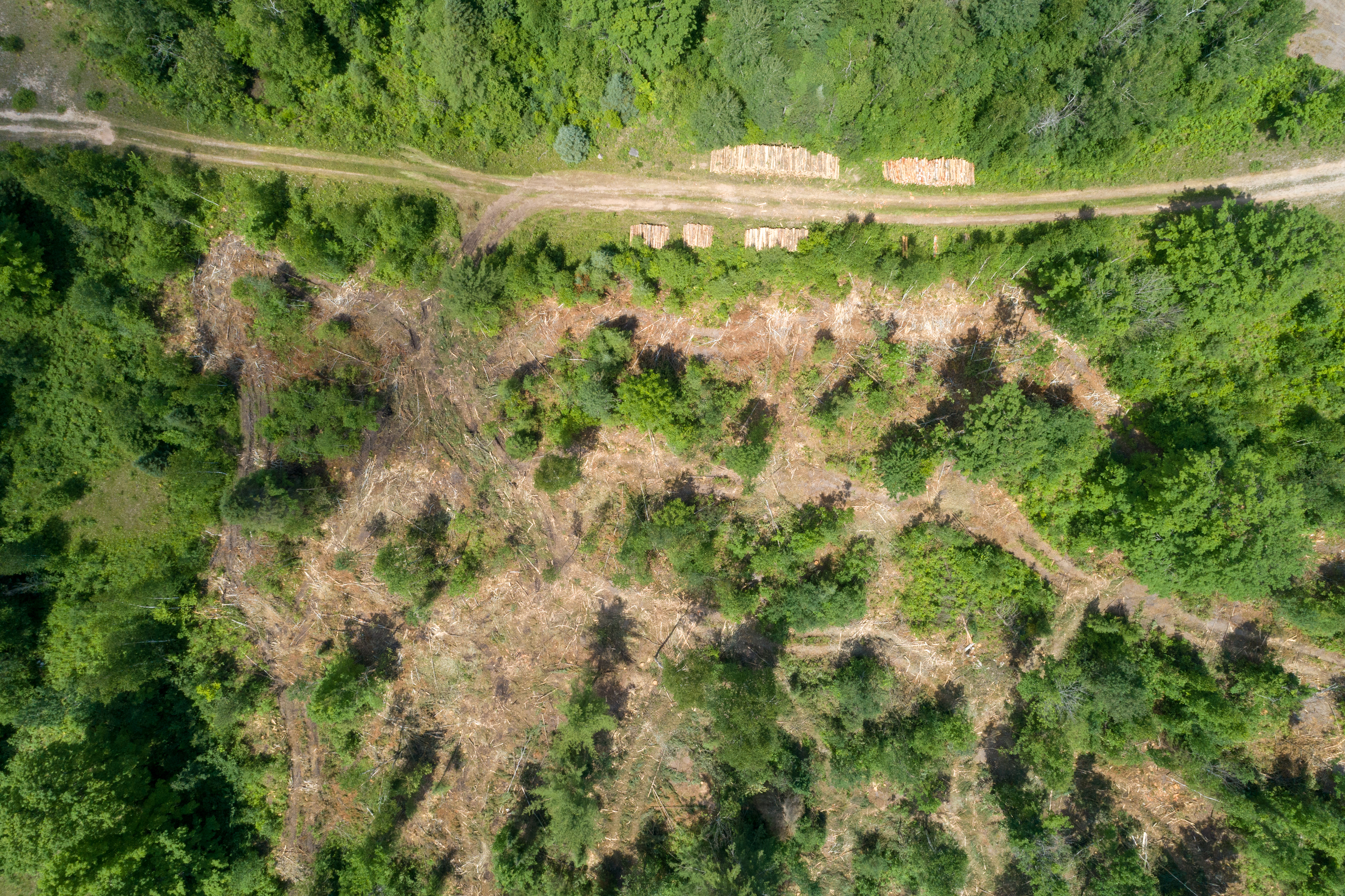
The Little Traverse Conservany identifies conservation values that are important for each of their preserves. For the Harris Working Forest, early-successional habitat for upland game birds is a value that the Conservancy will attempt to maintain through time through active management. The management plan for the reserve includes the following general management objectives:
- Protect natural resources, biological diversity, and scenic beauty (Conservation Values)
- Ensure public access
- Create non-motorized public recreation opportunities
- Manage the forest for wildlife and ecosystem health through timber and grassland management
Climate Change Impacts
For this project, the most important anticipated climate change impacts include:
Extreme heat events may become more frequent in this part of the state.
Boreal plant and animal species may face additional stress under climate change.
Insect pests and invasive species may become more damaging in the future.
Challenges and Opportunities
Climate change will present challenges and opportunities for accomplishing the management objectives of this project, including:
Challenges
It may become harder to regenerate aspen for early-successional habitat in the future
The forests on this property are already slightly degraded with invasive species due to the grazing history.
Opportunities
Other tree species can likely provide early-successional habitat in the future.
A longer growing season may benefit plants and animals in northern Michigan.
Adaptation Actions
Project participants used the Adaptation Workbook to develop several adaptation actions for this project, including:
Area/Topic
Approach
Tactics
Upland game bird habitat
5.1. Promote diverse age classes.
6.1. Manage habitats over a range of sites and conditions.
9.8. Move at-risk species to locations that are expected to provide habitat.
6.1. Manage habitats over a range of sites and conditions.
9.8. Move at-risk species to locations that are expected to provide habitat.
Create patches of early-successional forest in several locations across the property.
Create patches of young forests with species like maples that are expected to fare better under climate change.
9.3. Guide changes in species composition at early stages of stand development.
9.4. Protect future-adapted seedlings and saplings.
9.4. Protect future-adapted seedlings and saplings.
Encourage existing regeneration of red oak and other potential increasing species that provide mast for wildlife.
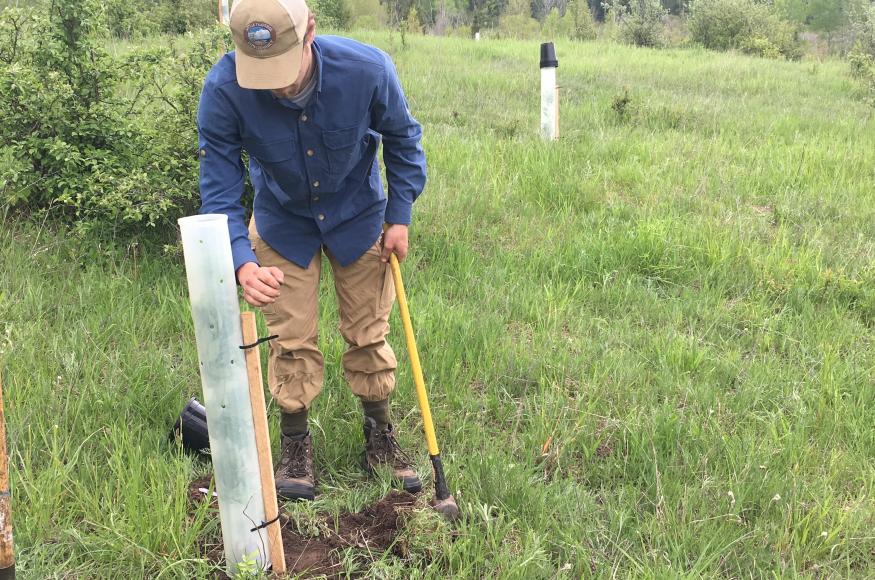
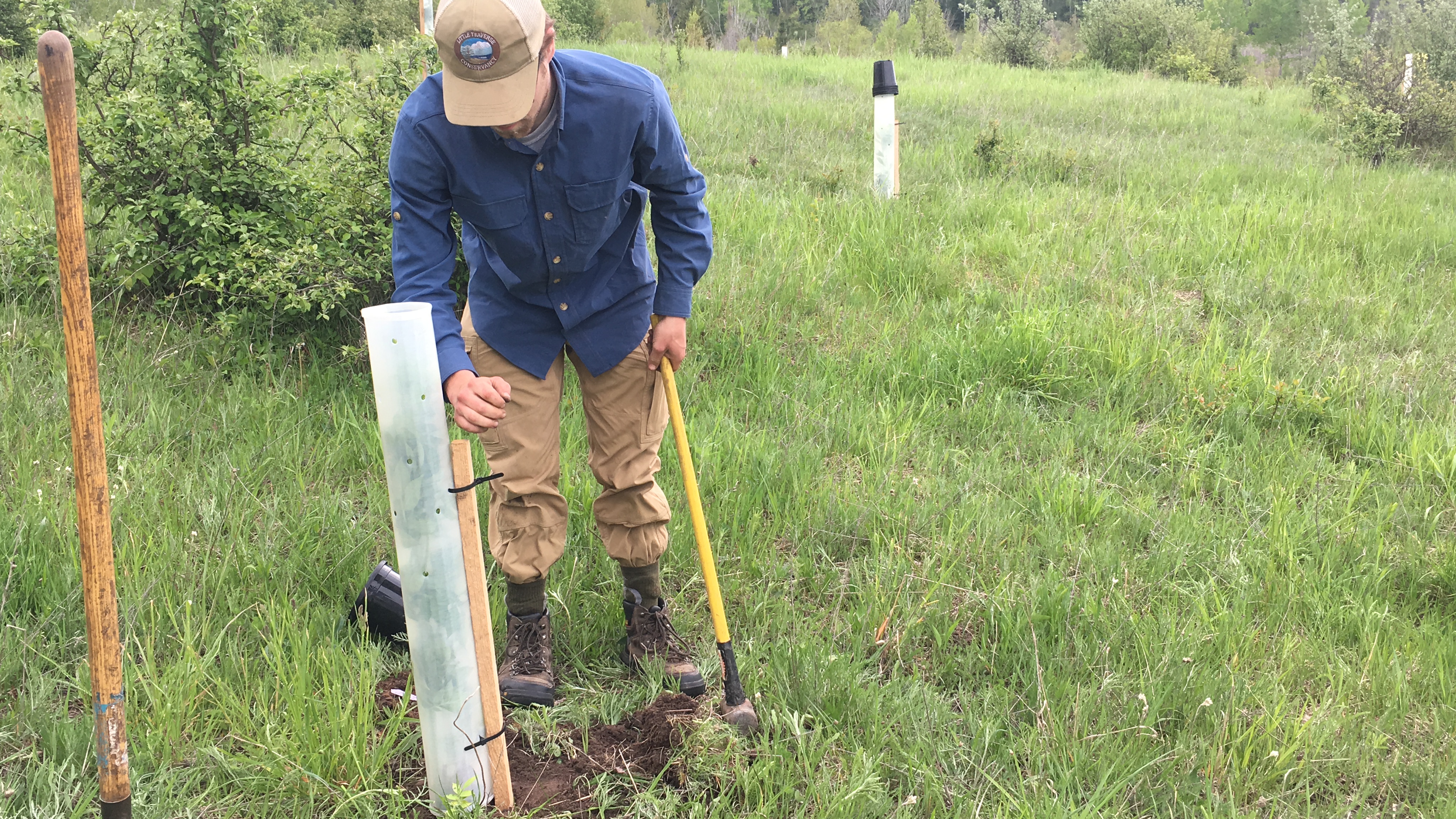
Plant white oak and other mast-producing species.
Consider managing for oak-pine barrens or savanna systems in areas that have been degraded.
Landscape-level planning
6.2. Expand the boundaries of reserves to increase diversity.
7.2. Maintain and create habitat corridors through reforestation or restoration.
7.2. Maintain and create habitat corridors through reforestation or restoration.
Establishing the Harris Reserve further expands the corridor of protected areas along the Pigeon River and across the Pigeon River Country in general. This property also connects riparian habitats to upland habitats.
Project Documents
Learn More
Keywords
Early-successional habitat
Invasive species
Management plan
Upland hardwoods
Wildlife habitat