• Start-up
  • Planning
  • Action
  • Evaluation
Researchers from the University of Vermont have partnered with Dartmouth College Woodlands, Vermont Forests Parks and Recreation, Vermont Fish and Wildlife, Vermont Land Trust, and Red Start Natural Resources in order to respond to the threat of emerald ash borer and climate change impacts at the Dartmouth College Woodlands. Ash trees make up roughly 40% of the canopy, and the nearest emerald ash borer infestation is only 5 miles away. Three experimental treatments and a control plot will help researchers understand how different management actions can contribute to the resilience of forests affected by EAB.

Project Area

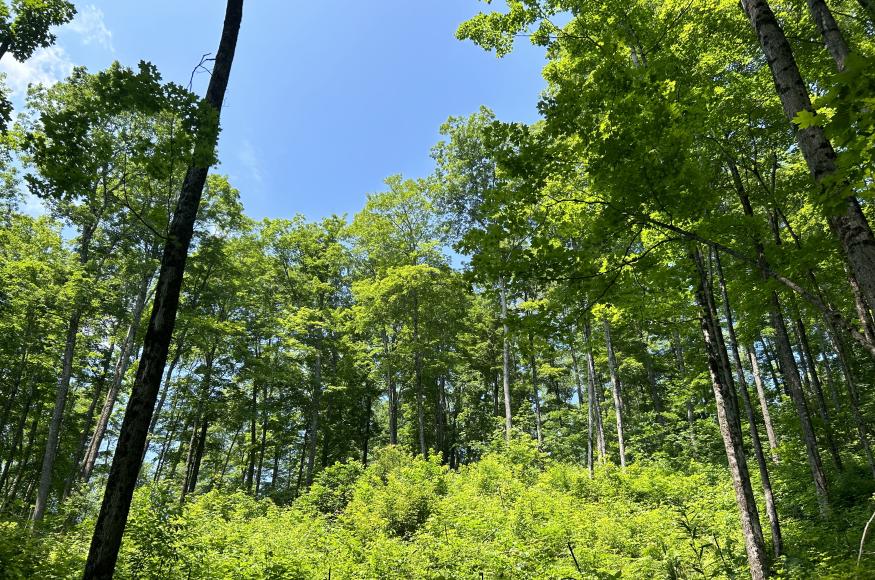
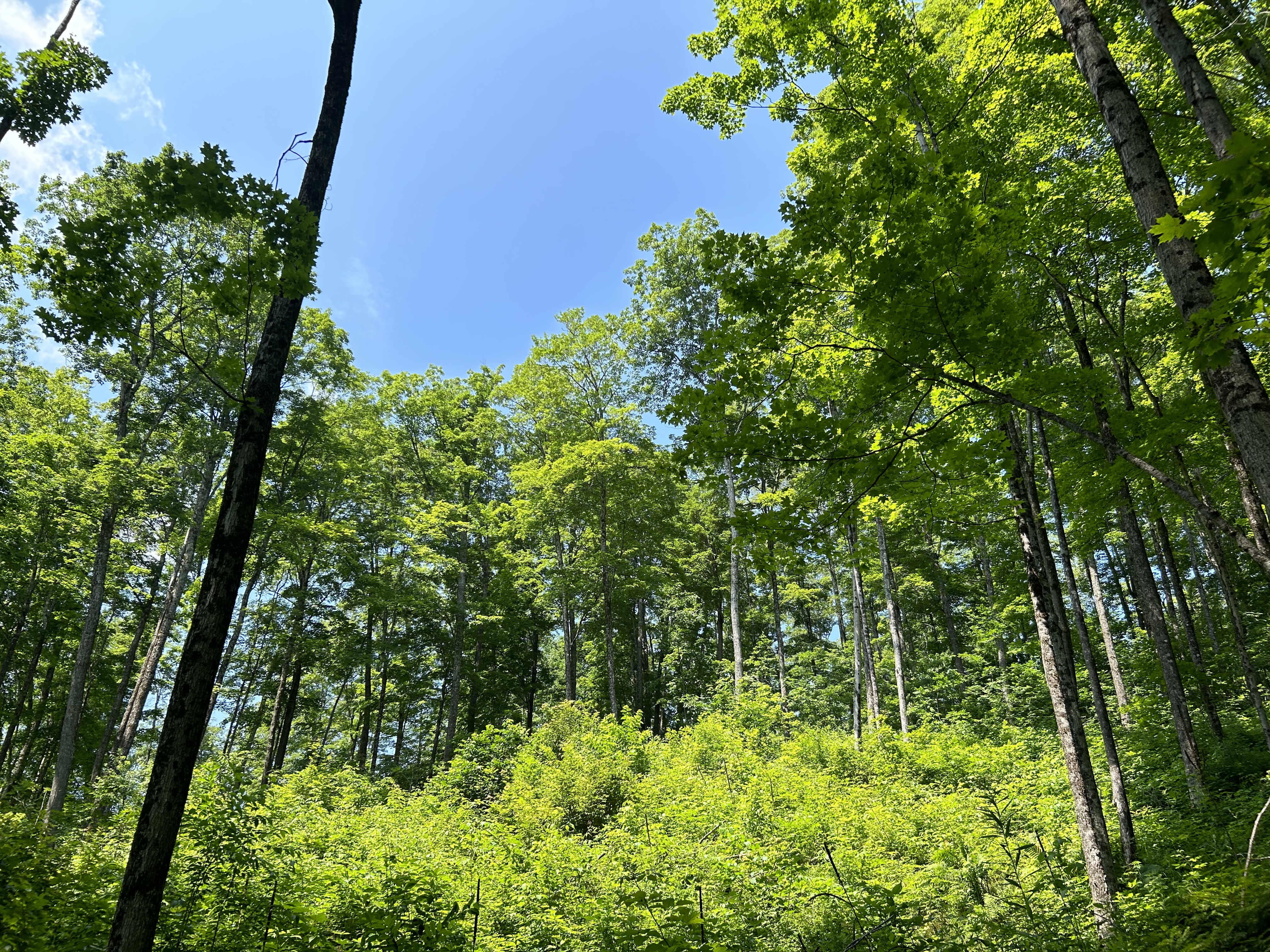
The Clement Woodlot is in a remote, densely forested area of Corinth, Vermont. The 700 acre property was given to Dartmouth college in the 1920’s and was conserved with the Upper Valley Land Trust in 2008. The property is actively managed for timber, and mainly supports sugar maples, yellow birch, and a high-percentage of white ash.

Management Goals

Specific management goals for the project area include:

  • Increase compositional and structural complexity, as well as age class diversity
  • Maintain and encourage white ash across size classes
  • Ensure presence of advance regeneration to allow recovery following disturbance
  • Encourage a diversity of microhabitat conditions to maintain and enhance abundance of understory vascular plants associated with rich wood communities, including those of cultural significance to the Cowasuk Band of Abenaki
  • Increase density of large cavity trees for woodpeckers and other cavity nesting species
  • Create and enhance diversity in vertical and horizontal structure for forest songbirds
  • Enhance stability of selected carbon pools (e.g., soils and forest floor) while encouraging accretion in others (e.g., living and dead biomass)

Climate Change Impacts

Climate change is expected to impact forest ecosystems in Vermont into the future. These include warming of 5.3 to 9.1 °F by late century (2071-2100), with fewer days below freezing and an increase in the growing season by three weeks. On average, the climate is projected to get wetter with more frequent and damaging extreme storms, including intense rainfall that may cause soil erosion. Timing of precipitation is expected to change, with longer periods between rain events increasing the risk of moisture deficits and drought during the growing season. These changes may affect invasive plant and pest and disease pressure on forests in addition to limiting opportunities for winter harvesting. Northern species such as sugar maple, yellow birch, and white birch that comprise much of the canopy on the site are predicted to decline in the region. Northward migration of future-adapted species may be slower than the expected changes in climate that would create suitable habitat for these species, resulting in declining forest health and productivity over time.

Adaptation Actions

Project participants used the Adaptation Workbook to develop several adaptation actions for this project, including:

Area/Topic
Approach
Tactics
Forest
Implement group selection cutting:
20% of the area in 0.1-0.25 ac gaps in areas of advance regeneration or where little regeneration exists beneath groups of economically mature trees, including ash
Crop-tree release in remaining matrix to maintain 70-80 ft2/ac BA, mark for quality and longevity, female ash, resistant crown forms, retain all basswood
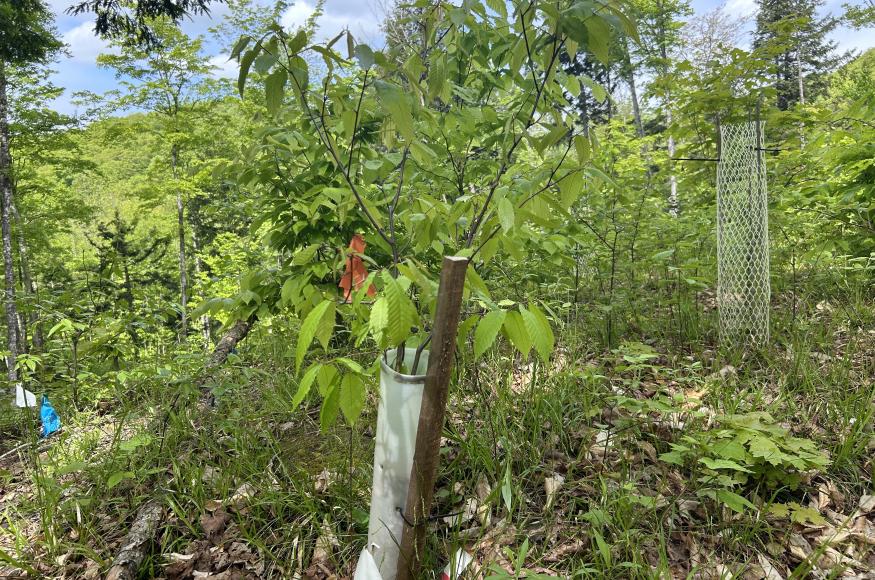
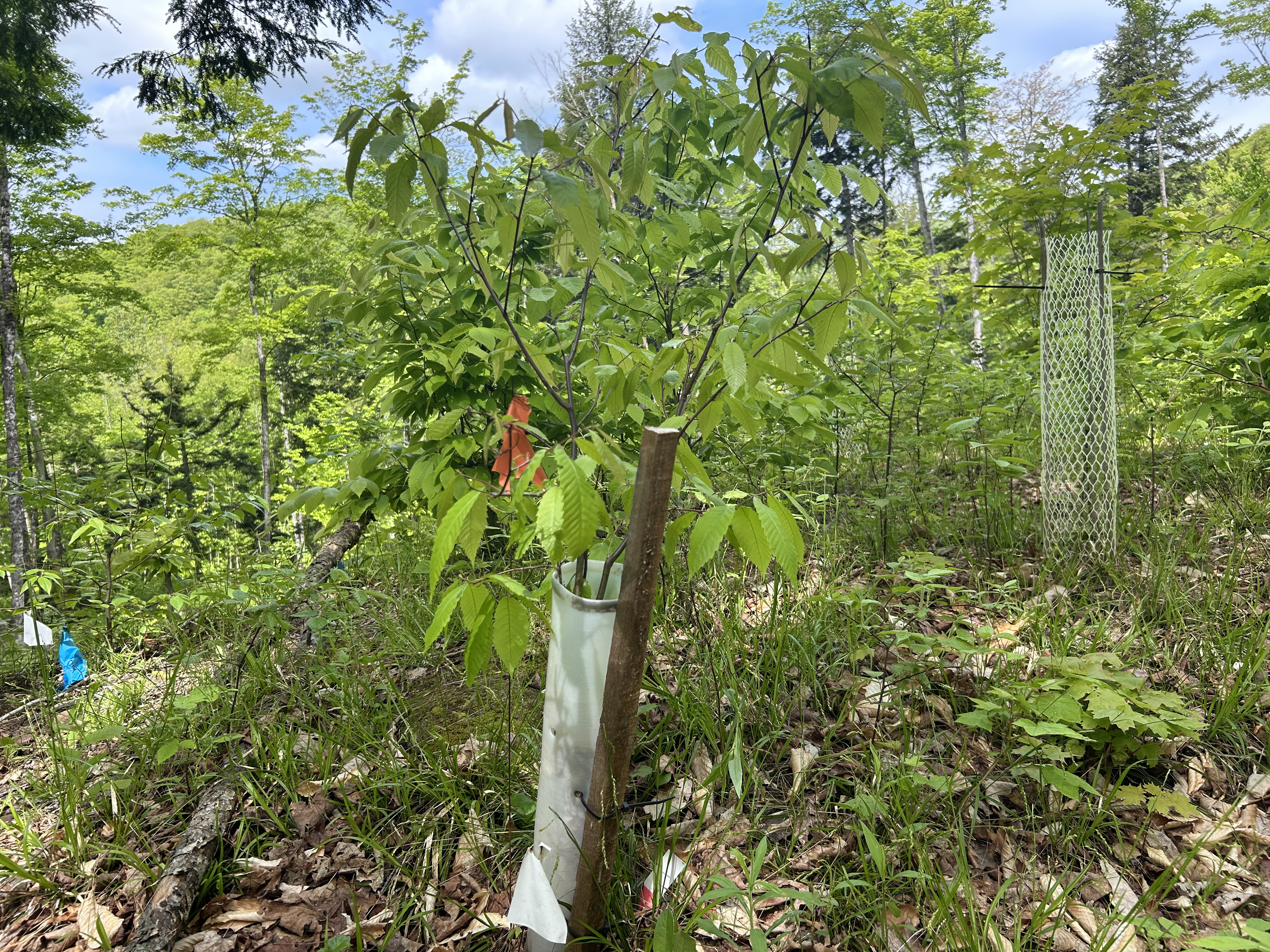
Plant seedlings of future-adapted northern hardwood species found on site in low abundance (red oak, black cherry, basswood) or nearby northern hardwood species expected to gain suitable habitat (bitternut hickory, black birch, American chestnut)
Leave 4 large (> 14 inches DBH) white ash as reserves per acre to recruit for future snags and downed dead wood
Retain slash on site to minimize herbivory in gaps and erosion – stipulate that limbing occurs in forest
Contour-fell 3-5 whole trees per acre (large, low value) for downed dead wood
Reserve existing cavity trees

Monitoring

Project participants identified several monitoring items that could help inform future management, including:
Forest vegetation, including understory communities
Breeding bird communities
Forest carbon, including soil pools
Non-native earthworms
Planted seedlings
Mammal communities

Next Steps

Adaptive strategies sustained a high representation of white ash across size classes and have served to recruit new ash cohorts, in addition to sugar maple and yellow birch. Initial planted seedling survival has been high across planted species (92% basswood, 94% red oak, 96% black cherry, 77% American chestnut, 85% bitternut hickory, and 71% black birch).

Last Updated