


Project Area

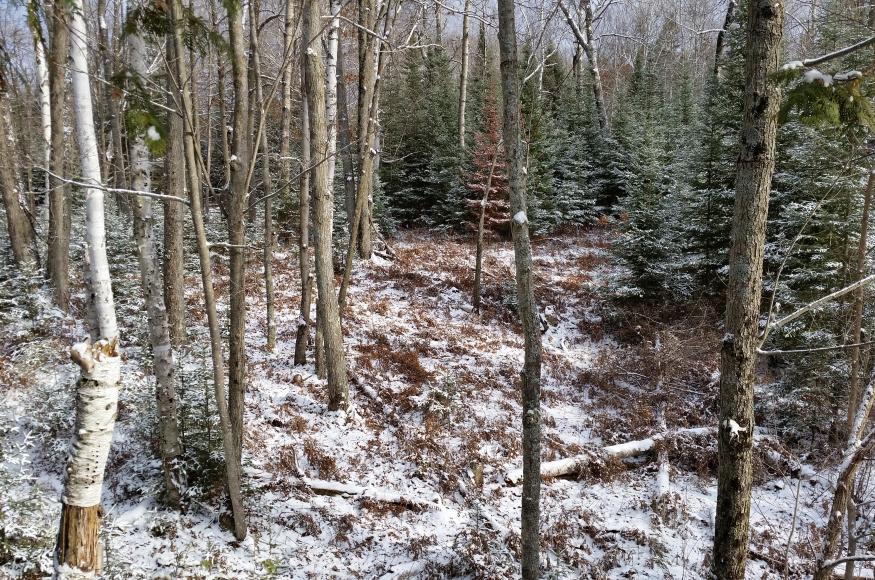
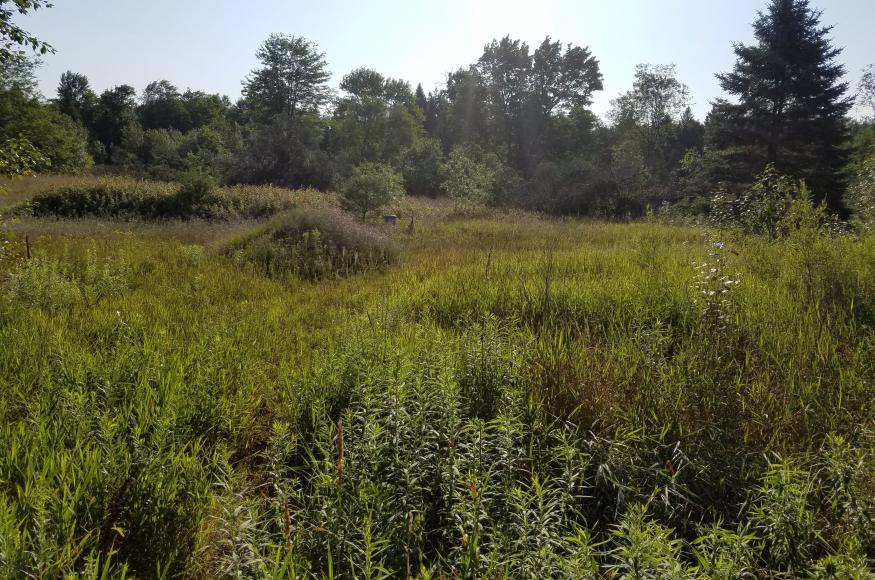
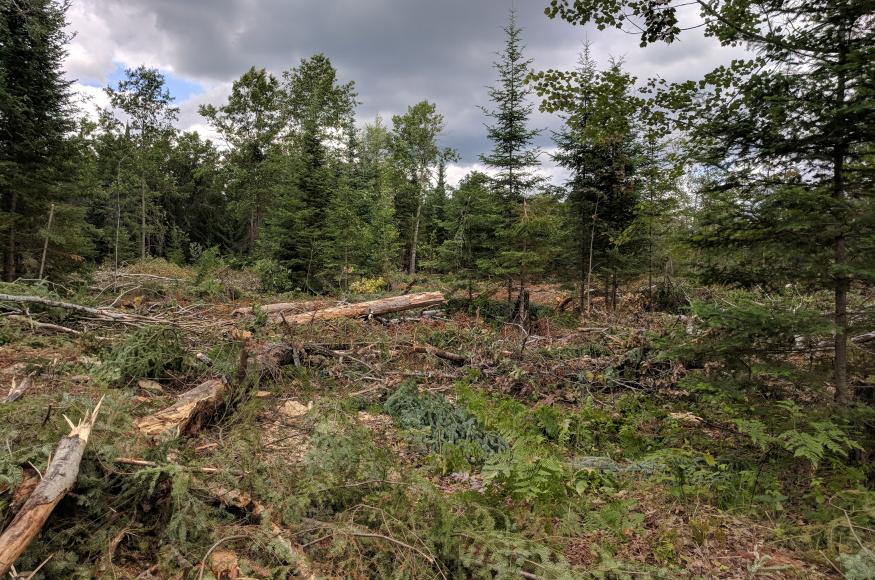
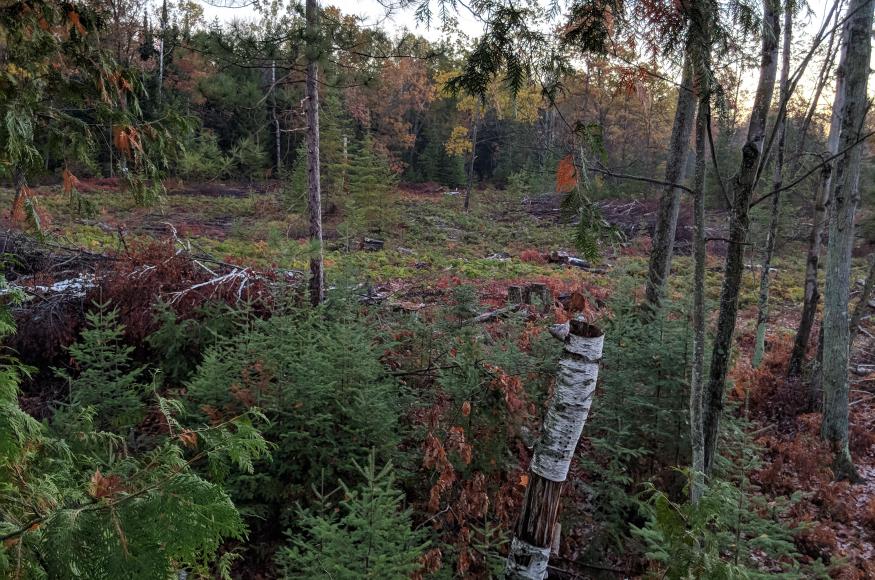
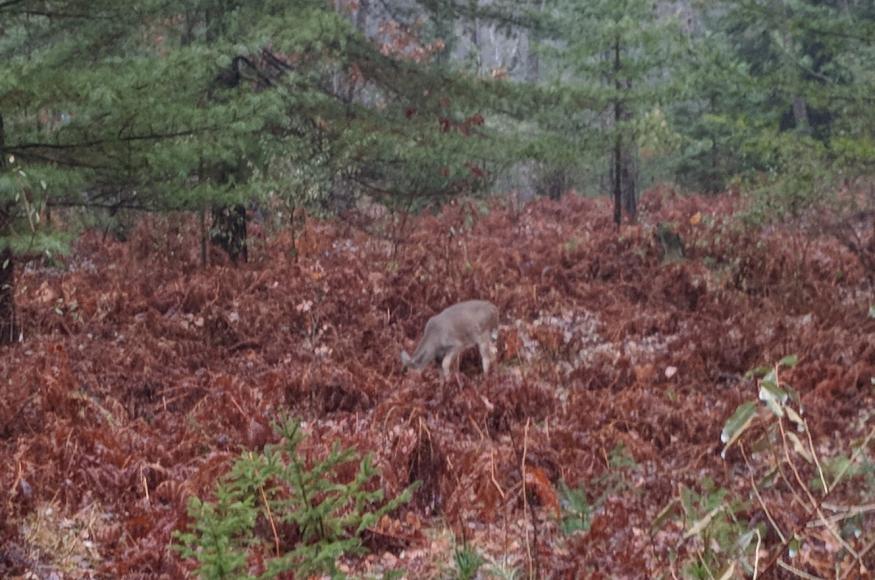
 The majority of the 40 acres owned by CJO Trust in this location is forested, except for a small patch on the southeastern end. The property has been in the family for several generations, and has been mostly unmanaged, except for early plantings of Scotch pine and use of the property for hunting deer. It was enrolled in 2017 in the Natural Resource Conservation Service's Environmental Quality Incentives Program, as well as the MI DNR's Qualifed Forest Program, resulting in a 10-year forest management plan, which was adapted to address climate change impacts. There are two main stands included in this project: Stand 1 has the majority of the acreage and is composed mostly of a Dry to Dry-Mesic Mixed Forest community, northern hardwood forest in the mid-to-late successional stage. Soils in this stand consist mainly of deep, well-drained soils formed in sandy and gravelly outwash. Prior to harvest, the dominant canopy tree species consisted of aspen, red maple, and northern pin oak, with a mix of conifers (pines and white spruce). In 2018 there was an initial harvest in this stand, removing mostly decadent aspen and birch, some pines, and firs. Many wildflowers can be found throughout this stand in the spring, including trout lily, creeping strawberry, mayapple, bloodroot, trillium, and spring beauty. Where present, tree regeneration consists mainly of red maple, cherry, and balsam fir, found within the .5-2” diameter classes. Autumn olive and Scotch pine are present in this stand and are considered non-desirable invasive species targeted for removal. Stand 2 occurs on very deep, very poorly drained organic soils, and is classified as wetland under the NWI and MI NFI (Northern Hardwoods Swamp, black ash subtype). Historically dominated by black ash (now dead due to Emerald Ash Borer), the stand currently consists mostly of standing snags, speckled alder, Michigan holly, aspen and white spruce. The understory consists mainly of cattails and other wetland shrubs, grasses, and sedges typical of black ash swamps. There are currently no invasive species noted in Stand 2.
Management Goals
Stand 1 - Dry-Mesic Mixed Forest
Goal 1: Enhance and promote wildlife habitat
Objectives:
- Maintain recruitment of conifers, red maple, black cherry, and oak species (red oak, burr oak, northern pin oak) as regeneration in the 0.5 - 2" diameter class, in the range of 70 - 90 trees per acre for those species. (3 - 5 years post harvest).
- Plant seedlings of desired species for future stand development, including red oak, burr oak, aspen, white oak, white pine, white spruce, serviceberry, witch hazel, dogwoods, and apples (~109 trees/shrubs per acre).
Goal 2. Minimize invasive species population
Objective: Eliminate all standing Scotch pine (Pinus sylvenstris) on the property and reduce cover of autumn olive from 30% to <10% cover.
Stand 2 - Black Ash Swamp
Goal 1. Enhance and promote wildlife habitat
Objective: Plant seedlings of desired species for future stand development in surrounding areas, including red oak, burr oak, aspen, white oak, white pine, white spruce, serviceberry, witch hazel, dogwoods, and apples (~109 trees/shrubs per acre).
Goal 2. Maintain wetland functions and protect water quality
Objectives:
- Restore tree cover through planting species likely to survive wetland conditions and be adapted to future climate impacts
- Monitor the stand for invasive species establishment (Phragmites sp., Phalaris sp.) and document with GPS presence of any found. (1x/year)
Climate Change Impacts
Challenges and Opportunities
Challenges
Opportunities
Adaptation Actions
Project participants used the Adaptation Workbook to develop several adaptation actions for this project, including:
2.3. Manage herbivory to promote regeneration of desired species.
9.1. Favor or restore native species that are expected to be adapted to future conditions.
9.2. Establish or encourage new mixes of native species.
9.3. Guide changes in species composition at early stages of stand development.
9.7. Introduce species that are expected to be adapted to future conditions.
9.4. Protect future-adapted seedlings and saplings
5.2. Maintain and restore diversity of native species.
5.3. Retain biological legacies.
9.6. Manage for species and genotypes with wide moisture and temperature tolerances.
3.4: Prevent invasive species establishment and remove existing invasive species
4.4: Introduce species that are expected to be adapted to future conditions
5.3: Adjust systems to cope with increased water abundance, and high water levels