
Project Area

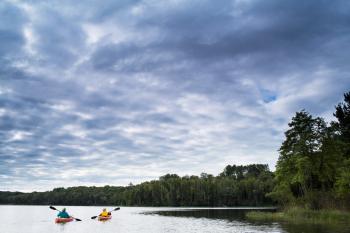 This project area is located in the eastern part of the Deer River District on the Chippewa National Forest. The project area encompasses approximately 50,826 acres. The Forest Service ownership within the project area is roughly 30,724 acres, about 60 percent of the area. The majority of the proposed activity for this project occurs in the Dry-Mesic Pine landscape ecosystem, which historically had mature and older stands dominated by a supercanopy of red pine and white pine. Mixed red maple and paper birch would have been found in the subcanopy, along with white spruce, balsam fir, aspen, northern red oak, bur oak and bigtooth aspen.
Management Goals

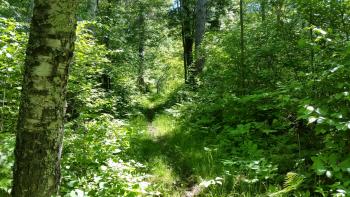
The overall goal for this project is to move the area closer to the Chippewa National Forest's existing goals for vegetation composition within the different Landscape Ecosystems. Management activities on approximately 3,200 acreas are specifically designed to:
- Increase acres of upland white pine and spruce/fir forest types
- Decrease acres of upland aspen forest types
- Maintain and increase structural and species diversity in young and old stands.
Climate Change Impacts
For this project, the most important anticipated climate change impacts include:
Aspen is projected to decline across northern Minnesota, and this project is specifically focusing on older aspen stands (80-90 years old) that will be most vulnerable to stress
White spruce and balsam fir are expected to decline across northern Minnesota, and 40-year-old spruce plantations in the project area may be overcrowded because they have never been thinned.
Armillaria, hazel, and pine bark beetles could all be more challenging for red pine under climate change.
Adaptation Actions
Project participants used the Adaptation Workbook to develop several adaptation actions for this project, and also identified many ways that "business-as-usual" forest management on the Chippewa NF aslo supports climate adaptation. Some of these ideas included:
Area/Topic
Approach
Tactics
Project-wide considerations
Removing the Jingo Lake Impoundment to improve watershed and stream habitat
Removing roads that are identified as unnecessary, and only building temporary roads
Aspen stands
Create patches of young aspen (0-9 age class) by clearcutting approximately 800 acres.
Clearcut bigger patches of aspen, which keeps deer away from the interior of the cut.
Convert aspen stands to other forest types that are better suited to future climate conditions, focusing on stands were oak and paper birch (40 acres) or white pine (250 acres) are present.
Reserve long-lived conifers oaks, and cedar in managed aspen stands.
Red pine
Thinning will occur on 660 acres of red pine stands
Trees from all size classes will be cut in red pine stands to maintain structural diversity
5.2. Maintain and restore diversity of native species.
9.1. Favor or restore native species that are expected to be adapted to future conditions.
9.1. Favor or restore native species that are expected to be adapted to future conditions.
Species other than red pine will be retained during thinning operations.
Black ash
9.1. Favor or restore native species that are expected to be adapted to future conditions.
9.2. Establish or encourage new mixes of native species.
9.2. Establish or encourage new mixes of native species.
Diversity planting after harvest in black ash stands would occur on about 13 acres (black spruce, tamarack, white spruce, yellow birch, white pine, hackberry, and other suitable species)
Project Documents
Laurentian EA 6-15.pdf
(2.28 MB)
Learn More
Keywords
Lowland/ bottomland hardwoods
Plantations
Upland hardwoods