
Project Area

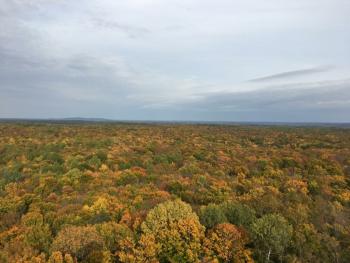 The Chequamegon-Nicolet National Forest covers more than 1.5 million acres of Wisconsin’s Northwoods and has been a key partner in the Climate Change Response Framework since its inception. The adaptation work described here is just one of several activities underway on the Forest to show the wide variety of ways in which climate change considerations can be incorporated into sustainable forest and natural resource management activities. Learn more about Chequamegon-Nicolet National Forest's actions to respond to a changing climate.
Management Goals

The Eagle River - Florence District of the Chequamegon-Nicolet National Forest has an active Invasive Species Program. The goal of this program is generally to contain populations of non-native invasive plants and animals, which overlaps with many other goals and objectives for the Forest as a whole. Priority invasive species are controlled through active management where possible, sometimes in cooperation with the state of Wisconsin, counties, tribes, and other organizations.
Climate Change Impacts
Adaptation Actions
The Invasive Species Program staff identified several actions that could help adapt to climate change, while continuing to address the challenges presented by non-native invasive species. Several of these actions selected from the Adaptation Workbook are listed below (not a comprehensive list).