
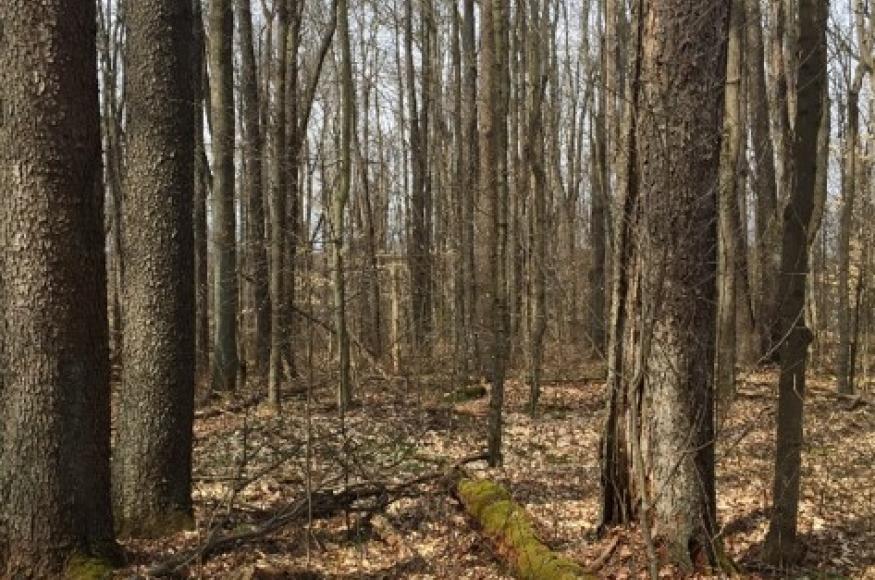

Project Area

 This project is located on the Marienville Ranger District. The project area contains 12,375 acres of predominantly northern hardwoods aged 70 years or older, and lacking in early successional habitat. The most common species are black cherry (44%), red maple (27%), American beech (15%), eastern hemlock (10%), and sugar maple (3%). This area is currently being managed under the "Allegheny National Forest Land and Resource Management Plan" (2007).
Management Goals


Treatment is proposed on 1,633 acres. Approximately 59% of the Otter Project is in even-aged management (MA 3.0) and 41% is uneven-aged management (MA 2.2). In MA 3.0, the primary management goals are to provide a sustained yield of high-value species and high-quality timber products, and to create a balanced forest age class distribution. In MA 2.2, vegetation managment is directed towards restoring late structural forest conditions with an emphasis on sustaining forest structure and continuity. Additional goals will continue to implement and monitor a range of silvicultural and reforestation practices in order to be responsive to emerging issues and regenerate stands with a diversity of healthy tree seedlings.
Climate Change Impacts
Challenges and Opportunities
Challenges
Opportunities
Adaptation Actions
The Adaptation Workbook was used to identify some potential adaptation actions for this project, which will be refined while the project continues to meet the requirements of NEPA. Potential adaptation actions that would promote a diversity of vegetation patterns across the project area include:
5.2. Maintain and restore diversity of native species.
1.2. Maintain or restore hydrology.
1.3. Maintain or restore riparian areas.
7.1. Reduce landscape fragmentation.
5.3. Retain biological legacies.
8.2. Favor existing genotypes that are better adapted to future conditions.
9.3. Guide changes in species composition at early stages of stand development.