
Project Area
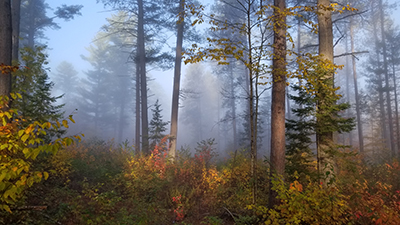
 The Petawawa Research Forest (PRF), located in Chalk River, Ontario, Canada, is a 10,000-hectare (24,711 acre) research forest. Operated by Natural Resources Canada, Canadian Forest Service, the PRF aims to be a living laboratory for innovative forest research as well as a hub for forest knowledge transfer. The PRF was establish in 1918 and has since continued to build upon a rich history of data and observations to help researchers develop solutions for the challenges facing the forests of today.
 The PRF is located within the Great Lakes-St. Lawrence forest region that features white pine, red pine, red oak, yellow birch, sugar maple, and red maple as common dominant species. Soils are typically sandy loams, and the topography ranges from flat to rolling.
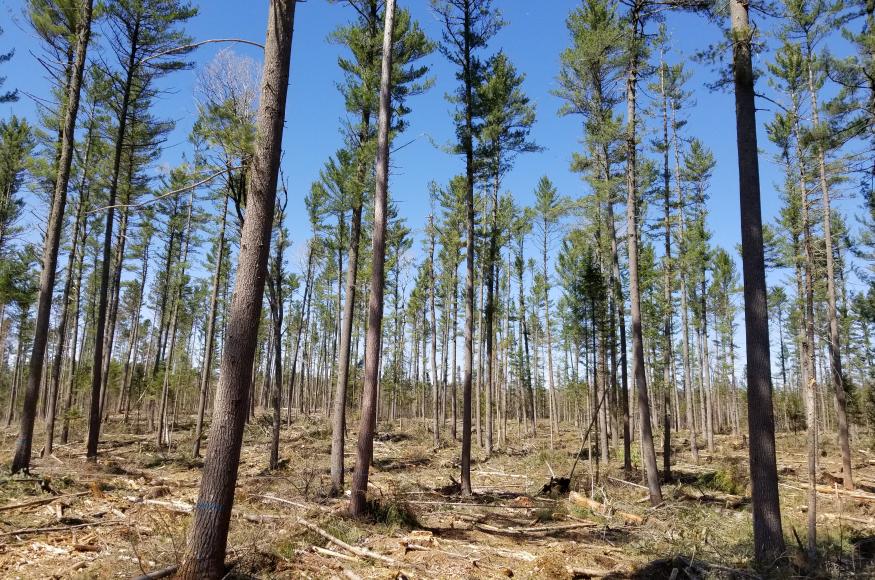
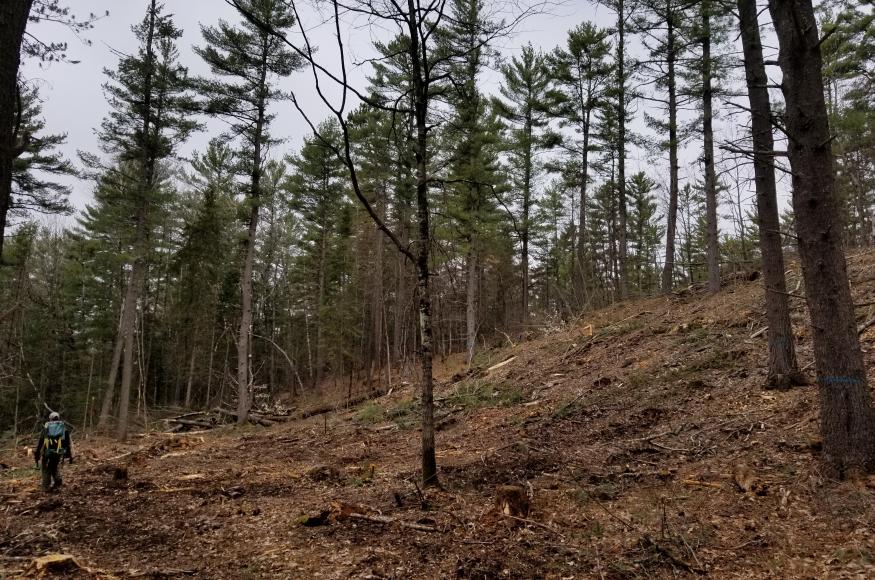
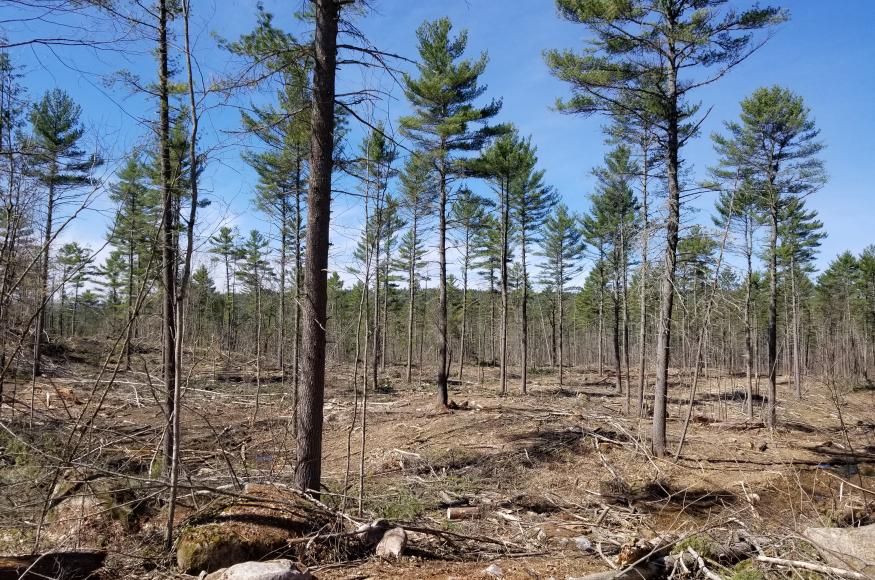
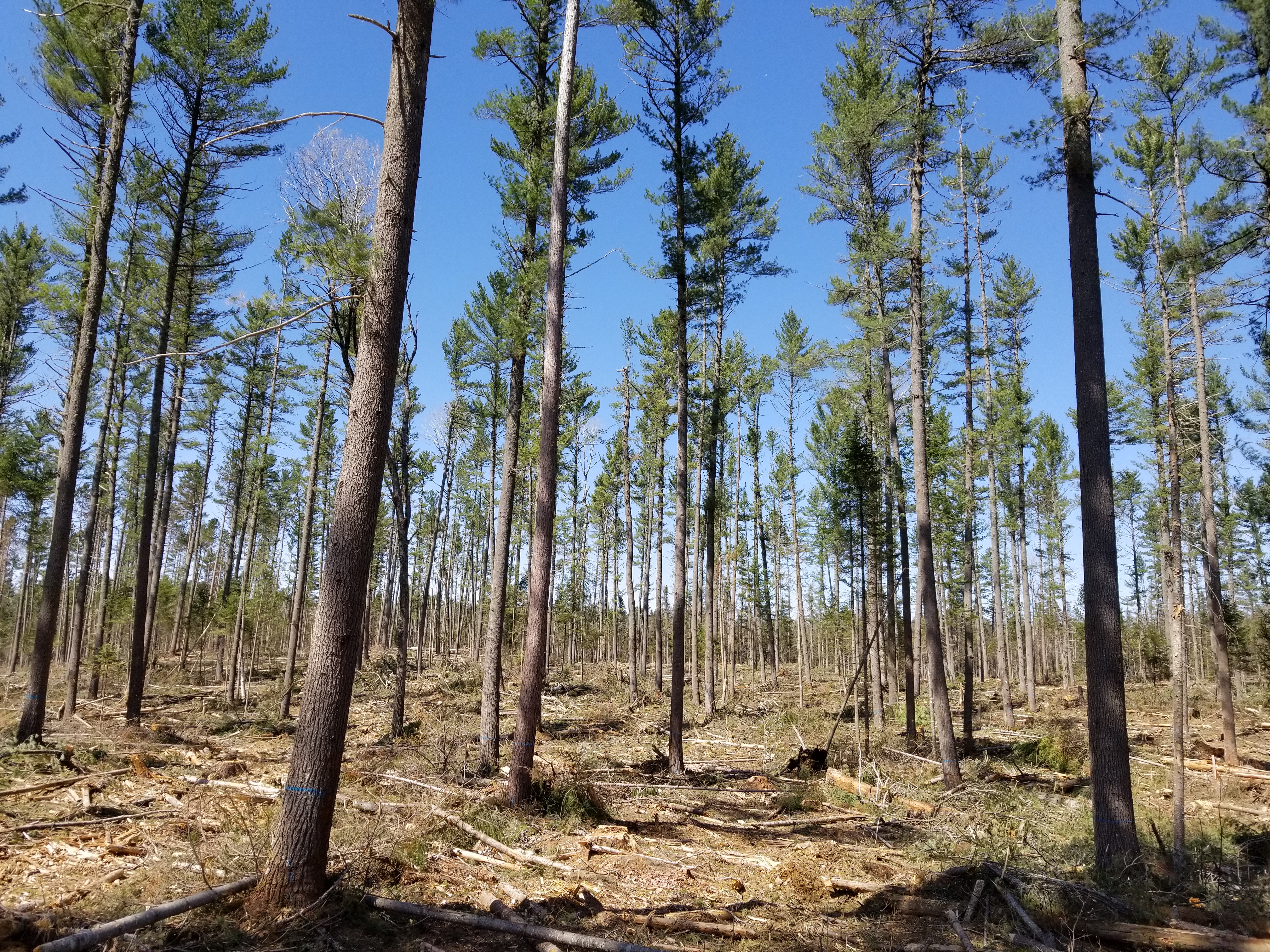
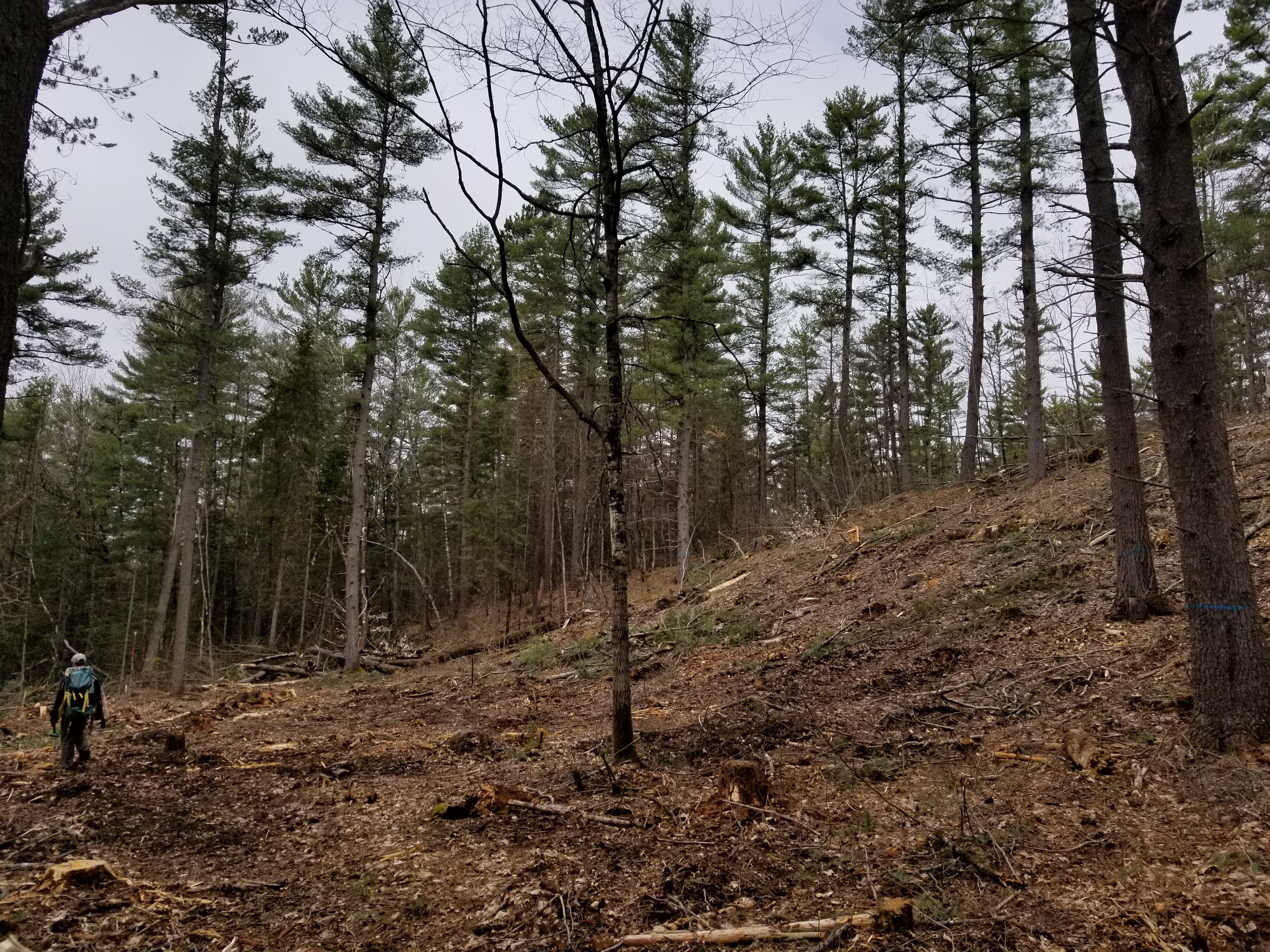
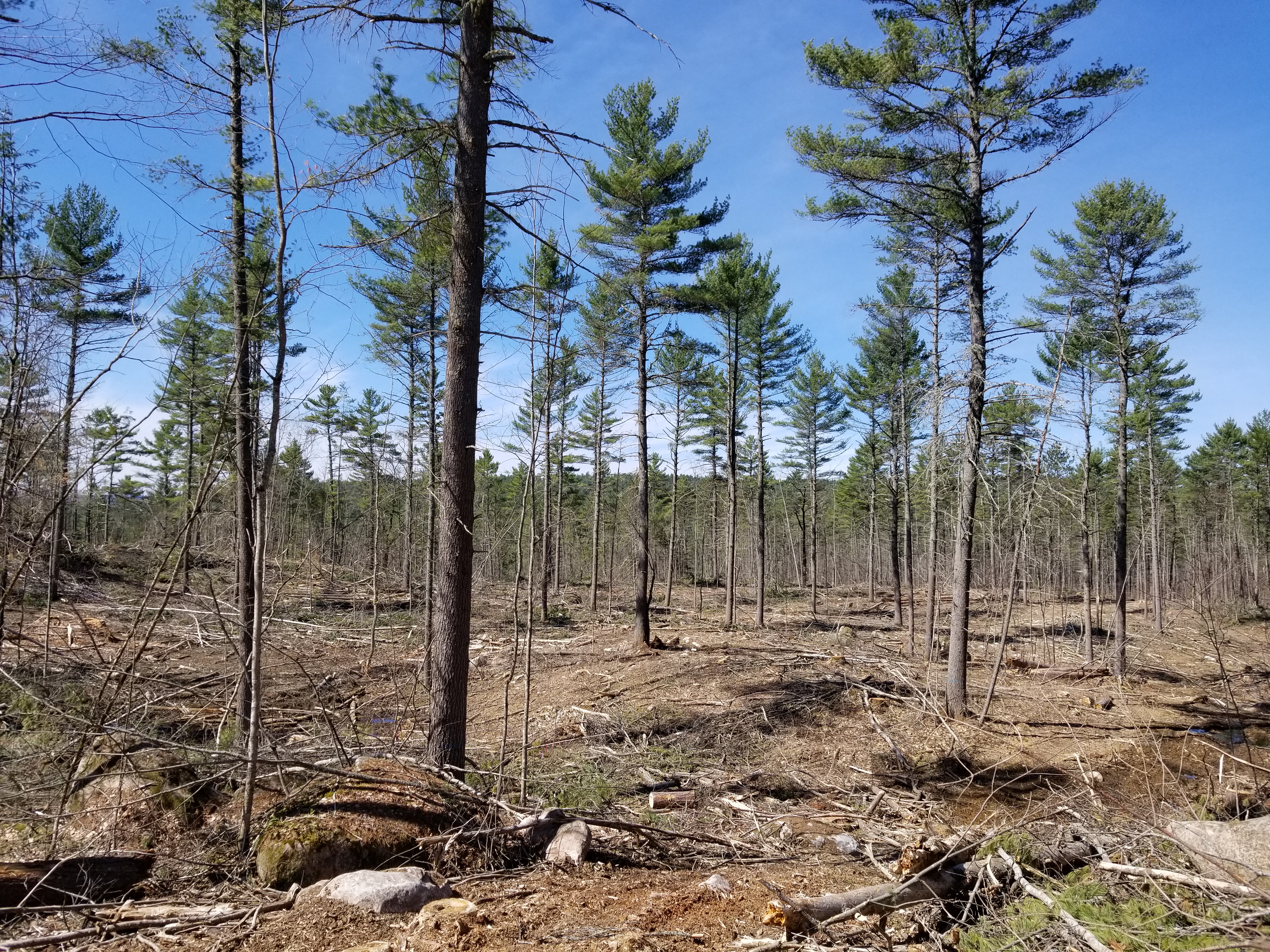
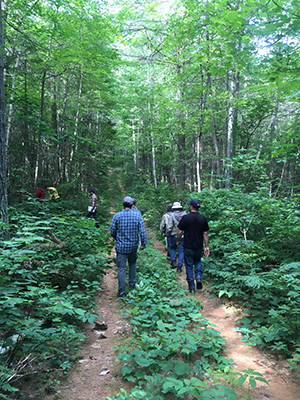
The ASCC research site at the PRF will be situated in stands with dominant and co-dominant components of white and red pine, and mid-canopy components of aspen, white birch, red maple, balsam fir, and white spruce. In these stands, the understory is predominantly hazel and ferns, with a limited herbaceous layer. Soils are well-drained sandy loams that vary in depths between shallow and deep. Reflecting the topographical heterogeneity of the region, study sites will represent level to upper slope positions.
Management Goals
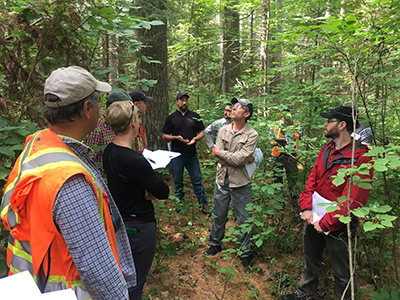
A team of natural resource specialists from the Canadian Forest Service, regional managers, and scientists came together for a three-day workshop in July 2019 to develop the study design for the ASCC project site. The team developed a set of Desired Future Condition statements, Objectives, and Tactics for each major climate adaptation trajectory (resistance, resilience, transition). These three trajectories are briefly summarized below:
No Action:
Since climate change impacts all forests globally, we cannot maintain a true “control.” With this in mind, we consider an approach in which forests are allowed to respond to climate change in the absence of direct silvicultural intervention as an appropriate baseline for many questions. Mature stands representing the Desired Future Condition (DFC) will be maintained and monitored for the duration of the study. These stands will serve as a benchmark of natural succession in the absence of management.
"Business as Usual" Control:
Under a no-change scenario, the DFC at maturity (100 years) for white pine forests in the region is:
- Regenerate a well-stocked, productive, pine-dominated stand (white pine and other drought-tolerant species common to the site)
- Maintain or increase production of high quality sawlogs and other forest products
- Manage for wildlife habitat and mitigation of pests through partial harvesting and planned retention of the original overstory species
Resistance:
- Regenerate a well-stocked, productive, pine-dominated stand (white pine and other drought-tolerant species common to the site)
- Maintain or increase production of high-quality sawlogs and other forest products
- Manage for wildlife habitat and mitigation of pest through partial harvesting and planned retention of the original overstory species
- Establish white pine adapted to future climate conditions
Resilience:
- Create a well-stocked, multi-aged structure (promote species composition of white pine > red oak > aspen > red pine > other species)
- Maintain/increase productivity and quality of wood products, and diversify wood products, including pine sawlogs
- Promote low susceptibility to disturbances, including drought, wildfire, wind, ice storms, insects, and diseases
- Enhance species diversity particularly among dominant species (including functional diversity, structural diversity, and genetic diversity)
- Establish trees adapted to future climate conditions
- Increase resilience to low intensity wildfires and reduce susceptibility to stand-replacing wildfires
- Manage for wildlife habitat and mitigation of pest by utilizing expanding gaps to create a multi-aged stand with a gradient of light conditions
Transition:
- Provide quality wood products
- Promote a diverse species mix that is adapted to drought, wildfire, wind, ice storms, insects, and diseases, and adapted to future climate conditions
- Maintain wildlife habitat through structural retention and an increase in mast species
Climate Change Impacts
Challenges and Opportunities
Challenges
Opportunities
Adaptation Actions
The ASCC project was designed to explicitly test three different adaptation options: resistance, resilience, and transition. A detailed silvicultural prescription was designed for each adaptation option, which was replicated several times across the study site. Detailed silvicultural prescriptions can be found in the Adaptation Workbook. The study site also includes several no-action "control" stands for comparison. Some of the adaptation tactics employed in this project include:
2.1. Maintain or improve the ability of forests to resist pests and pathogens.
9.1. Favor or restore native species that are expected to be adapted to future conditions.
2.1. Maintain or improve the ability of forests to resist pests and pathogens.
8.2. Favor existing genotypes that are better adapted to future conditions.
9.1. Favor or restore native species that are expected to be adapted to future conditions.
2.1. Maintain or improve the ability of forests to resist pests and pathogens.
3.1. Alter forest structure or composition to reduce risk or severity of wildfire.
3.3. Alter forest structure to reduce severity or extent of wind and ice damage.
5.1. Promote diverse age classes.
8.2. Favor existing genotypes that are better adapted to future conditions.
9.1. Favor or restore native species that are expected to be adapted to future conditions.
9.2. Establish or encourage new mixes of native species.
2.1. Maintain or improve the ability of forests to resist pests and pathogens.
3.3. Alter forest structure to reduce severity or extent of wind and ice damage.
8.2. Favor existing genotypes that are better adapted to future conditions.
9.2. Establish or encourage new mixes of native species.
9.7. Introduce species that are expected to be adapted to future conditions.