

Project Area
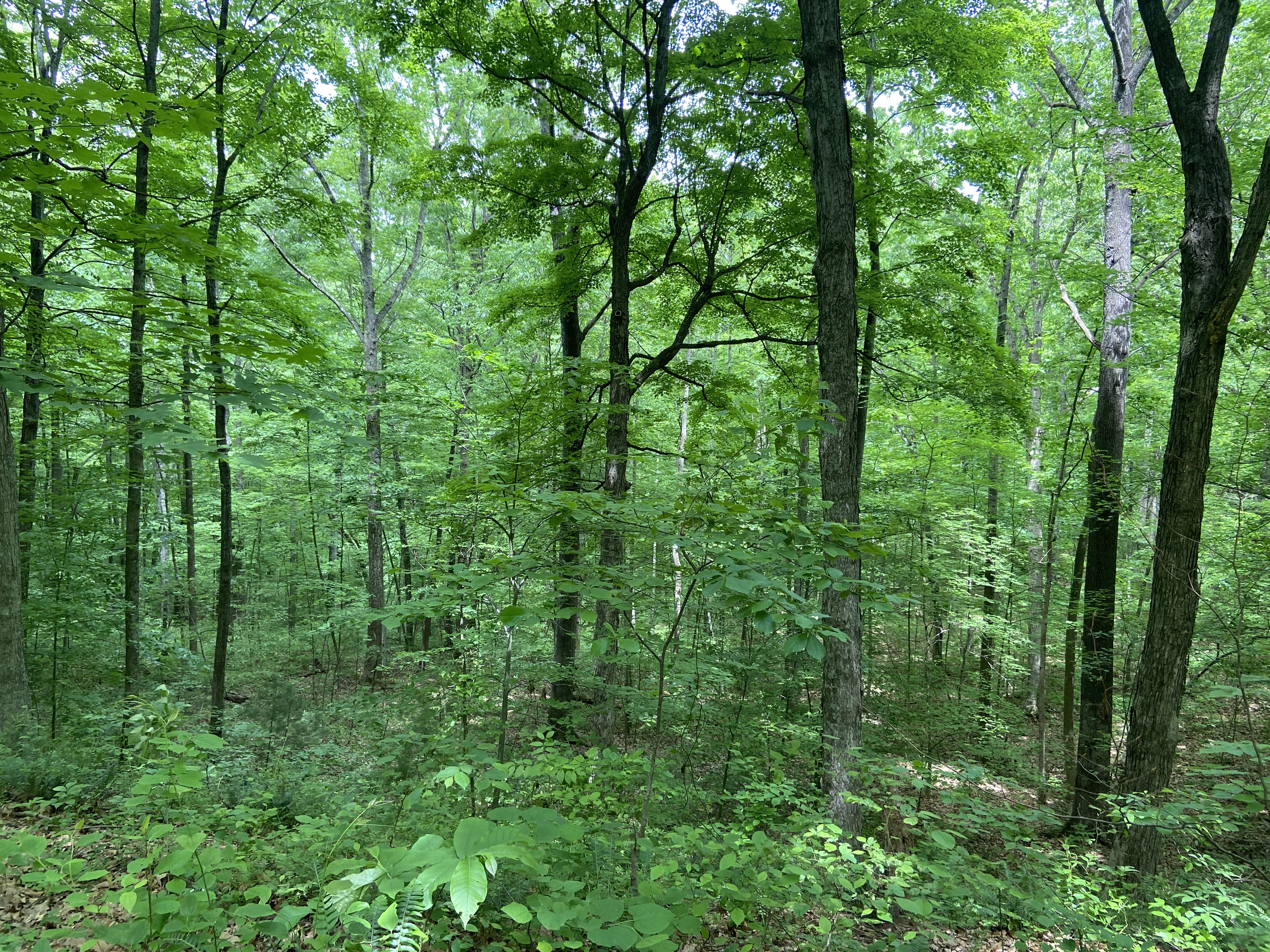
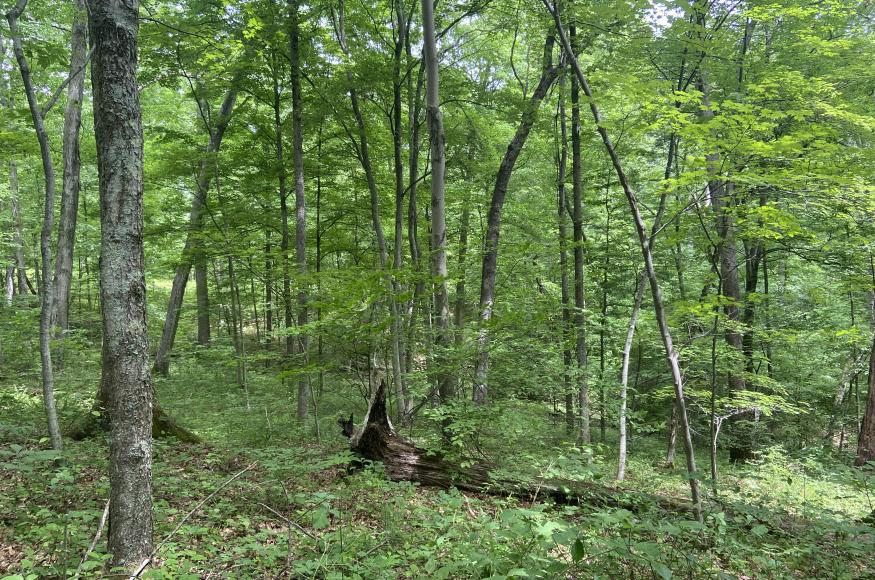
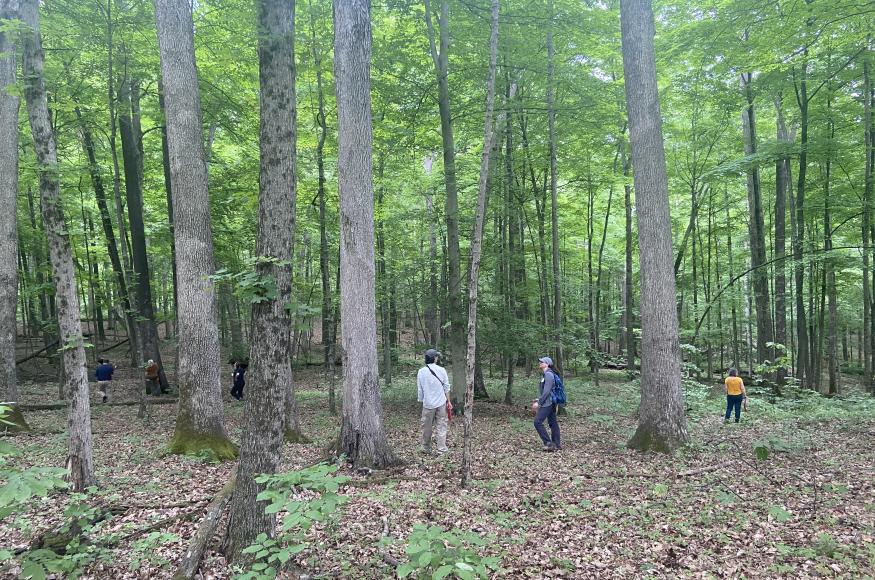
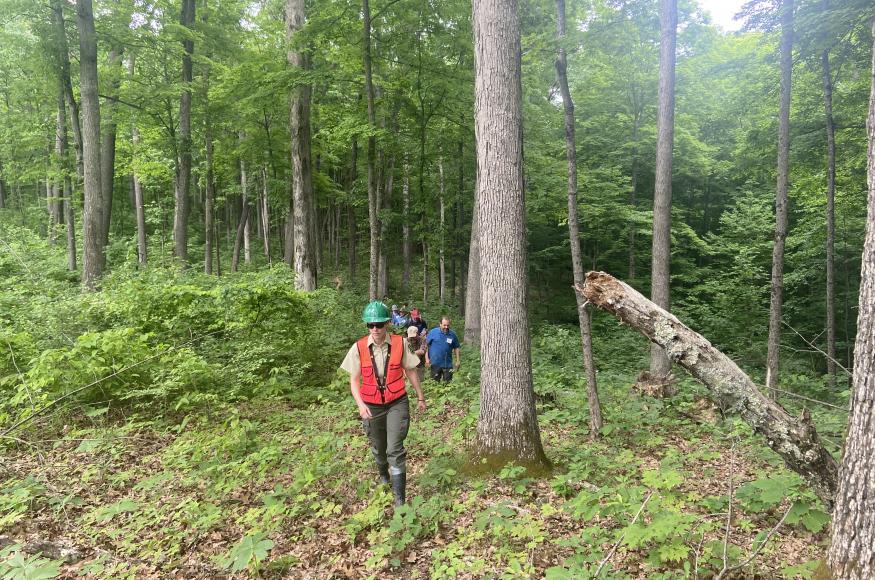
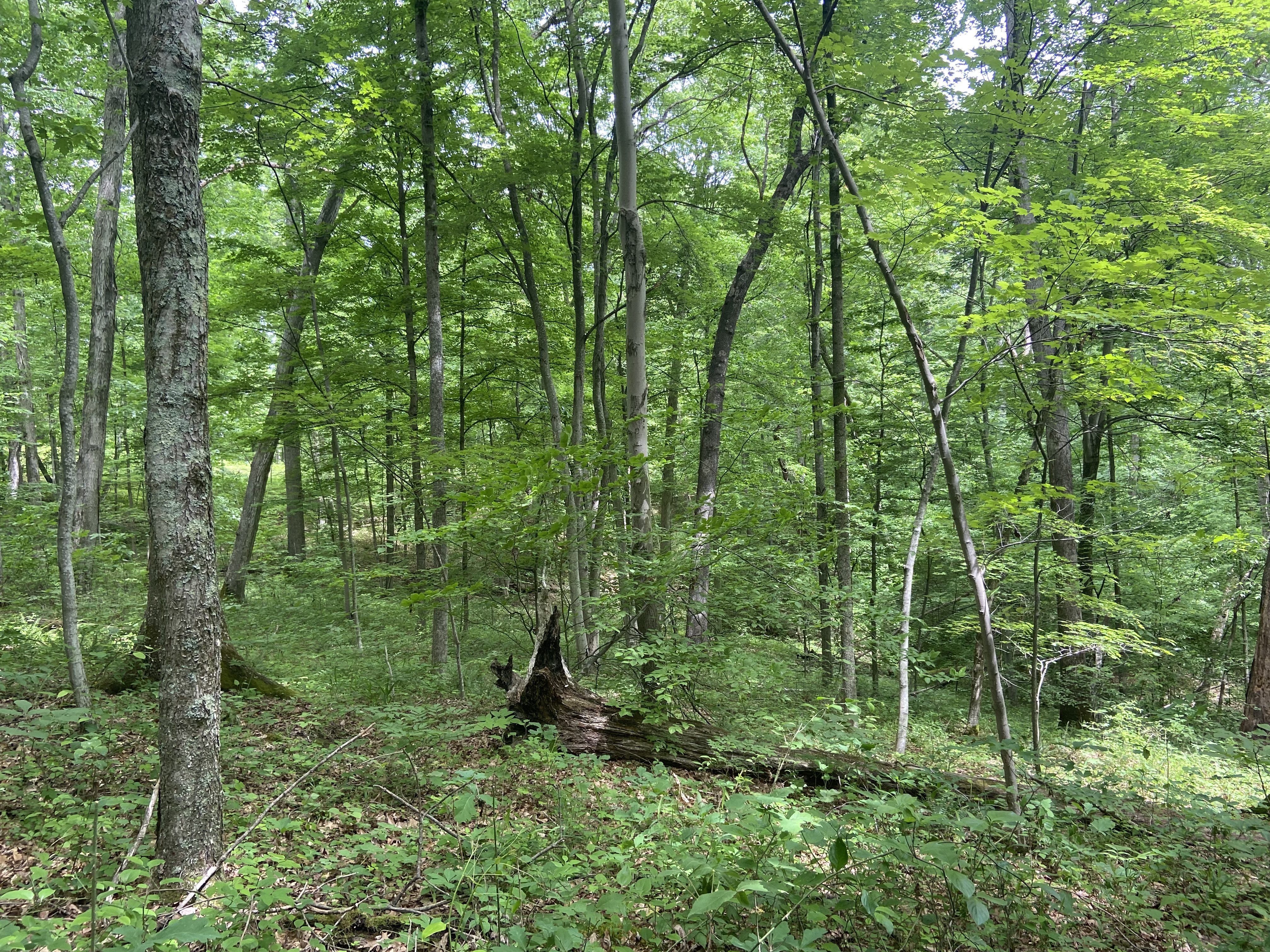
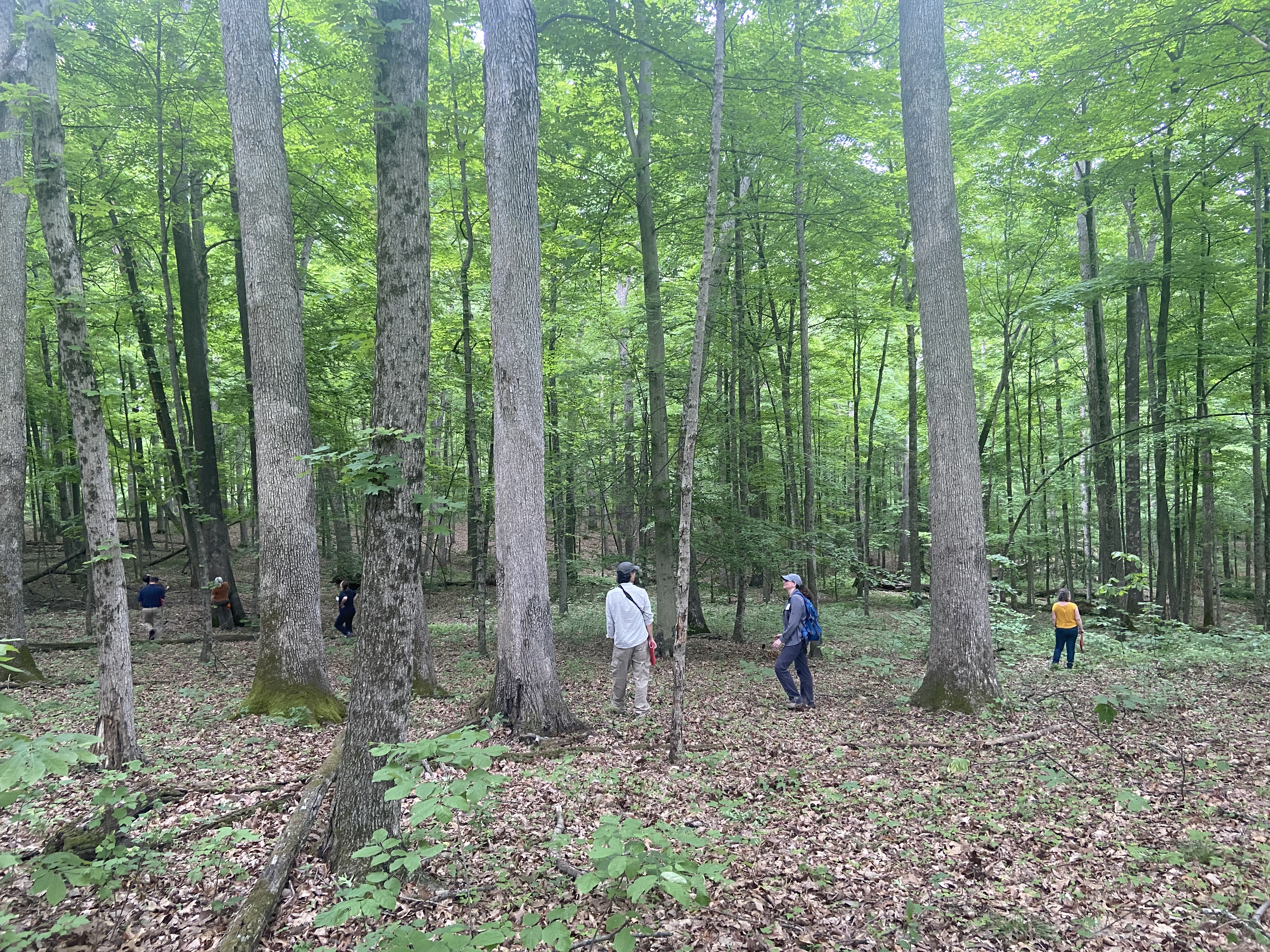
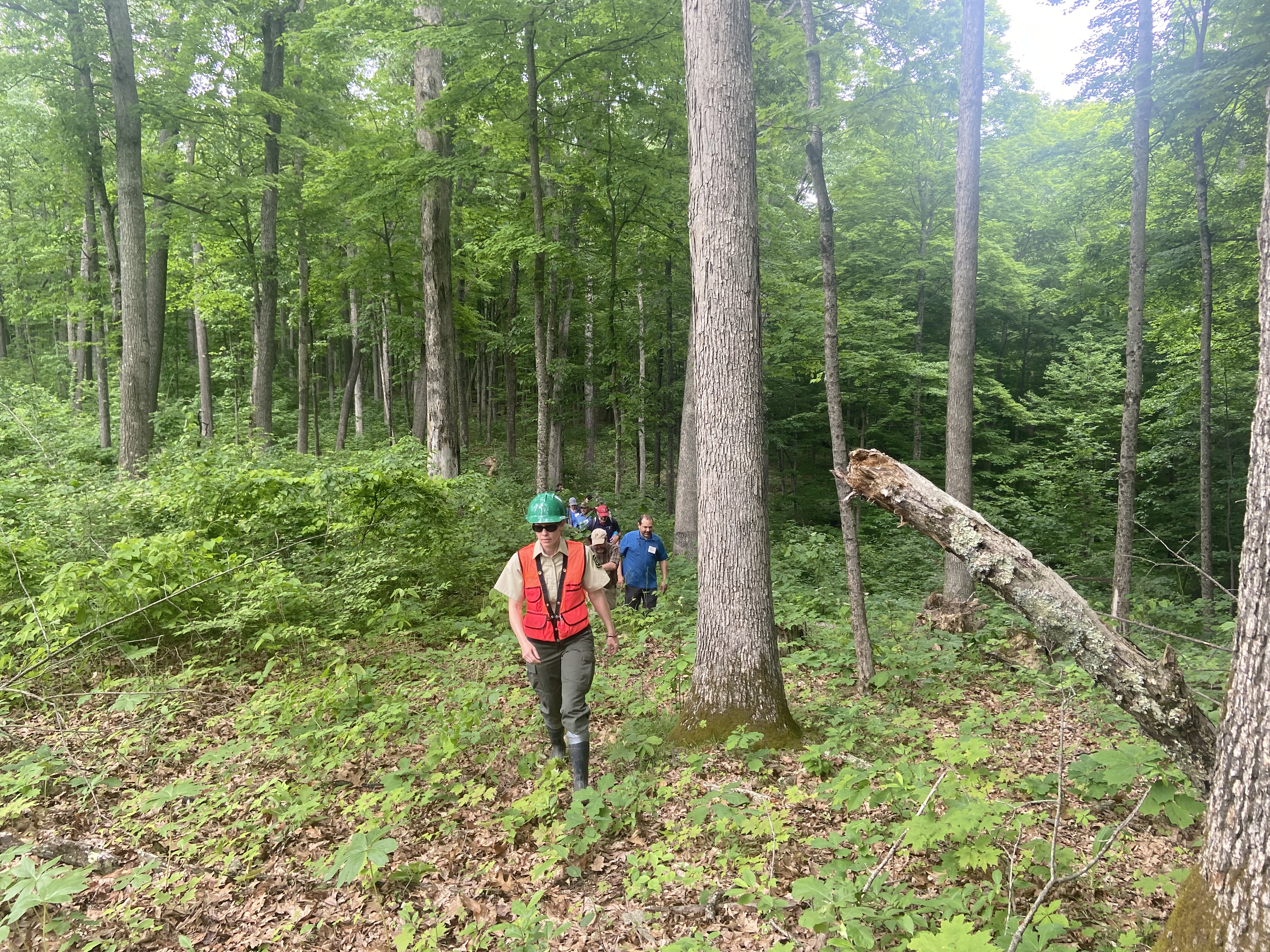
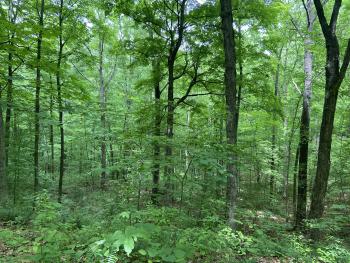 The Ohio Hills ASCC study site is located within southeastern Ohio’s Interagency Forestry Team’s Collaborative Oak Management Region. The research units are distributed within Vinton Furnace State Forest containing a 2,882-acre research zone that is surrounded by 9,393-acres of state forest and a 3,547-acre wildlife management area. Forest types ranging from dry to mesic species compositions dominated by white oak, black oak, chestnut oak, red maple, yellow polar, and sugar maple are promoted by variation in the dissected topography of the region.
Management Goals

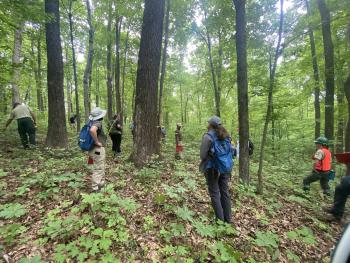
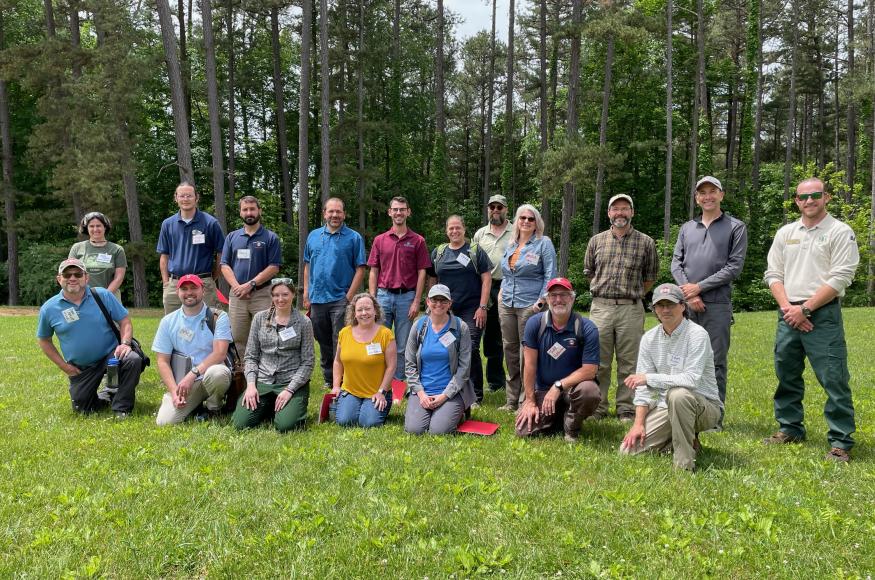
A team of natural resource specialists from the Ohio Hills, regional managers, and scientists came together for a three-day workshop in May 2022 to develop the study design for the ASCC project site. Overarching management goals for the Vinton Furnace and Zaleski State Forest include:
- Manage for a compositionally and structurally diverse sustainable oak ecosystem
- Consider visual aesthetics where timber harvesting is recommended
- Support Ohio’s timber industry by promoting important commercial species such as white oak
- Mitigate risks of invasive species establishment or spread
- Sustain and promote organismal and functional diversity
- Protect known or discovered archaeological resources
- Employ all applicable water quality best management practices during timber harvest
- Support and provide recreational opportunities, including hunting and wildlife watching, through diversifying forest age and structure
- Support demonstration and science delivery
Each ASCC site utilized three adaptation options (resistance, resilience, and transition), as well as a control or “no action” treatment where no management takes place. The team developed a set of Desired Future Condition statements, Objectives, and Tactics for each major climate adaptation trajectory. These three trajectories are briefly summarized below:
Resistance:
- Maintain an oak-dominated stand where understory matches overstory
- Protect state endangered and threatened wildlife species (bats, birds, and timber rattlesnakes)
- Resistant to disease (oak wilt and future novel diseases)
- Regeneration matches composition of the overstory
Resilience:
- Multi-cohort stand with diversity of ages, structures, species, and light conditions within natural range of variation
- Natural regeneration of oaks and hickories
- Resilience to wind, drought, ice storms, fire, and disease
- Maintain large oaks
- Promote wildlife habitat and herbaceous understory
- Introduce fire throughout treatment
- Low incidence of invasive plant species
- Protect state endangered and threatened wildlife species
Transition:
- Complex, multi-aged, variable structure
- Native and novel future-adapted, drought-tolerant oak and pine species
- Maintain white oak in canopy
- Maintain productive forests that align with future conditions
- Accommodate mixed to high severity levels of disturbance (drought and fire)
- Low incidence of invasive species
- Resistance to disease
- Protect state endangered and threatened wildlife species
Climate Change Impacts
Key projected climate change impacts that the project team considered for the Ohio Hills include:
Challenges and Opportunities
Challenges
Opportunities
Adaptation Actions
The ASCC project was designed to explicitly test three different adaptation options: resistance, resilience, and transition. A detailed silvicultural prescription was designed for each adaptation option, which was replicated several times across the study site. Detailed silvicultural prescriptions can be found in the Adaptation Workbook. The study site also includes several no-action "control" stands for comparison. Some of the adaptation tactics employed in this project include:
2.1. Maintain or improve the ability of forests to resist pests and pathogens.
9.1. Favor or restore native species that are expected to be adapted to future conditions.
1.5. Restore or maintain fire in fire-adapted ecosystems.
2.1. Maintain or improve the ability of forests to resist pests and pathogens.
3.1. Alter forest structure or composition to reduce risk or severity of wildfire.
3.3. Alter forest structure to reduce severity or extent of wind and ice damage.
9.1. Favor or restore native species that are expected to be adapted to future conditions.
5.1. Promote diverse age classes.
8.2. Favor existing genotypes that are better adapted to future conditions.
9.1. Favor or restore native species that are expected to be adapted to future conditions.
9.2. Establish or encourage new mixes of native species.
9.7. Introduce species that are expected to be adapted to future conditions.