


Project Area

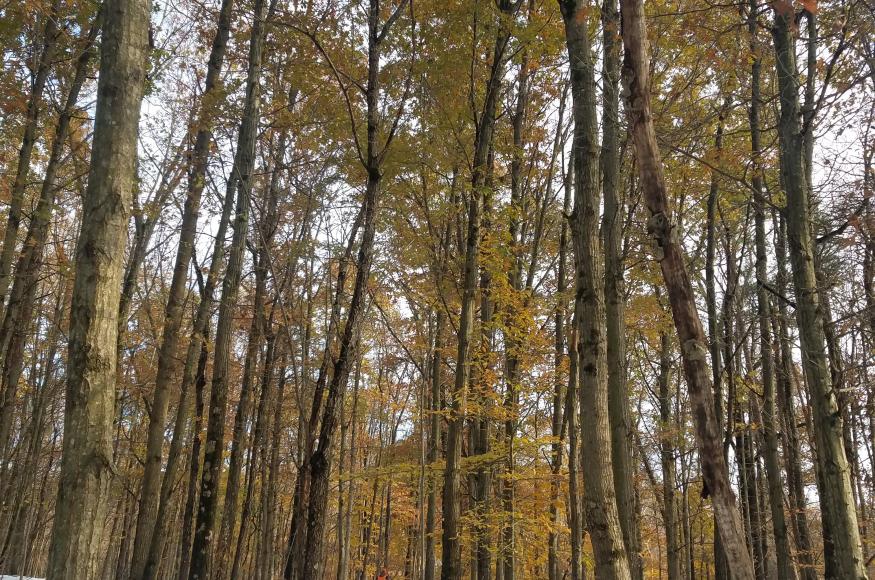
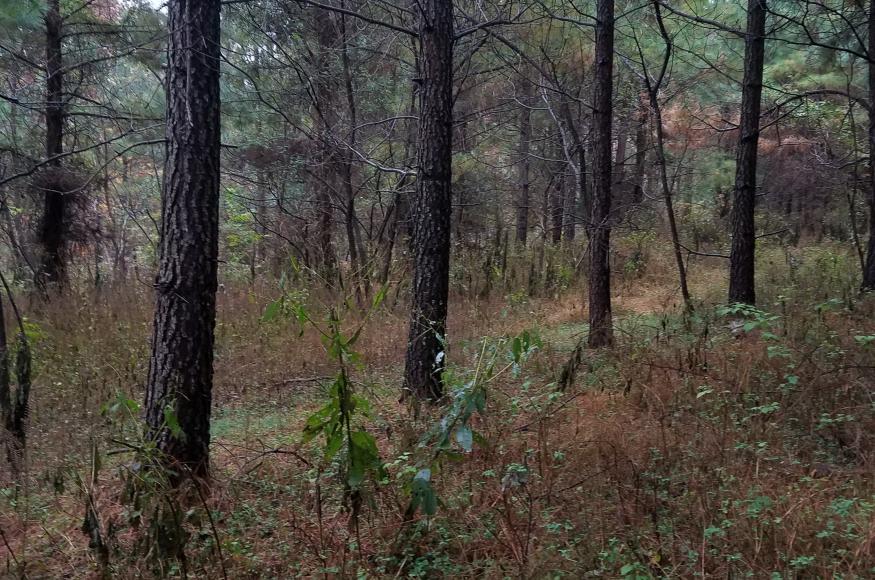
 The project area is located in western Maryland, along the Potomac River on the border with West Virginia. The soils are generally thin and shale derived, but are richer along the river. The project has six main stands as focal areas, including a maple-tulip poplar dominated Floodplain Forest, a Dry/Mesic Oak Forest (common to the Central Appalachians), a Mixed Mesophytic and Cove Forest (sheltered topographic positions), a reforested abandoned agricultural field, a pine plantation, and grass-dominated abandoned agricultural field. This demonstration page will focus on two of these areas: The Dry/Mesic Oak Forest system includes two matrix-forming oak-dominated systems that are weakly differentiated but very common in the Central Appalachians. Typical species include white oak, black oak, northern red oak, scarlet oak, red maple, pignut hickory, mockernut hickory, shagbark hickory, sugar maple, chestnut oak, sweet birch, American beech, black gum, tulip tree, and white ash. The Mixed Mesophytic and Cove Forest consists of hardwood or hemlock-hardwoods in sheltered topographic positions, often on concave slopes or in areas with high precipitation. Typical species include sugar maple, white ash, American basswood, yellow buckeye, tulip tree, red maple, eastern hemlock, cucumbertree, American beech, sweet birch, northern red oak, black cherry, mountain magnolia, and black oak.
Management Goals
GOALS:
Dry/mesic oak forest
- Increase resilience to pest and disease issues.
- Enable production of a sustainable timber supply for harvest.
Mixed Mesophytic and Cove Forest
- Protect water quality from sedimentation and nutrient pollution for both human and wildlife needs.
- Enable production of a sustainable timber supply for harvest.
- Maintain a mixture of native cove forest species on the landscape by maintaining cove microsite conditions.
OBJECTIVES:
Dry/mesic oak forest
- Increase conifer component to 20% on dry, shaley slopes. (10-20 Years)
- Encourage multiple age classes of oaks through selective harvest. (1-5 Years)
- Increase non-oak, drought tolerant species component to 30%. (10-20 Years)
- Maintain oak dominance (50%) on dry, shaley slopes through group selection harvest. (1-5 Years)
- Retain 70 sq ft basal area of desirable trees for seed source and second harvest while creating gaps of sufficient size to regenerate the oak (1.5-2x canopy height). (1-5 Years)
- Increase advanced regeneration to 300 stems/acre by controlling deer browse. (1-10 Years)
Mixed Mesophytic and Cove Forest
- Retain at least 60 sq ft basal area in stream management zones, preferably exclude logging in areas without mature maple. (1-15 Years)
- Maintain native shrub and tree regeneration cover at 60% (current). (1-15 Years)
- Selectively remove mature sugar maple to create growing space for advanced regeneration. (1-5 Years)
- Limit harvest of sugar maple to over-mature individuals. (1-15 Years)
- Plant eastern hemlock along most developed streams to maintain this important native conifer species. (1-15 Years)
Climate Change Impacts
For this project, the most important anticipated climate change impacts include:
Mean annual temperatures in the Central Appalachians will increase 2-8 °F by the end of the century, with more warming during summer and fall than winter and spring.
Precipitation in the Central Appalachians is projected to increase in spring but decrease in summer and fall.
Soil conditions will become drougthy late in the growing season and the risk of wildfire will increase.
Increases in storm intensity and flooding events have the potential to increase soil erosion and sedimentation within the large stream floodplain and riparian forest ecosystem.
Invasive species, insect pests, and pathogens in the Central Appalachians will increase or become more damaging.
Length of time between precipitation events may increase, increasing chances of drought, especially in the summer and fall
Challenges and Opportunities
Climate change will present challenges and opportunities for accomplishing the management objectives of this project, including:
Challenges
Seeding survival will be negatively impacted by drought, deer browse, and flooding events.
Increased suitability for invasive species will increase competition for native regeneration.
Most trees that are projected to increase in abundance given future climate conditions in the project area are shade-intolerant.
Northerly and drought-intolerant species, such as sugar maple, are not projected to do well under future climate change impacts. Regeneration strategies for species within this forest cover type are in conflict with regeneration strategies for oak.
Regeneration and harvesting strategies for desired species are conflicting, although their areas overlap.
Hemlock woolly adelgid and increasing temperatures are likely to prevent hemlock establishment in the future.
Opportunities
More southerly species such as sweetgum, longleaf pine, or shortleaf pine could be introduced to the property or may migrate onto the property under future conditions.
High quality seed trees are present on-site.
Increases in warmest days and CO2 concentrations could favor C4 grasses and other plants.
Oaks are projected to do well and will likely increase in abundance on the property.
Current conditions are favorable for hemlock regeneration, if browse and competition can be controlled.
Adaptation Actions
Project participants used the Adaptation Workbook to develop several adaptation actions for this project, including:
Area/Topic
Approach
Tactics
1.1 Reduce impacts to soils and nutrient cycling.
1.5. Restore or maintain fire in fire-adapted ecosystems.
9.1. Favor or restore native species that are expected to be adapted to future conditions.
9.7. Introduce species that are expected to be adapted to future conditions.
10.1 Promptly revegetate sites after disturbance.
3.1: Maintain or restore forest and riparian areas
1.5. Restore or maintain fire in fire-adapted ecosystems.
9.1. Favor or restore native species that are expected to be adapted to future conditions.
9.7. Introduce species that are expected to be adapted to future conditions.
10.1 Promptly revegetate sites after disturbance.
3.1: Maintain or restore forest and riparian areas
Encourage conversion to shade-tolerant, non-disturbance based species mixtures.
Implement regeneration techniques including direct seeding, soil scarification, and planting of new and desired species post-harvest.
Encourage the regeneration of a variety of species through various harvesting methods.
4.2. Prioritize and maintain sensitive or at-risk species or communities.
5.3. Retain biological legacies.
5.3. Retain biological legacies.
Retain large, legacy sugar maple when possible, and plant hemlock to retain on the landscape for wildlife and as a conifer component.
1.5. Restore or maintain fire in fire-adapted ecosystems.
9.1. Favor or restore native species that are expected to be adapted to future conditions.
9.1. Favor or restore native species that are expected to be adapted to future conditions.
Install grasslands in current turf areas and implement prescribed fire program.
Monitoring
Project participants identified several monitoring items that could help inform future management, including:
Species diversity (# of species present)
Conifer component (as % of stand and overstory)
Basal Area and size of canopy gaps created by harvests
Survival of natural regeneration and planted seedlings