




Project Area
Hoffman Evergreen Preserve is located in southeastern Connecticut (Stonington, CT, within Connecticut’s eastern coastal ecoregion, approximately 6 miles from Long Island Sound. The 200-acre preserve was originally created by a private landowner who planted thousands of conifer seedlings including hemlock, white pine, tamarack and spruce intermixed with over 142 acres of deciduous tree species including oaks, hickories, birch, beech, and maples. This property and several adjoining ones came to Avalonia Land Conservancy in 1976, 1997 and 2013 bringing the total area to 205 acres. The Hoffman Preserve is also within the Pachaug-Ledyard Focus Area of the new USFWS Great Thicket National Wildlife Refuge; it plays an important role in benefitting wildlife and connecting wildlife corridors.
Over the years, blizzards, nor’easters, hurricanes and wind storms, disease, insect pests, drought, and deer browse have taken a toll on the trees (both conifers and deciduous) leading to dead and dying trees, forest structure with little to no understory, over-mature conifers, and fire and safety hazards.
Over the years, blizzards, nor’easters, hurricanes and wind storms, disease, insect pests, drought, and deer browse have taken a toll on the trees (both conifers and deciduous) leading to dead and dying trees, forest structure with little to no understory, over-mature conifers, and fire and safety hazards.
Management Goals
The following goals are guiding forest management decisions at Hoffman Preserve:
- Support a diverse and resilient coastal forest
- Develop best management practices for the preserve given regional climate change projections
- Provide food and cover for a greater number and variety of wildlife species
- Engage in public outreach and education
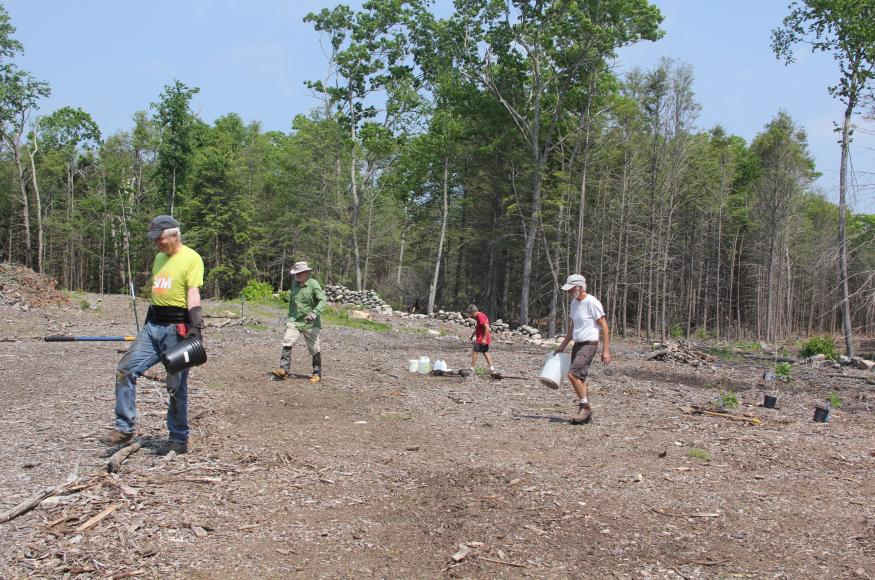
Hoffman Evergreen Preserve is a favored hiking and passive recreation spot, so public outreach before, during and after management activities is key. The intention is to promote understanding of management goals and adaptation tactics for the preserve. A webinar series was held in the Spring of 2021 to educate the public on forests and climate change topics. Signage for the preserve has been developed and will be posted the Fall of 2021. Volunteers will be engaged in the planting of trees and shrubs in patch cuts, thinned areas, and skid trails.
Challenges and Opportunities
Climate change will present challenges and opportunities for accomplishing the management objectives of this project, including:
Challenges
Potential for increased strength of storm/wind events causing damage to trees and creating hazardous conditions
Potential for new or increased disease and animal pest species to damage or kill trees
Potential for new or increased invasive plants to colonize
Potential for increased drought
Opportunities
Longer growing season and less harsh winters may promote greater and faster tree growth
Potential for more southern species to expand range into southeastern Connecticut (trees and shrubs)
Improved wildlife habitat and food, particularly for birds
Become an adaptation demonstration project for the region
Educational opportunities with regard to climate change and forests
Adaptation Actions
Project participants used the Adaptation Workbook to develop several adaptation actions for this project, including:
Area/Topic
Approach
Tactics
Forest
1.4. Reduce competition for moisture, nutrients, and light.
2.2. Prevent the introduction and establishment of invasive plant species and remove existing invasive species.
5.2. Maintain and restore diversity of native species.
8.1. Use seeds, germplasm, and other genetic material from across a greater geographic range.
9.2. Establish or encourage new mixes of native species.
9.3. Guide changes in species composition at early stages of stand development.
9.4. Protect future-adapted seedlings and saplings.
9.7. Introduce species that are expected to be adapted to future conditions.
5.6 Manage herbivory to promote regeneration, growth, and form of desired species.
7.1 Favor or restore non-invasive species that are expected to be adapted to future conditions.
2.2. Prevent the introduction and establishment of invasive plant species and remove existing invasive species.
5.2. Maintain and restore diversity of native species.
8.1. Use seeds, germplasm, and other genetic material from across a greater geographic range.
9.2. Establish or encourage new mixes of native species.
9.3. Guide changes in species composition at early stages of stand development.
9.4. Protect future-adapted seedlings and saplings.
9.7. Introduce species that are expected to be adapted to future conditions.
5.6 Manage herbivory to promote regeneration, growth, and form of desired species.
7.1 Favor or restore non-invasive species that are expected to be adapted to future conditions.
Selective patch cuts and thinning (completed Dec 2019)
Selective herbicide treatment in areas with significant invasive plants so as invasion in patch cuts (June – September 2021)
Monitor and pull/treat invasive plants as warranted
Selective patch cuts and thinning to remove dead/diseased trees
Planting of select native species
Trees and shrubs from mid-Atlantic nurseries planted in patch cuts/skid trails (range expansion)
Cut beech and birch seedlings growing and overtopping new plantings in patch cuts
Install deer guards on tree and shrub saplings
Monitoring
Project participants identified several monitoring items that could help inform future management, including:
GPS locations of new plantings recorded for monitoring in the future. This will aid in determining success (survival) of plantings, particularly species for which this area would be a range expansion
Invasive (plant and animal) monitoring for management purposes
Bird species monitoring